

Welcome to The Centre for Theoretical Physics and Astronomy
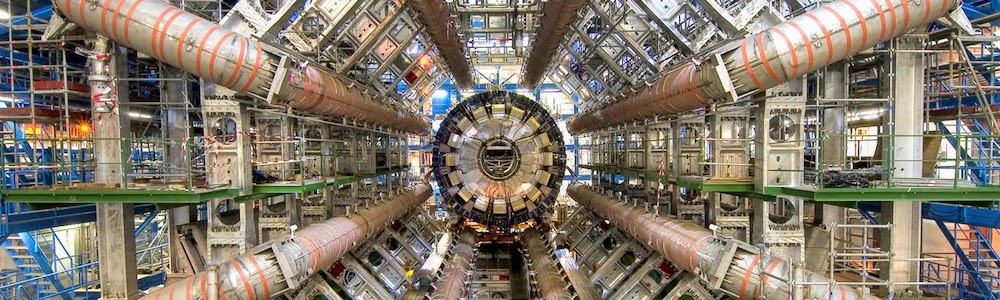
The Centre for Theoretical Physics and Astronomy investigates the most fundamental aspects of our universe, from the tiniest sub-atomic particles to the vast structure of galaxies and the universe as a whole. We pursue complementary programmes of theoretical and observational research, each informing and strengthening the other.
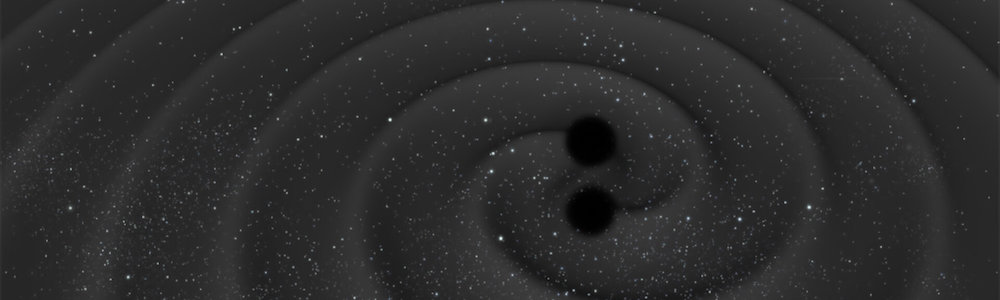
Our theoretical physics research has deep roots in quantum field theory and string theory, including a pivotal role in the discovery of consistent superstring theories and the first superstring revolution, and key contributions to the dualities underpinning the second. We have made seminal contributions to the field of scattering amplitudes, including foundational work on MHV amplitudes and dual conformal symmetry, and the development of the double copy, which reveals unexpected connections between gauge theory and gravity. We also have a strong tradition of research in string and M-theory. Current interests range from dualities and black holes to applications of amplitudes techniques to gravitational-wave physics.
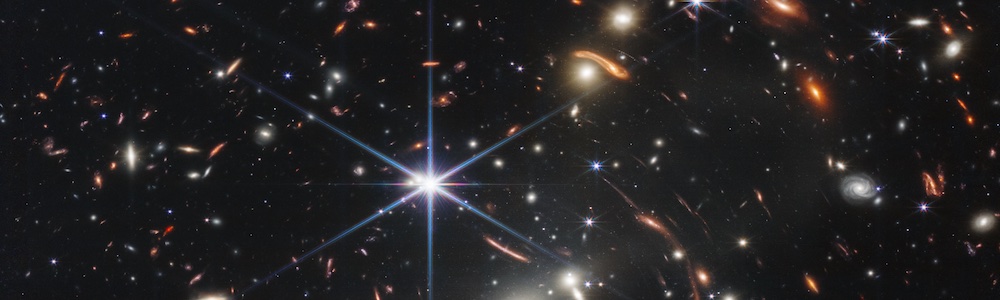
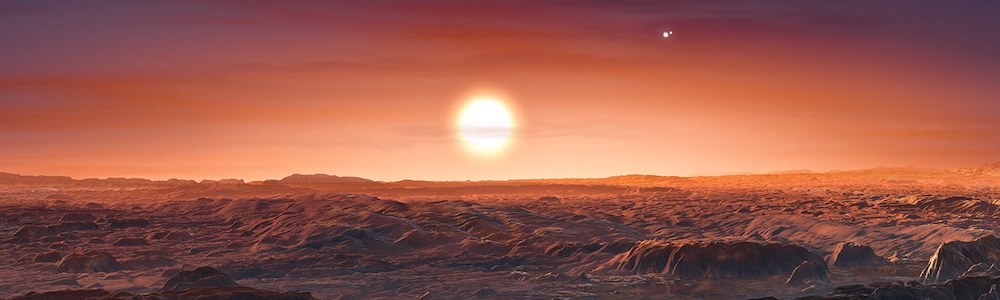
Our astronomy research encompasses a broad range of astrophysical phenomena, studied through observational, theoretical and simulational approaches. We host internationally leading groups in early universe physics, relativistic and survey cosmology, extrasolar planets, planet formation and dynamics, solar and space plasma physics and plasma astrophysics. Notable achievements include the Pale Red Dot campaign, which confirmed the existence of Proxima Centauri b, the closest potentially habitable exoplanet to Earth. Our members play leading roles in major international collaborations including the Square Kilometre Array, Euclid, VISTA, HERA and MeerKAT, as well as space missions such as ESA's Solar Orbiter and NASA's Parker Solar Probe.
The centre has close collaborative ties to institutions across the globe and is a member of SEPnet, SEPnet-Astro, the DISCnet data-intensive science centre and the Alan Turing Institute. We have also developed advanced machine learning algorithms which have applications both within and outside of our areas of research.
Events
 Wed 18 Mar 2026 Wed 18 Mar 202613:30 - 15:00 | Lex Millins - The MIGDAL experiment: Measuring a rare atomic process to aid the search for dark matter
 Centre for Theoretical Physics and Astronomy |
| Thu 19 Mar 2026 14:00 - 15:00 | Kostas Skenderis (Southampton U.)
Centre for Theoretical Physics and Astronomy |
| Thu 26 Mar 2026 14:00 - 15:00 | Mehregan Doroudiani (Southampton U.)  Centre for Theoretical Physics and Astronomy |
| Fri 27 Mar 2026 | ML Seminar - Marika Taylor Centre for Theoretical Physics and Astronomy |
| Wed 22 Apr 2026 14:00 - 15:30 | Centre colloquium: Ruth Gregory (King's College London) Centre for Theoretical Physics and Astronomy |
News
Recent Publications
- Information Cascade in Solar Wind Density Fluctuations
Carbone F Sorriso-Valvo L Telloni D Zank G Chen CHK Němeček Z Šafránková J
The Astrophysical Journal, American Astronomical Society vol. 998 (1)
04-02-2026 - Inferring the physics of protoplanetary disc evolution from the irradiated Cygnus OB2 region
Astronomy & Astrophysics, Edp Sciences vol. 705
01-01-2026 - Astrometric view of companions in the inner dust cavities of protoplanetary discs
Vioque M Booth RA Ragusa E Ribas Á Kurtovic NT Rosotti GP Penoyre Z Facchini S et al.
Astronomy & Astrophysics, Edp Sciences vol. 705
01-01-2026
Recent Grants
- Particle Physics Research Centre Consolidated Grant 2025-29
Seth Zenz, Abigail Waldron, Eram Rizvi, Peter Hobson, Adrian Bevan, Jonathan Hays, Marcella Bona, Ulla Blumenschein, Linda Cremonesi, Ian Dawson and Nicola McConkey
£904,955 Science & Technology Research Council (STFC)
01-01-2026 - 31-12-2027 - URF renewal - URF\R1031: Shock transients in the inner heliosphere during maximum solar activity
Heli Hietala
£689,718 Royal Society
02-12-2025 - 01-12-2028 - RS International Exchange 2025: Learning plasma physics fluid closures with machine learning - Italy
Enrico Camporeale
£12,000 Royal Society
01-12-2025 - 30-11-2027