

Past Events
October 2026 | |
| Tue 27 Oct 2026 14:00 - 15:30 | 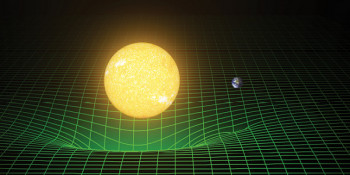 GAnG Seminar: Maximilian Ofner Shock formation in decelerated spacetimes GAnG Seminar: Maximilian Ofner Shock formation in decelerated spacetimesCentre for Geometry, Analysis and Gravitation NOTE: Pre talk intro for non experts starts at 2pm, with seminar starting at 2.30pm Title: Shock formation in decelerated spacetimes Abstract: In cosmological models the matter content of the universe is assumed to be a compressible fluid. Such fluids are prone to the formation of so-called shock singularities, meaning that, at a finite time, the fluid gradient blows up, while the fluid quantities themselves stay bounded. By contrast, rapidly expanding spacetimes facilitate... |
| Tue 20 Oct 2026 14:00 - 15:30 | GAnG Seminar: Klaas Parmentier (Cambridge) Centre for Geometry, Analysis and Gravitation NOTE: Pre talk intro for non experts starts at 2pm, with seminar starting at 2.30pm Title: CFTs on Squashed Spheres and the Thermal Effective Action Abstract: I will discuss CFTs on deformed three-spheres, in two complementary limits. For small deformations of the round sphere, the free energy can be computed using conformal perturbation theory techniques. For large squashing deformations of the Hopf fiber, the free energy is instead governed by a 2d thermal effective action. I will show... |
| Tue 13 Oct 2026 14:00 - 15:30 | GAnG Seminar: Pavel Kovtun (Southampton), Causality and instability in holographic Gauss-Bonnet gravity Centre for Geometry, Analysis and Gravitation NOTE: Pre talk intro for non experts starts at 2pm, with seminar starting at 2.30pm Title: Causality and instability in holographic Gauss-Bonnet gravity Abstract: tbc |
| Tue 6 Oct 2026 14:00 - 15:30 | GAnG Seminar: Paul Saffin Centre for Geometry, Analysis and Gravitation NOTE: Pre talk intro for non experts starts at 2pm, with seminar starting at 2.30pm Title: Real-time numerical quantum field theory Abstract: There are many systems that can be treated classically, and there are many that are static. However, there are situations where both quantum mechanics and dynamics play a role, so finding methods to solve both of these problems is useful. I will discuss various numerical approaches that have been used in the setting of relativistic field theories,... |
September 2026 | |
| Tue 29 Sep 2026 14:00 - 15:30 | GAnG Seminar: Paolo Arnuado Centre for Geometry, Analysis and Gravitation NOTE: Pre talk intro for non experts starts at 2pm, with seminar starting at 2.30pm Title: OPE = QNM: Analytic Structure, Black Holes, and Thermal Response Abstract: Thermal correlators admit two complementary descriptions. At short times they are controlled by local operator data through the thermal OPE, while at late times they are governed by collective excitations, or quasinormal modes. Underlying these two descriptions is a richer analytic structure: the continuation of thermal... |
| Tue 22 Sep 2026 14:00 - 15:30 | GAnG Seminar: Orlando Luongo - Negative refraction and gravitational metamaterials: From optical geometry to dark matter Centre for Geometry, Analysis and Gravitation NOTE: Pre talk intro for non experts starts at 2pm, with seminar starting at 2.30pm Title: Negative refraction and gravitational metamaterials: From optical geometry to dark matter Abstract: In this talk I propose a novel reinterpretation of spacetime as an effective optical medium capable of exhibiting negative refraction. I show that this phenomenon is not a coordinate artifact, but rather a covariant property of energy-momentum flow, arising when phase propagation and energy transport... |
| Fri 18 Sep 2026 10:00 - 17:00 |  Conference: Paris-London Analysis seminar Conference: Paris-London Analysis seminarCentre for Geometry, Analysis and Gravitation The next session of the Paris-London Analysis seminar will be hosted by the School of Mathematical Sciences at QMUL. The seminar takes place four times a year, with two sessions in Paris and two in London. Each session consists of a one-day programme of four talks. More details here. |
July 2026 | |
| Mon 13 - Fri 17 Jul 2026 | Conference: New Perspectives on Evolution Equations and Related Topics Centre for Geometry, Analysis and Gravitation The aim of this workshop is to explore key topics in the theory of evolution equations, both linear and nonlinear, which lie at the intersection of mathematical analysis and physics. The event is designed to foster collaboration between leading... |
| Tue 7 Jul 2026 14:00 - 15:00 | Special GAnG Seminar: Lewis Cole (Edinburgh U.). Centre for Geometry, Analysis and Gravitation Title: Gauge Theories and Integrability Abstract: Integrable systems are exactly solvable quantum field theories with infinitely many symmetries. In the past few years years, a novel perspective has emerged in which these systems are constructed from higher-dimensional gauge theories such as 4d Chern-Simons. This talk will provide a pedagogical introduction to this topic before reviewing some recent developments (e.g. 4d hBF). |
| Fri 3 Jul 2026 16:00 - 17:00 | 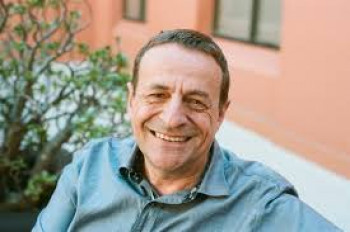 Special Mathematics Colloquium: On lines and particles Special Mathematics Colloquium: On lines and particlesCentre for Geometry, Analysis and Gravitation Join us for a Special Mathematics Colloquium delivered by Professor Bernd Sturmfels (Max Planck Institute for Mathematics in the Sciences, Leipzig). Title: On lines and particles Abstract: Momentum twistors in particle physics are lines in 3-space. We explain how this works and what it means for configurations of lines. Algebraic geometry provides a common language for line incidences, rigidity theory of graphs, and Feynman integrals for scattering amplitudes. |
June 2026 | |
| Mon 29 Jun - Fri 3 Jul 2026 |  Conference: Amplitudes 2026 Conference: Amplitudes 2026Centre for Theoretical Physics and Astronomy The Centre for Theoretical Physics and Astronomy at the School of Physical and Chemical Sciences is delighted to announce that Queen Mary University of London will host Amplitudes 2026, the international conference on scattering amplitudes, from 29 June to 3 July 2026. Amplitudes is an annual international conference series focused on scattering amplitudes in quantum field theory, string theory, and related areas of high-energy theoretical physics. The series has become since its inception in... |
| Wed 3 Jun 2026 14:00 - 15:30 | 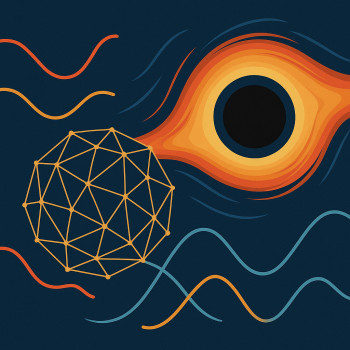 Centre colloquium - Claudia de Rham (Imperial College) Centre colloquium - Claudia de Rham (Imperial College)Centre for Theoretical Physics and Astronomy Colloquium title: Positivity in the sky Abstract: I will discuss the subtle interplay between the understanding of the laws of Nature as we observe them or test them in our "everyday experiments", and their underlying embedding within an ultimate high energy completion. I will highlight how the notion of causality enables us to connect some of the laws of physics at low energy with their behaviour at much higher energy, and clarify how the notion of causality is manifested with gravity, a... |
| Tue 2 Jun 2026 14:00 - 15:00 | Special Gravity Seminar: Jan Kożuszek Centre for Geometry, Analysis and Gravitation The premise of massive gravity is simple - adding a mass term to the graviton action. Yet it was only in 2010 that a permissible non-linear massive gravity Lagrangian, now known as the dRGT Lagrangian, was first written down. Since then, dRGT theory has generated considerable interest, but many fundamental questions about it remain unanswered. In this talk, I will briefly review the motivations and history of massive gravity, before moving on to discuss some of our recent progress on... |
April 2026 | |
| Wed 22 Apr 2026 14:00 - 15:30 | Centre colloquium: Ruth Gregory (King's College London) Centre for Theoretical Physics and Astronomy Title: Black Hole Spectroscopy from a Giant Quantum Vortex Abstract: Black-hole spectroscopy aims to infer physical properties of black holes by detecting the spectrum of quasi-normal modes (QNMs) they emit while settling towards equilibrium. Gravitational analogs aim to explore aspects of black hole systems by building laboratory experiments that share features of the black hole and its perturbations. A particularly interesting aspect of QNMs is the phenomenon of spectral instability: the... |
March 2026 | |
| Tue 31 Mar 2026 14:30 - 15:30 | GAnG Seminar: Julien Barrat (DESY) Centre for Geometry, Analysis and Gravitation NOTE: Pre talk intro for non experts starts at 2pm, with seminar starting at 2.30pm Speaker: Julien Barrat Title: Bootstrapping thermal CFTs Abstract: Thermal conformal field theories (CFTs) describe quantum systems at finite temperature, with applications ranging from laboratory systems to the holographic description of black holes. Although the thermal background breaks global conformal symmetry, key local data of the zero-temperature theory—such as the spectrum and operator... |
| Tue 24 Mar 2026 14:30 - 15:30 | GAnG Seminar: Jingeon An (U. Basel) Centre for Geometry, Analysis and Gravitation NOTE: Pre talk intro for non experts starts at 2pm, with seminar starting at 2.30pm Speaker: Jingeon An, University of Basel. Title: Minimal surfaces and Allen-Cahn equations. Abstract: Minimal surfaces and Allen–Cahn equations are central topics in geometric partial differential equations and geometric measure theory. We provide a brief overview of the research history, with particular focus on the interface regularity of Allen–Cahn equations. We then introduce a promising new... |
| Tue 17 Mar 2026 14:30 - 15:30 | GAnG Seminar: Javier Subils Centre for Geometry, Analysis and Gravitation NB: Pre seminar for non experts starts at 2pm, main talk 2.30pm Title: Inhomogeneous static black branes as critical bubbles in phase transitions Abstract: First-order phase transitions in the early Universe or in neutron stars can leave observable gravitational wave imprints. But predicting these signals requires precise understanding of bubble dynamics and, in particular, the nucleation of critical bubbles of the stable phase within a metastable plasma. Using holography, I present a... |
| Thu 12 Mar 2026 14:30 - 15:30 | GAnG Seminar: Michal P. Heller (Ghent University / Jagiellonian University) Centre for Geometry, Analysis and Gravitation Title: Quasinormal perspective on nonthermal fixed points Abstract: I will present nonthermal fixed points as paradigmatic far from equilibrium weak coupling phenomena characterised by a self-similar evolution in time. I will then discuss what strong coupling perspective based on the quasinormal modes insights into holographic thermalization and hydrodynamics can teach us about nonthermal fixed points. Based on 2307.07545, 2502.01622 and 2504.18754. |
| Tue 10 Mar 2026 14:30 - 15:30 | GAnG Seminar: Suvendu Giri (Uppsala) Centre for Geometry, Analysis and Gravitation NOTE: No pre talk this week, so seminar starting at 2.30pm Title: A "dictionary" to test GR with GW: from observations to theory Abstract: GR, while one of the most successful and well-tested theories to date, is expected to receive corrections at high energies—through higher-curvature terms, additional degrees of freedom, or both. Given the vast landscape of possible extensions, how can we test them in a systematic way? I will present a general framework for interpreting deviations... |
| Tue 3 Mar 2026 14:30 - 15:30 | GAnG Seminar: Allen Fang Centre for Geometry, Analysis and Gravitation NOTE: Pre talk intro for non experts starts at 2pm, with seminar starting at 2.30pm Speaker: Allen Fang Title: On the uniqueness of Kerr-de Sitter Abstract: The uniqueness of the Kerr-de Sitter family of black hole spacetimes as stationary solutions to the Einstein vacuum equations is a crucial ingredient to understanding the final states of positive cosmological constant universes, such as our physical universe. In the asymptotically flat case, Kerr was shown to be the unique... |
February 2026 | |
| Tue 24 Feb 2026 14:30 - 15:30 | GAnG Seminar: Marcelo Malagutti (UCL) Centre for Geometry, Analysis and Gravitation NOTE: Pre talk intro for non experts starts at 2pm, with seminar starting at 2.30pm Title: Scattering for the Steklov problem on an infinite wedge Abstract: The Steklov problem is the spectral problem for the Dirichlet-to-Neumann map (DtN) for the Laplacian–an operator which appears, for example, in the Calderon problem and the Sloshing problem. Motivated by the Steklov problem on higher dimensional, piecewise smooth Lipschitz domains, we consider the massive DtN map (i.e. the DtN map... |
| Tue 17 Feb 2026 14:30 - 15:30 | GAnG Seminar: Daniela Cors (Cambridge) Centre for Geometry, Analysis and Gravitation NOTE: Pre talk intro for non experts starts at 2pm, with seminar starting at 2.30pm Title: tbc. |
| Tue 10 Feb 2026 14:30 - 15:30 | GAnG Seminar: Prachi Sahjwani (Cardiff) Centre for Geometry, Analysis and Gravitation NOTE: Pre talk intro for non experts starts at 2pm, with seminar starting at 2.30pm Title: Stability of Quermassintegral and Minkowski-Type Inequalities in Curved Spaces Abstract: In this talk I will discuss stability results for geometric inequalities, with a focus on inequalities arising in curved spaces. After introducing the notion of stability through the classical isoperimetric inequality, I will present results from my PhD concerning the stability of quermassintegral... |
| Tue 3 Feb 2026 14:30 - 15:30 | POSTPONED - GAnG Seminar: Charlie Hoy (Portsmouth) Centre for Geometry, Analysis and Gravitation This event is postponed due to speaker illness, further details to follow. NOTE: Pre talk intro for non experts starts at 2pm, with seminar starting at 2.30pm Title: Bridging Simulation and Inference: Numerical relativity informed Bayesian analyses Abstract: Inferring the properties of colliding black holes from gravitational-wave observations is subject to systematic errors arising from modelling uncertainties. Although the accuracy of each model can be calculated through... |
January 2026 | |
| Tue 27 Jan 2026 14:30 - 15:30 | GAnG Seminar: Peter Cameron from Imperial College - Spacetime extensions in low regularity Centre for Geometry, Analysis and Gravitation NOTE: Pre talk intro for non experts starts at 2pm, with seminar starting at 2.30pm Title: Spacetime extensions in low regularity Abstract: It has been shown that the interior of a dynamical black hole (of the sort believed to occur in nature) contains a Cauchy horizon to which the spacetime metric extends continuously. However, Penrose's strong cosmic censorship conjecture states that in any such extension, the Christoffel symbols should fail to be locally square integrable (and... |
| Wed 21 Jan 2026 13:30 - 15:00 | 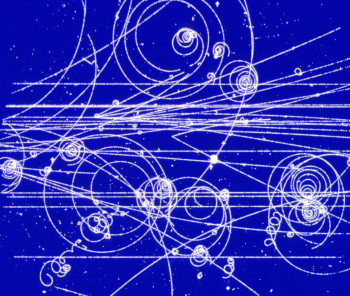 Seminar: Testing the laws of gravity and dark matter properties with cosmological observations - Dr Camille Bonvin Seminar: Testing the laws of gravity and dark matter properties with cosmological observations - Dr Camille BonvinCentre for Theoretical Physics and Astronomy In 1998, two groups of astrophysics discovered that the expansion of our Universe is accelerating, in direct contradiction with our expectations from General Relativity. This strange behaviour of our Universe could either be due to a new form of energy, called dark energy, or to a modification of the laws of gravity at large, cosmological scales. In this talk I will discuss how cosmological observations can be used to test the validity of General Relativity and the nature of dark matter. I will... |