

Events
The ‘scrap-or-build’ switch and the traffic sign: How tiny structural shifts in microtubules tune dynamics and molecular affinity
Centre for Molecular Cell Biology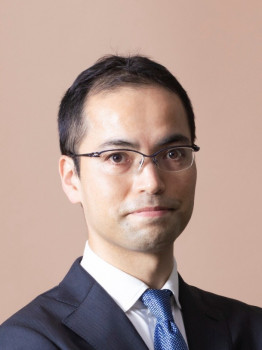
Date: 19 May 2026 Time: 13:00 - 14:00
Location: G.E. Fogg Building, Room 1.02, Mile End Campus
Dr Tomohiro Shima
Assistant Professor, University of Tokyo, Japan
Summary
Microtubules are among the principal cytoskeletal components that maintain the shape and architecture of eukaryotic cells. Their dynamic growth and shrinkage are exquisitely regulated across space and time, driving essential cellular processes such as cell division, migration, and morphological changes during differentiation. Furthermore, microtubules serve as tracks for motor proteins, enabling the targeted transport of materials to specific locations within the cell. Yet, far from being passive structures, even minute local structural shifts within their lattice can act both as a 'traffic sign' for motor proteins and a 'scrap-or-build' switch that determines whether the filament continues to grow or begins to disassemble. In this talk, I will discuss how these local structural cues translate into large-scale effects on microtubule dynamics and how cells exploit this dual mechanism to organise their internal architecture.
Bio
Dr Shima is a biophysicist with a long-term interest in cytoskeleton and molecular motors. He has been educated at the University of Tokyo, where he has obtained a PhD in 2009, working in particular on the mechanism of cytoplasmic dynein (Shima et al., PNAS 2006). He continued this work as a postdoctoral researcher at RIKEN. In his independent research as an Assistant Professor at the School of Biological Sciences at the University of Tokyo, Dr Shima has established the mechanism that controls kinesin activity and cytoskeletal organisation via kinesin-mediated expansion of microtubule lattice (Shima et al., J Cell Biol 2018).
| Contact: | Vladimir Volkov |
Updated by: Christoph Engl