


News
July 2026
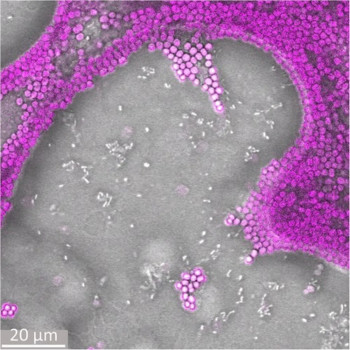
Bacteria form 'herds' to survive predators, offering fresh insight into Earth's carbon cycle
Centre for Biodiversity and Sustainability
15 July 2026CBS member Professor Conrad Mullineaux and his team have discovered that tiny photosynthetic bacteria band together into protective "herds" when attacked by predators – a survival strategy that could also influence how carbon is stored in the world's waters. Here's the full story. [more]
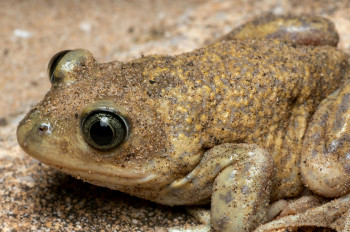
Climate change is forcing amphibians to change their diet – but they can only adapt so far
Faculty of Science and Engineering
14 July 2026New research involving Queen Mary University of London reveals that amphibians can change what they eat to cope with rising temperatures, but that this natural survival strategy has limits. Published in Scientific Reports, the international study found that tadpoles actively alter their diet as temperatures increase, consuming more plant material ... [more]
June 2026
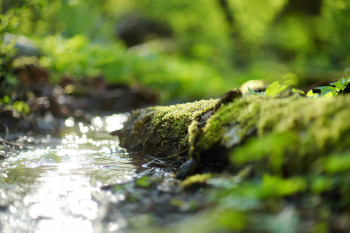
Freshwater methane emissions maximised by global warming
Faculty of Science and Engineering
5 June 2026It is not just cows that emit the powerful greenhouse gas methane – microbial emissions from the natural world will inevitably increase as our planet continues to warm. A new study led by Professor Mark Trimmer of Queen Mary University of London, published in the journal Nature Climate Change, explains how ... [more]
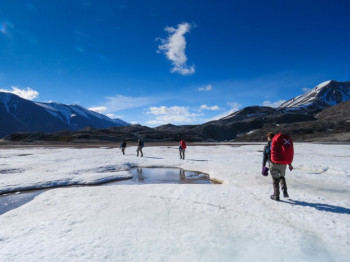
Behind the research: Freshwater methane emissions maximised by global warming
Faculty of Science and Engineering
5 June 2026This "behind-the-research" blog by Mark Trimmer, Professor of Biogeochemistry, takes readers beyond the published findings to reveal the motivations, challenges, and human stories that shaped the study. Say methane and most people think of cows, yet nearly half of all methane is produced by microbes in freshwaters. While we know ... [more]
May 2026
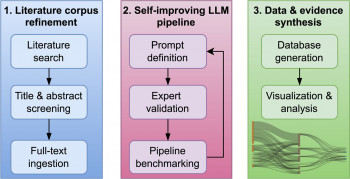
New AI system could help scientists keep up with the explosion of research papers
Faculty of Science and Engineering
28 May 2026Queen Mary University researchers have developed a new AI-powered framework, MetaBeeAI, designed to help scientists review and analyse vast amounts of literature faster, more transparently, and with greater human oversight. Dr. Rachel Parkinson, who is the leading researcher on this project, states that MetaBeeAI could potentially transform how evidence is ... [more]
April 2026
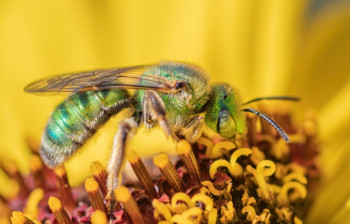
'Chameleon' bees change colour with the weather
Faculty of Science and Engineering
22 April 2026Study reveals some bees shift colour depending on humidity – and may explain why the same species can look different across climates. Some bees really do change colour with the weather, according to new research that shows humidity can temporarily alter the shimmering hues of certain species. In a study published ... [more]
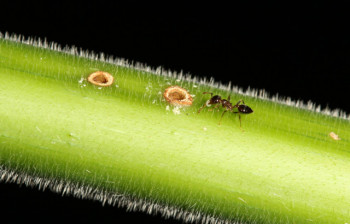
Wasps move in on ant–plant partnership, disrupting a 10‑million‑year mutualism
Faculty of Science and Engineering
15 April 2026New research reveals unexpected intruders in a classic tropical tree–ant relationship, raising concerns for forest recovery in human‑altered landscapes. An international team of scientists from Queen Mary University of London, the Royal Botanic Gardens, Kew, the Biology Centre of the Czech Academy of Sciences and other institutions has ... [more]
February 2026
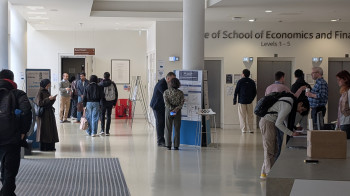
Centre for Biodiversity and Sustainability presents at QMUL Climate Action Week
Centre for Biodiversity and Sustainability
26 February 2026In this year's university-wide climate action week, the Centre for Biodiversity and Sustainability (CBS) represented the Faculty of Science and Engineering through the exhibition From London to the White Continent: Cooperation, Science and Climate Action in the Graduate Centre Foyer. The exhibition featured posters of CBS science highlights, various items ... [more]
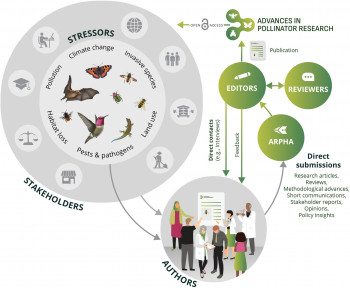
New journal Advances in Pollinator Research launched by Centre for Biodiversity and Sustainability member Rachel Parkinson
Centre for Biodiversity and Sustainability
19 February 2026Pollinators comprise a taxonomically diverse group – including insects, mammals, birds, and more rarely, amphibians, reptiles, and even gastropods – that support wild plant communities and underpin global food production systems. Today, a new journal has been lauched dedicated to the study of this essential ecosystem compoment: Advances in Pollinator Research. CBS ... [more]

"This engine is grinding to a halt" - Nature slowing down as climate change gains pace
Centre for Biodiversity and Sustainability
9 February 2026The Centre for Biodiversity and Sustainability recently uncovered a global ecological paradox. While it is widely expected that accelerating climate change will speed up nature's pace—forcing species to replace each other more rapidly—we found the exact opposite. By analyzing a century of data across marine, freshwater, and terrestrial ... [more]