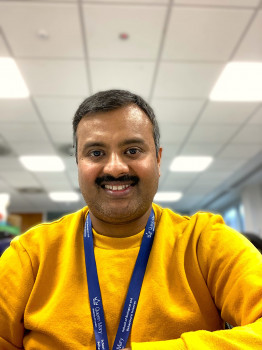
Dr Vishwanath Bhat Kumble
Postdoctoral Research Associate
School of Biological and Behavioural Sciences
Queen Mary University of London


Research
EBV associated Cancers, Drug Discovery, Protein Crystallography, Protein biophysical assays, cell-based assays
Interests
I joined as a postdoctoral research associate in Prof Michelle West’s lab in the Blizard Institute. I specialise in the molecular mechanisms of virus-associated tumours, with over a decade of experience in viral oncology. My research focuses on the structure and functional analysis of the Epstein-Barr virus (EBV) encoded nuclear antigen-1 (EBNA1) variants and their role in B-cell transformation. Utilising a combination of protein crystallography, biophysical assays (PTS, FP, EMSA), and cell-based functional assays, I contribute to structure-based drug discovery efforts aimed at developing novel therapeutic interventions.
I obtained my PhD from the Medical University of Graz, Austria (2019), where I investigated the role of sphingolipids in Merkel cell polyoma virus-positive and negative Merkel Cell Carcinoma. My research has been published in the Journal of Investigative Dermatology and Experimental Dermatology, with one publication featured on the journal's cover page. Beyond the bench, I have experience in laboratory management and mentoring PhD and master’s students.
Research Group
News
April 2026
9 April 2026
On 23-27 April, CMAI researchers will participate at the Fourteenth International Conference on Learning Representations (ICLR 2026), taking place in Rio de Janeiro, Brazil. ICLR is the premier gathering of professionals dedicated to the advancement of the branch of artificial intelligence called representation learning, but generally referred to as deep learning.
... [more]

March 2026
31 March 2026
Raymond Hu has been awarded a New Investigator research grant worth £646,000 by EPSRC. The project is called "DymSUM - Distributed Dynamic Software Updates using Multiparty Session Types" and investigates a theory-based approach to how distributed software can evolve while running. The project involves collaboration with industrial partners at Monzo Bank ... [more]

30 March 2026
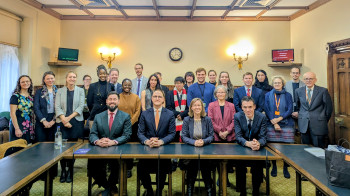
CMAI PhD student Alexander Williams recently completed a 3 month research fellowship at the Parliamentary Office of Science and Technology (POST) following a successful application to the UKRI Policy Internship Scheme.
POST is an impartial research and knowledge exchange service based in the UK Parliament. They work to ensure cutting-edge research ... [more]
21 March 2026
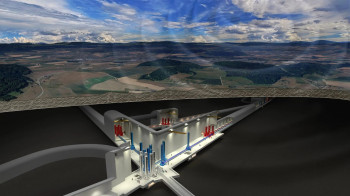
QMUL has joined the Einstein Telescope (ET) collaboration with a new ET Research Unit supported by School of Mathematical Sciences and the School of Physical and Chemical Sciences. ET is a European project, driven by an international collaboration, for an innovative gravitational-wave observatory. It will be part of a third-generation ... [more]
20 March 2026
Søren Riis and Marc Roth are both joint winners of the SafeAI Benchmark Competition "Humanity's Last Exam".
The linked paper "A benchmark of expert-level academic questions to assess AI capabilities", co-authored by FACT researchers Søren Riis and Marc Roth, has been published in Nature. This paper accompanies the ... [more]

19 March 2026
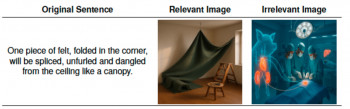
A new paper, "Predicting Sentence Acceptability Judgments in Multimodal Contexts", by a team including Shalom Lappin from the Centre for Fundamental AI and Computational Theory, explores the effect of images on the ability of Large Language Models (LLMs) to predict the ratings humans give to sentences over how acceptable they ... [more]
17 March 2026
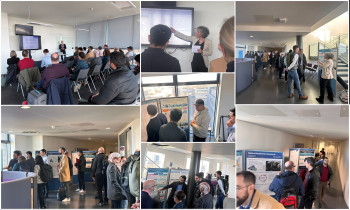
The Centre for Networks, Communications, and Systems successfully hosted its first Industry Exhibition, marking a significant milestone for the centre. The event welcomed over 30 attendees, and we had the pleasure of showcasing our research to industry partners and guests.
It was a proud moment to see the quality of work ... [more]
13 March 2026
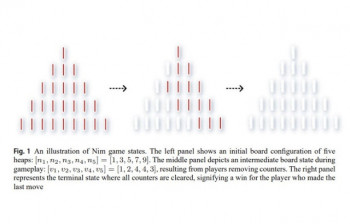
New research published in Machine Learning shows pattern learning is not enough to train AI to tackle games – and abstract representations or hybrid approaches may help.
See full story at: https://www.qmul.ac.uk/media/news/2026/science-and-engineering/se/ais-game-playing-still-has-flaws-research-shows.html
11 March 2026
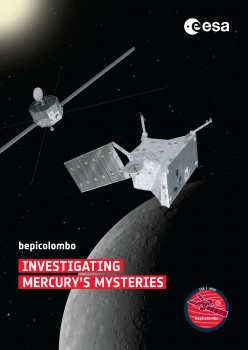
Dr H. Hietala, Senior Lecturer in Space Plasma Physics at QMUL, has been appointed a Guest Investigator on the BepiColombo mission. BepiColombo is a joint mission of the European Space Agency (ESA) and the Japan Aerospace Exploration Agency (JAXA) to the planet Mercury consisting of two spacecraft. Launched on 20 October 2018, ... [more]
11 March 2026
A team of researchers including Oliver Jenkinson, Professor of Mathematics in the Centre for Complex Systems, has recently published a breakthrough study in the highly renowned journal Inventiones Mathematicae. The paper, entitled Typical periodic optimization for dynamical systems: symbolic dynamics by Wen Huang, Oliver Jenkinson, Leiye Xu and Yiwei Zhang, ... [more]

10 March 2026
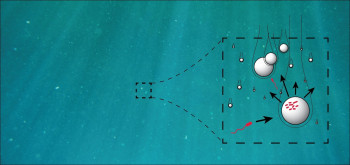
How can bacteria that forage on organic particles survive in vast ocean regions where such particles are extremely sparse? A new study by researchers from Queen Mary University of London and ETH Zurich shows that variability at the level of individual bacteria plays a central role. Using a probabilistic population ... [more]
4 March 2026
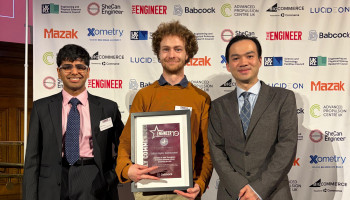
Queen Mary University of London (QMUL) has been recognised at The Engineer Collaborate to Innovate Awards, which celebrate projects where close collaboration between universities, industry and the NHS delivers real-world impact. Three QMUL-involved projects were in the finalist, with Prostate-AI receiving a Highly Commended award. This recognition highlights Queen Mary's ... [more]
1 March 2026
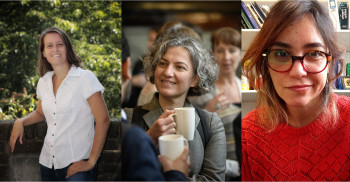
To mark International Women's Day, we spotlight three women leading research in Science and Engineering. Meet Silvia Liverani (Head of the Centre for Probability, Statistics and Data Science) Mona Jaber (Head of the Centre for Networks, Communications, and Systems) and Ana Sobrido (Head of the Centre for Centre for Sustainable ... [more]
February 2026
27 February 2026
We are delighted to congratulate Dr. Maged Elkashlan on being recognised by the IEEE Vehicular Technology Society as a Top Performing Editor for his outstanding contributions as an Associate Editor of IEEE Transactions on Vehicular Technology in 2025. This distinction reflects his exceptional dedication, professionalism, and commitment to maintaining the highest ... [more]

26 February 2026
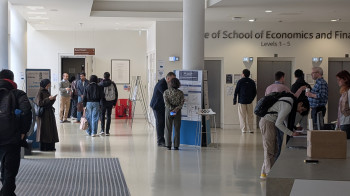
In this year's university-wide climate action week, the Centre for Biodiversity and Sustainability (CBS) represented the Faculty of Science and Engineering through the exhibition From London to the White Continent: Cooperation, Science and Climate Action in the Graduate Centre Foyer.
The exhibition featured posters of CBS science highlights, various items ... [more]
25 February 2026
Two senior academics from Queen Mary University of London — Professor Akram Alomainy from the School of Electronic Engineering and Computer Science (EECS) and Professor Jan Mol from the School of Physical and Chemical Sciences — have been selected as Fellows in the highly competitive Expert Exchange Programme led by the Department ... [more]
19 February 2026
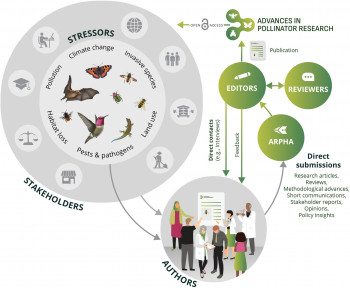
Pollinators comprise a taxonomically diverse group – including insects, mammals, birds, and more rarely, amphibians, reptiles, and even gastropods – that support wild plant communities and underpin global food production systems. Today, a new journal has been lauched dedicated to the study of this essential ecosystem compoment: Advances in Pollinator Research.
CBS ... [more]
18 February 2026
A new UK led roadmap has set out an ambitious vision for how wireless technology could be transformed over the coming decade. The paper, The 2026 Roadmap on Wireless and Microwave Metasurfaces, led by Professor Akram Alomainy of Queen Mary University of London, brings together leading researchers from universities, industry and ... [more]

18 February 2026
I am a lecturer in Medical Technology and a member of the Centre for Bioengineering at Queen Mary University of London. My research focuses on biomechanics and organ-on-a-chip technologies, particularly how mechanical forces influence musculoskeletal health and disease.
My work sits at the intersection of biomechanics, mechanobiology and advanced in ... [more]
17 February 2026
The Centre for Advanced Robotics has just launched a new initiative: the Robot Cafe'.
Open to all Queen Mary Robotics students as well as members of the Electronics Society, the Robot Café provides an opportunity to deepen technical knowledge, experiment with tools and technologies, and connect with like-minded peers in ... [more]