

Events
Flexible Printed Electronics for Robotics and Interactive Systems - Prof. Ravinder Dahiya, Northeastern University (USA)
Centre for Electronics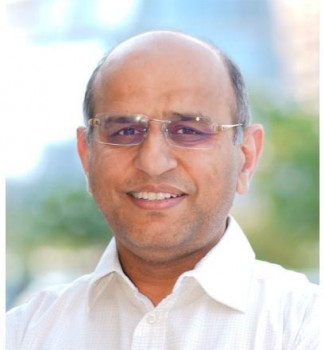
Date: 17 March 2026 Time: 11:00 - 12:00 
Location: Queens Building QB201+ Online
Synopsis
The miniaturization of electronics has enabled rapid advancements in computing and communication over the past several decades. However, as we look toward the next frontier of technological innovation, it is increasingly evident that miniaturization alone is not enough. A new class of emerging applications—including wearable systems, soft robotics, biomedical implants, interactive devices, and flexible displays—demands electronic systems that not only offer high-performance but also are mechanically flexible, conformable, and compatible with dynamic or soft substrates. In parallel, there is growing concern about the ecological footprint of traditional micro- and nanofabrication processes. These challenges call for a rethinking of how we design and manufacture electronic systems. This talk will present recent advances in resource-efficient approaches to building high-performance electronics on unconventional substrates. Focusing on printed electronics, the talk will discuss materials, device architectures, and scalable fabrication methods that enable flexible and stretchable electronic systems. As a case study, the talk will showcase developments in electronic skin (e-skin) for robotics—highlighting the integration of printed sensors, high-mobility electronic materials, and flexible circuits onto soft, deformable surfaces. These technologies offer a glimpse into the future of semiconductor manufacturing—one that is not only scalable and adaptive to emerging needs but also environmentally responsible.
Biography
Ravinder Dahiya is a Professor of Electrical and Computer Engineering at Northeastern University, Boston, where he leads the Bendable Electronics and Sustainable Technologies (BEST) group. His multidisciplinary research spans flexible and printed electronics, electronic skin (e-skin), and their applications in robotics, wearables, and interactive systems. He has authored over 550 publications, including books, patents, and journal articles, and has led or contributed to numerous international research projects.
Prof. Dahiya serves on the IEEE Board of Directors and was President of the IEEE Sensors Council (2022–2023). He is the Editor-in-Chief of npj Flexible Electronics (Nature Portfolio) and founded IEEE Journal on Flexible Electronics, which is launched in 2022 the founding EiC. He also founded the IEEE International Conference on Flexible, Printed Sensors and Systems (FLEPS). He has chaired several major conferences such as IEEE SENSORS.
Prof. Dahiya serves on the IEEE Board of Directors and was President of the IEEE Sensors Council (2022–2023). He is the Editor-in-Chief of npj Flexible Electronics (Nature Portfolio). He also served as the Founding Editor-in-Chief of the IEEE Journal on Flexible Electronics, which he founded and led from its inception and launch in 2021. In addition, he founded the IEEE
International Conference on Flexible, Printed Sensors and Systems (FLEPS) and has chaired several major international conferences, including IEEE SENSORS.
His honours and awards include EPSRC, Marie Curie, and Monbusho Fellowships, the IEEE Sensors Council Technical Achievement Award, Elsevier's Young Investigator Award, and 13 best paper awards. He is a Fellow of the IEEE and the Royal Society of Edinburgh.
- Web: www.rsdahiya.com
- Group Website: https://best.sites.northeastern.edu
- TEDx talk: 'Animating the Inanimate World'
| Contact: | James Kelly |
| Email: | j.kelly@qmul.ac.uk |
Updated by: Akram Alomainy