

Events
Chemistry Seminar – Dr Valentina Erastova (University of Edinburgh)
Centre for Chemical Research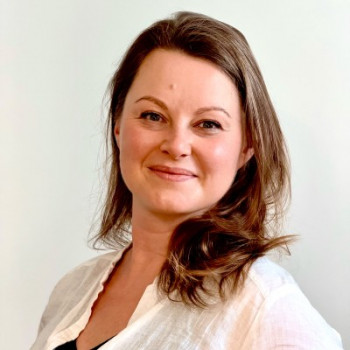
Dr Valentina Erastova
Date: 11 November 2026 Time: 14:00 - 15:00 
Location: G.O. Jones LT
Title: "LET'S TALK ABOUT DIRT: from environmental sorptive materials of Earth to biosignatures in Space"
Abstract:
My group's work combines insights from environmental science, prebiotic chemistry and astrobiology with molecular simulations. We develop computational protocols and software that let us use accurate molecular models of environmental materials in high-throughput molecular dynamics simulations.
For instance, our realistic models of biochars are built from curated experimental data. They show how feedstock and production conditions shape the surface area and functionality of biochars – the key properties for selective adsorption – which supports applications in CO2 capture, water purification and soil nutrient retention.
ClayCode, our recently developed software for generating realistic clay structures, makes sure that the variety of natural clays is not lost when their structure is approximated for modelling. This allows us to study interactions between clay minerals and molecular species in diverse environments, including early Earth and Mars, and to ask: 'Where should the next Mars rover land?' and 'I found a peptide on a rocky planet – is it a sign of extraterrestrial life?' Our simulations show that layered minerals can selectively adsorb amino acids and facilitate peptide formation – a key step for abiogenesis – with mechanism, polymer composition and yield dictated by mineral structure and environmental factors. Such mineral-formed peptides may mimic biosignatures in extraterrestrial samples, but statistical analysis lets us distinguish them from true biological remnants, which can inform the interpretation of space mission data and the choice of rover sampling sites.
The goal of this talk is to showcase my group's contributions to environmental challenges, from net-zero technologies and water security on Earth to the search for life beyond it, while fostering interdisciplinary discussion to spark new ideas and collaborations.
Dr Erastova's academic career:
Valentina is a Senior Lecturer in the School of Chemistry at the University of Edinburgh. Her group develops molecular models, simulation workflows and computational tools for natural and environmental materials, with a focus on interfacial processes in chemically heterogeneous systems – biochars, clay minerals, confined fluids and organic–mineral interfaces.
She completed her MChem at Durham University, including an Erasmus research project at the Universidade de Santiago de Compostela under the supervision of Prof. Jesus Rodrigues-Otero, where she first applied computational chemistry to reaction mechanisms, and returned to Durham for a PhD with Prof. Mark Wilson on diesel fuel crystallisation and cold-flow additives. Postdoctoral work with Prof. Chris Greenwell moved her into geochemistry and materials modelling, building atomistic descriptions of layered minerals, oxide surfaces and organic–mineral interactions. This was fiollowed by a brief period working with Prof. Paul Hodgkinson pairing simulation with solid-state NMR.
She moved to Edinburgh in 2019 as a Chancellor's Fellow in Materials and Manufacture and established an independent group at the interface of computational chemistry, environmental materials and energy science. Its outputs include realistic molecular models of biochars, built from curated experimental descriptors, and ClayCode, an open tool for constructing clay mineral models for molecular dynamics, alongside Assemble! and DynDen. These are applied to CO2 capture, pollutant adsorption, shale and reservoir nanofluidics, subsurface hydrogen storage, and the preservation of biosignatures on Mars.
Valentina leads the Energy, Environmental and Sustainable Chemistry research theme at EaStCHEM and the Climate and Sustainability theme in the School of Chemistry, and served on the editorial board of Philosophical Transactions of the Royal Society A between 2019 and 2025. She teaches and designs computational chemistry training from first-year undergraduate level through to researchers moving into modelling from experimental backgrounds. In 2020 she founded the Scientist Next Door outreach programme, for which she received the University's Principal's Medal for Exceptional Contribution in 2021.
| Arranged by: | Centre for Chemical Research |
| Contact: | Federico Hernandez |
| Email: | f.hernandez@qmul.ac.uk |
Updated by: Federico Javier Hernández