Prof Shalom Lappin
Professor of Natural Language Processing
School of Electronic Engineering and Computer Science
Queen Mary University of London
Research
Natural Language Processing, Machine Learning, Deep Learning, Artificial Intelligence, Computational Models of Human Cognition
Interests
My work focusses on the application of deep learning models to problems in computational linguistics, natural language processing, and related areas in AI.
Publications of specific relevance to the Centre for Fundamentals of AI and Computational Theory

Publications of specific relevance to the Centre for Fundamentals of AI and Computational Theory
2026
 LLM and Human Modes of Representation
Lappin S
Journal of Applied Logics,
College Publications vol. 13 (6), 936-955.
02-11-2026LLM and Human Modes of RepresentationLappin S
In
Arxiv 19-06-2026 Neuro-symbolic NLP: taxonomy, assessment, and directionsChatzikyriakidis S Lappin S
Frontiers in Artificial Intelligence,
Frontiers vol. 9
22-05-2026 Predicting Sentence Acceptability Judgments in Multimodal ContextsJang H Ilinykh N Loaiciga S Lau JH Lappin S
Proceedings of the 15th Workshop on Cognitive Modeling and Computational Linguistics., 25-34.
01-05-2026 Humans vs Vision-Language Models: A Unified Measure of Narrative CoherenceIlinykh N Jang H Lappin S Sayeed A Loáiciga S
In
Arxiv 26-03-2026 Predicting Sentence Acceptability Judgments in Multimodal ContextsJang H Ilinykh N Loáiciga S Lau JH Lappin S
In
Arxiv 24-02-2026
Research Group
PhD Students
- Roksana Goworek
Mutlilingual Polysemy Disambiguation and Other Language Variation
News
March 2026
26 March 2026
Shalom Lappin is part of a team centred at the Centre for Linguistic Theory and Studies in Probability (CLASP) at the University of Gothenburg that have published new work on a comparison of Humans vs Vision-Language Models
It proposes a unified way to measure narrative coherence in writing about about ... [more]
19 March 2026
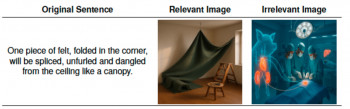
A new paper, "Predicting Sentence Acceptability Judgments in Multimodal Contexts", by a team including Shalom Lappin from the Centre for Fundamental AI and Computational Theory, explores the effect of images on the ability of Large Language Models (LLMs) to predict the ratings humans give to sentences over how acceptable they ... [more]