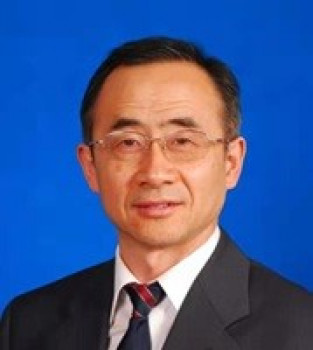
Prof Xiaodong Chen
BEng, PhD, FIEEE and FIET
Professor of Microwave Engineering
School of Electronic Engineering and Computer Science
Queen Mary University of London
Research
Antennas and Arrays for Wireless Communications and navigation, Magnetrons and gyrotrons, Space-based solar power wireless transmission system, AI diagnosis and RF/EM treatment of mental disorders and tumours
Interests
Professor Chen’s research spans microwave and millimetre-wave source devices and antennas, the biological effects of electromagnetic waves, and medical applications. Over the past 30 years, he has led nearly 30 major research projects, published more than 270 journal papers and 600 conference papers, and authored four academic monographs. He has delivered keynote and invited talks internationally and has received Best Paper Awards at leading conferences. He has chaired more than 10 international conferences in antennas, bioelectromagnetics, and RF/millimetre-wave technologies, including founding the IEEE United Conference on Millimetre-Wave and THz Technologies (UCMMT) in 2008. He currently serves on the European Microwave Association (EuMA) Group 4 and represents Region 4 of the European Association on Antennas and Propagation (EurAAP). He also served on the Executive Committee for the EU Galileo Satellite Navigation System Forward-Looking Study (2005–2007).
Professor Chen is distinguished by his ability to translate complex theory into industrial impact, including:
• Magnetron innovation: Pioneered the use of 3D Particle-in-Cell (3D PIC) simulation for microwave magnetron design, significantly improving R&D efficiency and supporting the UK’s leadership in medical and industrial mi-crowave systems.
• Millimetre-wave & CW high-power sources: Drove innovation in rising-sun long-anode magnetrons for millimetre-wave applications and in continu-ous-wave (CW) high-power sources for fusion plasma heating and particle accelerators.
• Antenna innovation: Developed the first compact planar printed ultrawide-band (UWB) antenna, now used in healthcare body-area networks, IoT, and tracking systems.
• Satellite navigation & energy: Developed multiband circularly polarised an-tennas deployed in satellite navigation and communications; more recently, led UK government-funded Space-Based Solar Power (SBSP) research on digital beamforming power transmitters and integrated rectennas.
Grants

Grants of specific relevance to the Centre for Electronics
(EPITA) Enabling Partnerships for Innovation & Accelerator Technology Advancement - Xiaodong ChenXiaodong Chen and
Jin Zhang£79,191
EU Commission - Horizon Europe01-05-2026 - 30-04-2030 Quench Detection for high-temperature superconducting (HTS) Magnets through Time-Domain Reflectometry using Directional CouplerJin Zhang and
Xiaodong Chen£206,648
UK Atomic Energy Authority01-05-2025 - 31-07-2026
Quench Detection Mechanism for HTS Magnets Through Time-Domain ReflectometryJin Zhang and
Xiaodong Chen£30,000
UK Atomic Energy Authority01-01-2024 - 31-12-2024 Numerical models of 2D PSL interaction region and multistage depressed collector at 700GHzXiaodong Chen£19,950
UKAEA UK Atomic Energy Authority14-02-2023 - 31-05-2023 Huawei PhD studentship with Prof X ChenXiaodong Chen£120,000
Huawei Technologies01-10-2020 - 30-09-2023 Sheet electron beam vacuum electronic devices for the generation of high power THz radiationXiaodong Chen and
Yasir Alfadhl£266,274
EPSRC Engineering and Physical Sciences Research Council05-03-2019 - 04-03-2021 An ultrawide band sparse antenna arrayXiaodong Chen£45,000
Generic Commercial01-10-2018 - 30-09-2019 K.C. Wong International FellowshipXiaodong Chen£66,000
Royal Society01-10-2016 - 30-09-2018
Research Group
PhD Students
- Awais Khan
Antennas - Toshan Wickramanayake
Physics Modelling of Lithium-Ion Batteries For Battery Management Systems: Enhanced Solver Efficiency, Faster Parameterisation and Accurate Ageing Characterisation - Yisong Yang
Antennas: Study on Microwave Induced Autophagy in Alzheimer’S Disease Treatment
News
October 2025
23 October 2025
A new international study co-authored by Professor Xiaodong Chen from the Centre for Electronics at Queen Mary University of London has demonstrated how brainwave analysis powered by artificial intelligence could transform the early diagnosis of cognitive disorders. The paper, published in Expert Systems with Applications (Elsevier, 2025), presents a pioneering EEG-based ... [more]
July 2025
2 July 2025
On a sun-drenched afternoon of 2nd July 2025, members of the Centre for Electronics at the School of Electronic Engineering and Computer Science (EECS), Queen Mary University of London, gathered for a vibrant Summer Social in the Graduate Centre Common Room (7th Floor). With sweeping panoramic views of London as the ... [more]