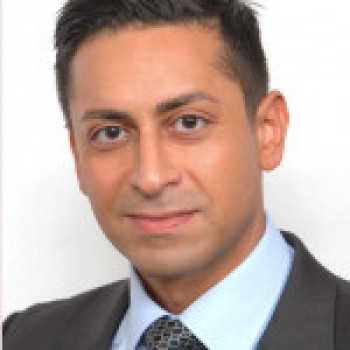
Dr Alan Rios Fukelman
Postdoctoral Research Assistant
School of Mathematical Sciences
Queen Mary University of London
| Funder: | Medical Research Council |
| Project: | UKRI FLF: The materials approach to quantum spacetime
|

Research
Accelerating spacetimes, Solvable theories, Quantum Field Theory, Holography
Interests
I am a researcher in Theoretical Physics from Argentina. After completing my Licenciatura in
Buenos Aires, I pursued a PhD at the Institute of Cosmos Sciences, University of Barcelona, under the
supervision of Bartomeu Fiol, focusing on exact results in superconformal field theories through matrix
model techniques. I then joined King’s College London as a Postdoctoral Research Associate, where I worked
on quantum field theory in accelerating spacetimes and helped establish the first solvable QFT in de
Sitter spacetime. I am now part of Prof. Tarek Anous’ group at Queen Mary University of London, developing
models to advance our understanding of de Sitter spacetime.
News
March 2026
4 March 2026
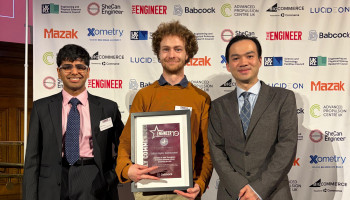
Queen Mary University of London (QMUL) has been recognised at The Engineer Collaborate to Innovate Awards, which celebrate projects where close collaboration between universities, industry and the NHS delivers real-world impact. Three QMUL-involved projects were in the finalist, with Prostate-AI receiving a Highly Commended award. This recognition highlights Queen Mary's ... [more]
1 March 2026
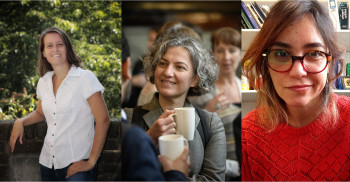
To mark International Women's Day, we spotlight three women leading research in Science and Engineering. Meet Silvia Liverani (Head of the Centre for Probability, Statistics and Data Science) Mona Jaber (Head of the Centre for Networks, Communications, and Systems) and Ana Sobrido (Head of the Centre for Centre for Sustainable ... [more]
February 2026
27 February 2026
We are delighted to congratulate Dr. Maged Elkashlan on being recognised by the IEEE Vehicular Technology Society as a Top Performing Editor for his outstanding contributions as an Associate Editor of IEEE Transactions on Vehicular Technology in 2025. This distinction reflects his exceptional dedication, professionalism, and commitment to maintaining the highest ... [more]
26 February 2026
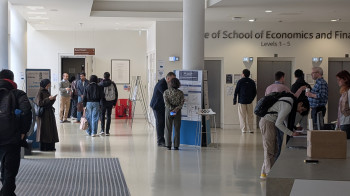
In this year's university-wide climate action week, the Centre for Biodiversity and Sustainability (CBS) represented the Faculty of Science and Engineering through the exhibition From London to the White Continent: Cooperation, Science and Climate Action in the Graduate Centre Foyer.
The exhibition featured posters of CBS science highlights, various items ... [more]
25 February 2026
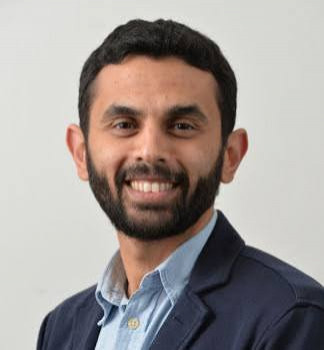
Two senior academics from Queen Mary University of London — Professor Akram Alomainy from the School of Electronic Engineering and Computer Science (EECS) and Professor Jan Mol from the School of Physical and Chemical Sciences — have been selected as Fellows in the highly competitive Expert Exchange Programme led by the Department ... [more]
19 February 2026
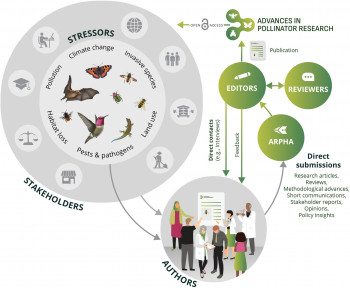
Pollinators comprise a taxonomically diverse group – including insects, mammals, birds, and more rarely, amphibians, reptiles, and even gastropods – that support wild plant communities and underpin global food production systems. Today, a new journal has been lauched dedicated to the study of this essential ecosystem compoment: Advances in Pollinator Research.
CBS ... [more]
18 February 2026
A new UK led roadmap has set out an ambitious vision for how wireless technology could be transformed over the coming decade. The paper, The 2026 Roadmap on Wireless and Microwave Metasurfaces, led by Professor Akram Alomainy of Queen Mary University of London, brings together leading researchers from universities, industry and ... [more]

18 February 2026
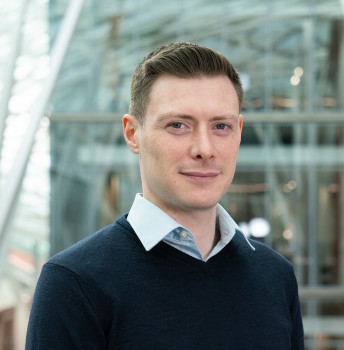
I am a lecturer in Medical Technology and a member of the Centre for Bioengineering at Queen Mary University of London. My research focuses on biomechanics and organ-on-a-chip technologies, particularly how mechanical forces influence musculoskeletal health and disease.
My work sits at the intersection of biomechanics, mechanobiology and advanced in ... [more]
17 February 2026
The Centre for Advanced Robotics has just launched a new initiative: the Robot Cafe'.
Open to all Queen Mary Robotics students as well as members of the Electronics Society, the Robot Café provides an opportunity to deepen technical knowledge, experiment with tools and technologies, and connect with like-minded peers in ... [more]
13 February 2026
A new study published in Science Advances presents a major step forward in the development of quantum algorithms that are more accurate, more efficient, and better suited to the capabilities of early quantum computers.
The research from Queen Mary University of London focuses on improving the way quantum computers calculate ... [more]

12 February 2026
Queen Mary University of London is celebrating the success of its spinout company Dragonfly AI, which has secured £5 million in new investment to fuel its next phase of international expansion and product innovation.
Dragonfly AI, co-founded by Dr Hamit Soyel, Chief Scientist and inventor of the underlying technology, has rapidly ... [more]
11 February 2026
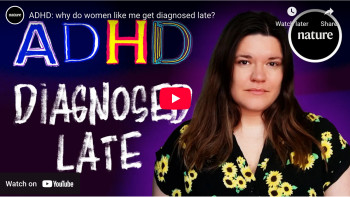
Emily Bates was diagnosed with Attention-Deficit Hyperactivity Disorder (ADHD) at the age of 34. In a recent Nature Outlook programme, Ms Bates reflects on how her symptoms were easy to miss earlier in life - from appearing like a "model student" at school to coping by leaving work until the very ... [more]
10 February 2026
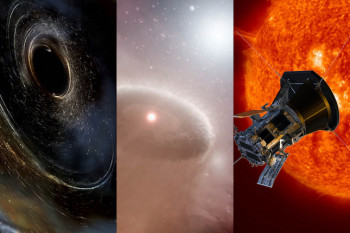
Researchers in the Astronomy Unit (AU), in the School of Physical and Chemical Sciences at Queen Mary, have been awarded a total of £1.5 million from the Science and Technology Facilities Council (STFC) to fund 3 research projects over the next 3 years. The research grants cover Queen Mary's internationally leading research in ... [more]
9 February 2026
The Centre for Biodiversity and Sustainability recently uncovered a global ecological paradox.
While it is widely expected that accelerating climate change will speed up nature's pace—forcing species to replace each other more rapidly—we found the exact opposite. By analyzing a century of data across marine, freshwater, and terrestrial ... [more]

7 February 2026
The Centre for Theoretical Physics and Astronomy at the School of Physical and Chemical Sciences is delighted to announce that Queen Mary University of London will host Amplitudes 2026, the international conference on scattering amplitudes, from 29 June to 3 July 2026.
Amplitudes is an annual international conference series focused on scattering amplitudes in ... [more]
5 February 2026
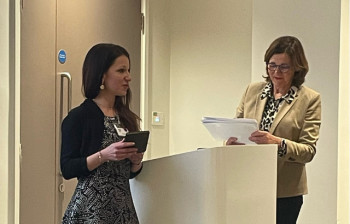
Many congratultons to Claudia Garetto who has been awarded the 2026 Suffrage Science Award for Maths and Computing, a prestigious peer-to-peer award recognising outstanding women in science for both research excellence and their commitment to inspiring others. The Suffrage Science Awards are unique in their format and ethos: each recipient nominates ... [more]
January 2026
26 January 2026
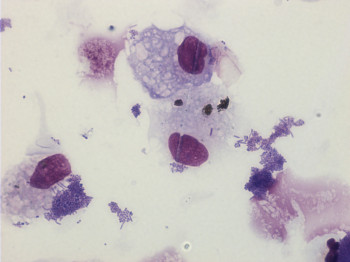
A group of researchers from QMUL's Centre for Complex Systems (CCS, School of Mathematical Sciences) and the Centre for Genomics and Child Health (CGCH, Blizard Institute) have received £25,000 from UKRI Research England (internally administered by QMUL) for an interdisciplinary project on the dynamics of air pollution through the International Science ... [more]
24 January 2026
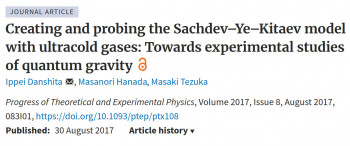
Congratulations to Masanori Hanada: his paper "Creating and probing the Sachdev–Ye–Kitaev model with ultracold gases: Towards experimental studies of quantum gravity", published in the Journal "Progress of Theoretical and Experimental Physics" won an Outstanding Paper Award of the Physical Society of Japan. Only five papers have been selected ... [more]
23 January 2026
I am a Senior Lecturer in Psychology in the Centre for Brain and Behaviour, where I study how humans perceive voices. Human voices don't just tell us what someone is saying, voices also convey a lot of information about a speaker's intentions, feelings, and attitudes. Crucially, voices also help us ... [more]
14 January 2026
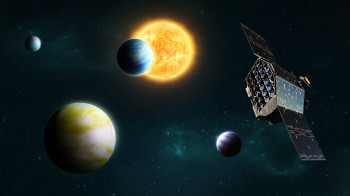
Queen Mary's Astronomy Unit (AU) has just hosted the third PLATO Theory Meeting, bringing more than 70 researchers to Mile End to discuss how the community can make the most of ESA's forthcoming exoplanet mission, PLATO.
The meeting, held from 12–14 January 2026, was organised by the AU's Exoplanets and Planet Formation group ... [more]