

News
'Project Psyche' aims to sequence the genomes of all 11,665 European butterfly and moth species
Centre for Evolutionary and Functional Genomics30 November 2025


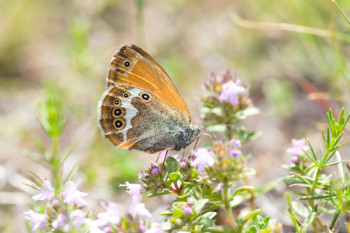
A team from Queen Mary University of London - School of Biological and Behavioural Sciences has been taking part in a global project that aims to sequence the genomes of all 11,665 European butterfly and moth species.
'Project Psyche' involves researchers, taxonomists, policymakers and citizen scientists from all over the world, and has already sequenced 1,000 genomes. The dataset, freely available to all, will help scientists investigate evolution, climate change resilience and food security issues.
Queen Mary PhD students Marcus H. and Jenny Stewart, from the lab of Dr Vicencio Oostra are participating in the Project Psyche consortium, representing early career researchers and working on media and communications respectively. Meanwhile, PhD student Yuqian (Arina) Huang and Post-Doc Dr Madeleine Carruthers have also contributed to sample collection for the project in Cambridgeshire.
Marcus Hicks said: "We are incredibly excited to be involved in the scientific discoveries that are made possible with the resources created by Project Psyche, and hope that it inspires similar initiatives across other continents."
He also noted that diversity has been a key strength of the project. "Project Psyche has stood out to me as an international consortium committed to listening to and incorporating ideas from a truly diverse range of people," he went on. "With women in key leadership roles, members from across Europe, and individuals at various stages of their scientific careers, the project fosters inclusivity at every level. Its rapid success and growth are a testament to how an accepting and inclusive working environment can drive ground-breaking scientific progress."
Butterflies and moths, collectively known as Lepidoptera, are major players in ecosystems all around the world. They also act as biodiversity and climate change indicators as they react quickly to environmental changes or habitat degradation. This means that a decline in butterfly numbers can serve as an early warning for wider losses in wildlife. Comparing the genomes of species that have disappeared, are declining, or are stable or growing can help us understand how environmental changes and human activities affect insect diversity and distribution.
The project published a new white paper in Trends in Ecology & Evolution called 'Project Psyche: reference genomes for all Lepidoptera in Europe'. It details how the genomes of all butterflies and moths can aid nature conservation, transform our understanding of evolution and uncover new ways of tackling agricultural pests.
People: Vicencio OOSTRA
Updated by: Chema Martín-Durán