Dr João Vilas Boas
Postdoctoral Research Assistant
School of Mathematical Sciences
Queen Mary University of London
| Funder: | Engineering and Physical Sciences Research Council |
| Project: | CFT and Gravity: Heavy States and Black Holes |
Research
Quantum Field Theory, Holography, Conformal Field Theory, Bootstrap
Interests
My research focuses on holography and the AdS/CFT correspondence to understand the
dynamics of strongly coupled quantum field theories and their gravitational duals. I am particularly
interested in conformal field theory (CFT) techniques, including the analytic conformal bootstrap, as a
non-perturbative approach to constrain and solve CFTs. My work aims to find new insights from both the
bulk and boundary perspectives to test and refine predictions from holography.
Research Group
News
October 2026
22 October 2026
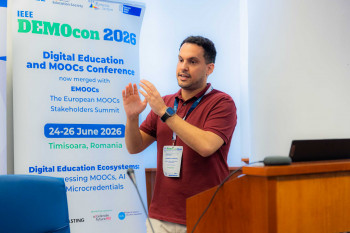
Two research papers led by Dr Dimitris Chiotis, Lecturer in Mathematics at Queen Mary University of London's Hainan transnational education (TNE) partnership, have been published by the Institute of Electrical and Electronics Engineers (IEEE), highlighting both individual scholarship and collaborative educational innovation in undergraduate mathematics teaching.
Drawing on teaching practice ... [more]
22 October 2026
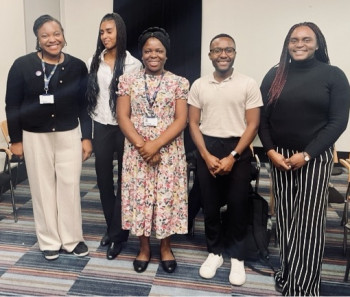
As part of the School of Engineering and Materials Science (SEMS) celebration of Black History Month 2026, an event highlighting underrepresented voices in science and engineering was held on 21 October 2026. The event was extremely well attended, attracting a large audience both in person and online, demonstrating the strong interest within our ... [more]
20 October 2026
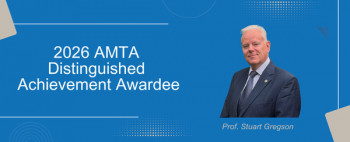
Queen Mary honorary visiting professor is recognised for a career advancing antenna measurement theory, practice and education.
Professor Stuart Gregson, Honorary Visiting Professor in Queen Mary University of London's School of Electronic Engineering and Computer Science, has been named the Antenna Measurement Techniques Association's (AMTA) 2026 Distinguished Achievement Awardee.
The award ... [more]
20 October 2026
We welcome three new members of the Centre this term.
Mathieu Delehaye is a PhD student in Mathematical Sciences at the School of Mathematical Sciences, Queen Mary University of London. He is interested in market microstructure and high-frequency trading, in particular how the composition of the trader population affects trading ... [more]
19 October 2026
This academic year, the Faculty of Science and Engineering's Foundation Programme has welcomed more than 950 students, creating pathways into degree programmes spanning mathematics, engineering, physics, chemistry, biology and computer science.
Supporting such a large and diverse cohort is a significant undertaking. All foundation students complete the SEF042 Science and Engineering ... [more]
12 October 2026
The IEEE Student Branch at Queen Mary University of London recently hosted a successful workshop exploring career opportunities in automation, bringing together students and industry experts to discuss how emerging technologies are reshaping industries and creating new professional pathways for future engineers.
The event featured presentations from leading professionals across ... [more]
12 October 2026
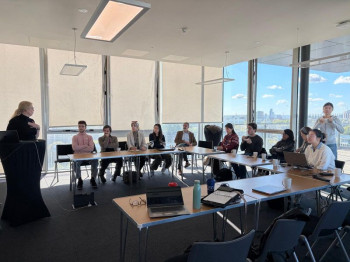
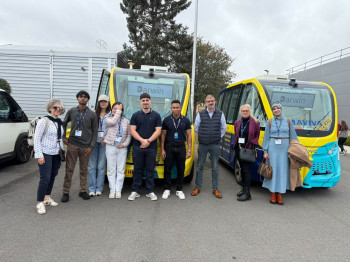
Students from the IEEE Student Branch at Queen Mary University of London recently visited the Harwell Science and Innovation Campus for an industry-focused tour hosted by Prof David Owens and the Virgin Media O2 team.
The visit provided students with first-hand experience of emerging technologies shaping the future of automation, ... [more]
2 October 2026
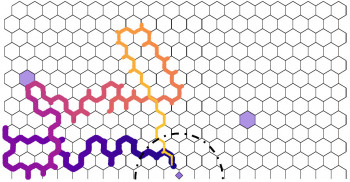
Together with colleagues from the UK and India, Rainer Klages, Reader in Applied Mathematics in the Centre for Complex Systems, has successfully applied to organise a workshop at the École de Physique des Houches in the French Alps. The event is funded by the Wilhelm and Else Heraeus Foundation, a ... [more]
1 October 2026
Researchers from Queen Mary University of London finds that directly activating a key cellular energy sensor extended lifespan in yeast, worms and flies, offering new clues about the biology of ageing.
Scientists have taken an important step towards understanding how the biological processes of ageing might one day be targeted ... [more]
September 2026
30 September 2026
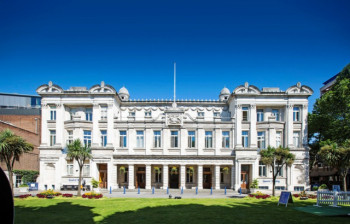
Queen Mary University of London has launched a new transnational education partnership with the University of International Business and Economics (UIBE) in Beijing, bringing two new undergraduate programmes to students in China.
Embedded within the School of Mathematical Sciences, the partnership marks an important step in the Faculty of Science ... [more]
24 September 2026
Professor Dino Distefano, Professor of Software Verification at Queen Mary University of London, has been elected as a Fellow of the Royal Academy of Engineering.
Professor Distefano is among 75 new Fellows elected by the Academy this year, recognising engineers and engineering researchers whose work has made an important contribution to ... [more]
24 September 2026
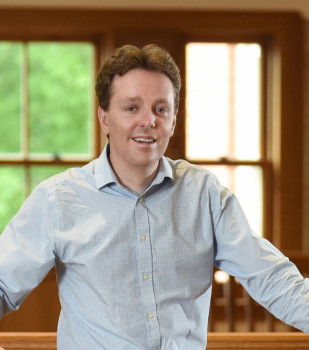
We are pleased to be hosting Peter McNamara for a year-long visit as part of his sabbatical from Bucknell University.
We asked him to tell us a bit about himself and his work.
Tell us about your academic journey so far.
Following undergrad at Trinity College Dublin, I did my ... [more]
22 September 2026
Dr Samuel Pironon, Lecturer in Conservation Biology in Queen Mary University of London's Faculty of Science and Engineering, has been awarded a highly competitive UK Research and Innovation (UKRI) Future Leaders Fellowship worth £1.4 million over four years, with the potential for further extension.
The Future Leaders Fellowships programme supports talented ... [more]
22 September 2026
Professor Joshua Reiss, Professor of Audio Engineering in the School of Electronic Engineering and Computer Science has been awarded a prestigious Royal Academy of Engineering Research Chair.
Professor Reiss is one of five leading engineers selected for a Royal Academy of Engineering Research Chair or Senior Research Fellowship. Funded by ... [more]
21 September 2026
Queen Mary researchers help reveal an unusual exoplanet orbit that could provide new clues about the formation and evolution of planetary systems.
Astronomers have discovered the first known planet orbiting a small, cool star on a retrograde orbit, travelling around its star in the opposite direction to the star's rotation.
... [more]
21 September 2026
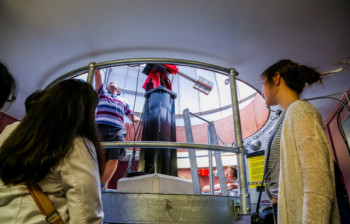
We're delighted to share that Professor Jan Mol has been awarded a Royal Academy of Engineering Research Chair in scaling graphene quantum electronics. The award recognises Jan's pioneering research and will support his work at Queen Mary to develop scalable graphene-based hardware for the next generation of quantum computers.
Quantum ... [more]
18 September 2026
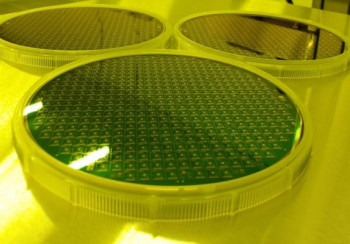
Shalom Lappin argues in an article published in Quillette that the digital revolution is not remaking the world in the same way as the industrial one did but is working in a fundamentally different way...
The digital revolution has rapidly led to destabilising technological change in all sorts of ways ... [more]
17 September 2026
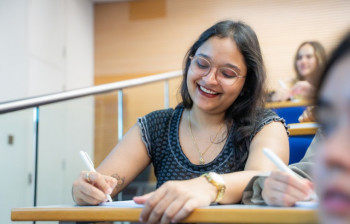
Research from Queen Mary University of London explores how combining learner autonomy with student-led enquiry can create a more engaging and collaborative experience for international students learning academic English.
What happens when students are given more say in what they learn, how they learn it and which questions they want ... [more]
16 September 2026
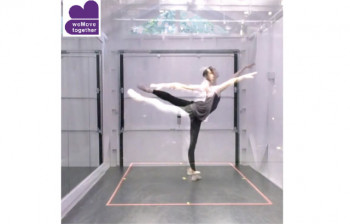
From ballet studio to behavioural science: researchers uncover the best view for learning choreography.
New research from Queen Mary University of London finds that less experienced dancers learn choreography more effectively when they follow a teacher's movements from the same perspective, with implications far beyond dance.
A groundbreaking study led ... [more]
15 September 2026
New analysis of almost 300,000 kilometres of Roman roads reveals a complex network shaped by people, places and landscapes, in which Rome was less central than is often assumed.
A multidisciplinary team of researchers from Aarhus University in Denmark, Queen Mary University of London, and other European institutions analysed a dataset ... [more]