Dr Priyadarshi Paul
Postdoctoral Research Assistant
School of Mathematical Sciences
Queen Mary University of London
| Funder: | Medical Research Council |
| Project: | UKRI FLF: The materials approach to quantum spacetime
|
Research
Quantum field theory, de Sitter spacetime, Quantum gravity and holography, Black holes
Interests
Hi, I am a researcher in theoretical physics. I grew up in West Bengal, India. I completed my PhD in physics at the International Centre for Theoretical Sciences (ICTS-TIFR), Bengaluru. I worked on quantum gravity in de Sitter spacetime under the supervision of Prof. Suvrat Raju.
After my PhD, I recently joined Queen Mary University of London (School of Mathematical Sciences) as a postdoctoral research assistant. Here, I am part of the research group led by Prof. Tarek Anous.
My primary research focus is to understand quantum theory of de Sitter spacetime. Currently I am working on different solvable models in two-dimensional de Sitter spacetime. Solutions to these models can have potential non-perturbative implications for cosmological correlations. I am also interested in studying the boundary limit of flat spacetime.
To learn more about my research & activities, please visit my iNSPIREHEP profile or my website.
Research Group
News
October 2026
2 October 2026
Together with colleagues from the UK and India, Rainer Klages, Reader in Applied Mathematics in the Centre for Complex Systems, has successfully applied to organise a workshop at the École de Physique des Houches in the French Alps. The event is funded by the Wilhelm and Else Heraeus Foundation, a ... [more]
1 October 2026
Researchers from Queen Mary University of London finds that directly activating a key cellular energy sensor extended lifespan in yeast, worms and flies, offering new clues about the biology of ageing.
Scientists have taken an important step towards understanding how the biological processes of ageing might one day be targeted ... [more]

September 2026
30 September 2026
Queen Mary University of London has launched a new transnational education partnership with the University of International Business and Economics (UIBE) in Beijing, bringing two new undergraduate programmes to students in China.
Embedded within the School of Mathematical Sciences, the partnership marks an important step in the Faculty of Science ... [more]

24 September 2026
Professor Dino Distefano, Professor of Software Verification at Queen Mary University of London, has been elected as a Fellow of the Royal Academy of Engineering.
Professor Distefano is among 75 new Fellows elected by the Academy this year, recognising engineers and engineering researchers whose work has made an important contribution to ... [more]
24 September 2026
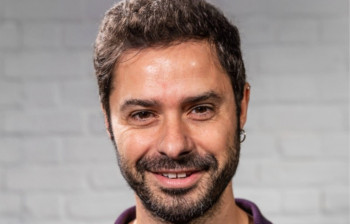
We are pleased to be hosting Peter McNamara for a year-long visit as part of his sabbatical from Bucknell University.
We asked him to tell us a bit about himself and his work.
Tell us about your academic journey so far.
Following undergrad at Trinity College Dublin, I did my ... [more]
22 September 2026
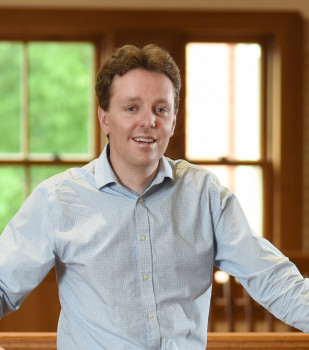
Dr Samuel Pironon, Lecturer in Conservation Biology in Queen Mary University of London's Faculty of Science and Engineering, has been awarded a highly competitive UK Research and Innovation (UKRI) Future Leaders Fellowship worth £1.4 million over four years, with the potential for further extension.
The Future Leaders Fellowships programme supports talented ... [more]
22 September 2026
Professor Joshua Reiss, Professor of Audio Engineering in the School of Electronic Engineering and Computer Science has been awarded a prestigious Royal Academy of Engineering Research Chair.
Professor Reiss is one of five leading engineers selected for a Royal Academy of Engineering Research Chair or Senior Research Fellowship. Funded by ... [more]

21 September 2026
Queen Mary researchers help reveal an unusual exoplanet orbit that could provide new clues about the formation and evolution of planetary systems.
Astronomers have discovered the first known planet orbiting a small, cool star on a retrograde orbit, travelling around its star in the opposite direction to the star's rotation.
... [more]
21 September 2026
We're delighted to share that Professor Jan Mol has been awarded a Royal Academy of Engineering Research Chair in scaling graphene quantum electronics. The award recognises Jan's pioneering research and will support his work at Queen Mary to develop scalable graphene-based hardware for the next generation of quantum computers.
Quantum ... [more]
18 September 2026
Shalom Lappin argues in an article published in Quillette that the digital revolution is not remaking the world in the same way as the industrial one did but is working in a fundamentally different way...
The digital revolution has rapidly led to destabilising technological change in all sorts of ways ... [more]
17 September 2026
Research from Queen Mary University of London explores how combining learner autonomy with student-led enquiry can create a more engaging and collaborative experience for international students learning academic English.
What happens when students are given more say in what they learn, how they learn it and which questions they want ... [more]

16 September 2026
From ballet studio to behavioural science: researchers uncover the best view for learning choreography.
New research from Queen Mary University of London finds that less experienced dancers learn choreography more effectively when they follow a teacher's movements from the same perspective, with implications far beyond dance.
A groundbreaking study led ... [more]
15 September 2026
New analysis of almost 300,000 kilometres of Roman roads reveals a complex network shaped by people, places and landscapes, in which Rome was less central than is often assumed.
A multidisciplinary team of researchers from Aarhus University in Denmark, Queen Mary University of London, and other European institutions analysed a dataset ... [more]

15 September 2026
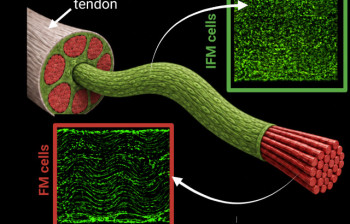
Study reveals how specialised tendon cells respond to changes in their physical environment, opening new possibilities for future research into tendon health and repair.
Researchers at Queen Mary University of London are now closer to understanding tendinopathy, a common condition that can cause persistent pain and impaired movement in people ... [more]
8 September 2026
A recent article by Anna Maltsev, Reader in Applied Probability in the Centre for Complex Systems, and colleagues at the National Institute on Aging in Baltimore (Maryland, USA) was featured on the cover of Circulation Research. Circulation Research is a prestigious medical journal published by the American Heart Association, covering ... [more]

3 September 2026
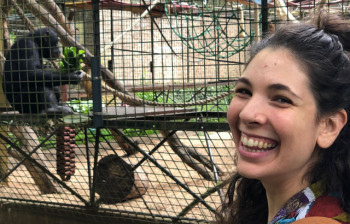
A study by Queen Mary University of London finds that young chimpanzees develop dialect, providing a new way of understanding ontogenetic evolution.
A study has found that young chimpanzees develop distinct population-specific vocal patterns as they mature (ontogeny), challenging the long-held assumption that their calls are inflexible and determined solely ... [more]
August 2026
26 August 2026
Queen Mary University of London researchers have discovered a new way to make wireless communication devices more adaptable, paving the way for smarter antennas, more efficient networks, and next-generation communication technologies.
Researchers at Queen Mary University of London have shown that making extremely small changes to the structure of a ... [more]

26 August 2026
Queen Mary University of London researchers develop a quantum computational spectroscopy approach that could open new ways of studying complex quantum systems.
Scientists could have a new way to explore the hidden behaviour of matter, thanks to research involving Queen Mary University of London that uses a quantum computer to ... [more]

22 August 2026
Dr Charalampos Saitis, Assistant Professor of digital music processing at Queen Mary University of London's Centre for Multimodal AI, member of the Centre for Digital Music and Director of the Communication Acoustics Lab, is a co-investigator on a major new international research partnership that sets out to broaden how timbre ... [more]

20 August 2026
Ian Morris, Reader in Mathematics in the Centre for Complex Systems, and Çağrı Sert from the University of Warwick, have found a remarkable generalisation of a landmark result about self-affine fractals to their projections or "shadows". Their study, entitled Projections of self-affine fractals, was published in the highly prestigious ... [more]