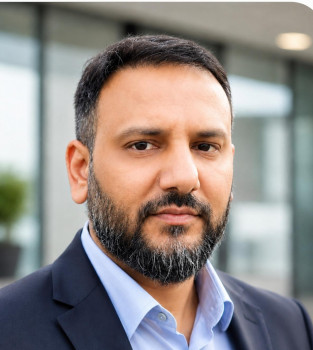
Dr Ali Awais
Silicon Detector Technician
School of Physical and Chemical Sciences
Queen Mary University of London

Research
Semiconductor Tracker ATLAS Experiment, Silicon Sensors, Thermal Management, Infra-red imaging
Interests
I am a PhD-qualified researcher working as a Silicon Detector Technician. My work contributes to the ATLAS Experiment at CERN, supporting the Phase-II upgrade of the Inner Tracker (ITk). My research focuses on the testing, qualification, and thermal characterisation of silicon strip detector components. I perform silicon strip sensor qualification using visual inspection, IV, CV, and strip measurements in a cleanroom environment, support the production of qualified ITk strip pre-modules for UK assembly sites, and carry out the thermal qualification of ITk barrel staves using a custom infrared imaging system.
I also perform thermal finite element (FEA) simulations in ANSYS to investigate the thermal performance and operating margins of ITk barrel staves with detector modules, contributing to the optimisation and long-term reliability of the upgraded ATLAS tracking detector.
Research Group
News
September 2026
8 September 2026
A recent article by Anna Maltsev, Reader in Applied Probability in the Centre for Complex Systems, and colleagues at the National Institute on Aging in Baltimore (Maryland, USA) was featured on the cover of Circulation Research. Circulation Research is a prestigious medical journal published by the American Heart Association, covering ... [more]

August 2026
22 August 2026
Dr Charalampos Saitis, Assistant Professor of digital music processing at Queen Mary University of London's Centre for Multimodal AI, member of the Centre for Digital Music and Director of the Communication Acoustics Lab, is a co-investigator on a major new international research partnership that sets out to broaden how timbre ... [more]

20 August 2026
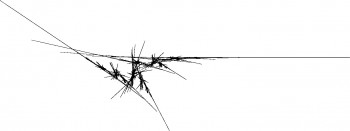
Ian Morris, Reader in Mathematics in the Centre for Complex Systems, and Çağrı Sert from the University of Warwick, have found a remarkable generalisation of a landmark result about self-affine fractals to their projections or "shadows". Their study, entitled Projections of self-affine fractals, was published in the highly prestigious ... [more]
17 August 2026
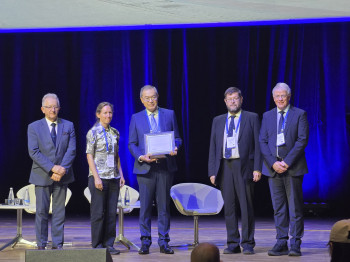
Queen Mary University of London is proud to announce that Professor Yang Hao, Professor of Antennas and Electromagnetics in the School of Electronic Engineering and Computer Science, has been awarded the International Union of Radio Science (URSI) Booker Gold Medal—one of the organisation's highest honours.
Professor Hao receives the ... [more]
13 August 2026
An artificial intelligence project developed at Queen Mary University of London to help academics provide faster, more detailed feedback to students has been selected for a national spinout programme.
EduGrade AI, an educator-controlled assessment and feedback platform, has been selected for the Innovate UK ICURe Exploit Business and Spinout Readiness ... [more]

12 August 2026
Researchers at Queen Mary University of London, Imperial College and University of Oxford have helped develop a new architecture that could overcome one of the biggest obstacles preventing photonic quantum computers from reaching their full potential.
Published in Nature Photonics, the international study introduces Clavina – a modular, programmable photonic quantum ... [more]
11 August 2026
Queen Mary University of London researchers develop intelligent communications system that dramatically improves data transmission when bandwidth is limited.
Anyone who has struggled through a poor phone call knows the frustration of missing half a conversation. Now, researchers at Queen Mary University of London, led by Paul Anthony Haigh, have ... [more]
7 August 2026
Queen Mary researchers develop a lightweight, electrically adjustable lens inspired by the flexibility of the human eye.
The ability to change focus instantly is something most people take for granted. Every day, our eyes effortlessly switch between reading a book, recognising a face across the room or watching a bird ... [more]
6 August 2026
Special Issue: Call for Papers
Please find the the deatils about this Speciall Issue on AI-native Smart Radio Environments for 6G within the IEEE Network Journal with Dr. Maged Elkashlan as Guest Editor. More details can be found at the following link:
https://www.comsoc.org/publications/magazines/ieee-network/cfp/... [more]

6 August 2026
Special Issue: Call for Papers
Please find the the deatils about this Speciall Issue on AI-native Smart Radio Environments for 6G published by IEEE Internet of Things Journal with Dr. Maged Elkashlan as Guest Editor.
Important Dates:
Submission Deadline: December 31, 2026
First Review Due: February 15, 2027
Revision Due: March 15, 2027
Second Reviews Due/... [more]
6 August 2026
Special Issue: Call for Papers
Please find the the deatils about this Speciall Issue on Signal Processing for Fluid Antenna Systems: Foundations, Algorithms, and Emerging Applications published by IEEE Signal Processing Magazine with Dr. Maged Elkashlan as Guest Editor.
Important Dates:
1 September 2026 --- White Paper Due
1 October 2026 --- Invitation Notification
15 ... [more]
6 August 2026
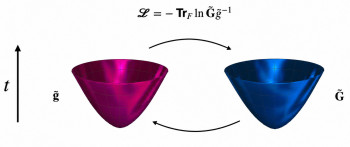
Professor Ginestra Bianconi, Professor of Applied Mathematics in the Centre for Complex Systems, has been awarded a three-year, £323,000 grant from the John Templeton Foundation to develop Gravity from Entropy. This new theoretical framework seeks to uncover the microscopic nature of gravity and bridge the long-standing divide between general relativity and ... [more]
3 August 2026
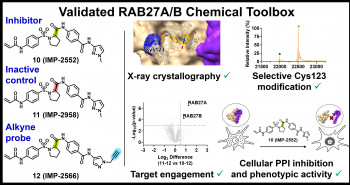
Dr Elena De Vita from our Centre for Molecular and Cell Biology has led a study that was recently published in the Journal of the American Chemical Society. The work developed a new class of chemical compounds that can target RAB27 proteins - challenging targets that have previously been considered ... [more]
July 2026
28 July 2026
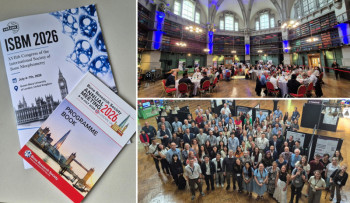
Queen Mary University of London has reinforced its position as a leading international centre for musculoskeletal research by successfully hosting two major scientific conferences back-to-back on its Mile End campus this July.
The XVIIth Congress of the International Society of Bone Morphometry (ISBM 2026) from 4th - 7th July was followed ... [more]
27 July 2026
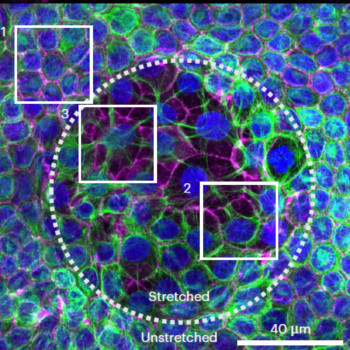
Researchers at Queen Mary University of London and IBEC have discovered that epithelial tissues adapt to prolonged stretching by slowly reorganising their keratin cytoskeleton into large multicellular networks.
Using advanced live imaging, engineered tissue models and computational simulations, the team found that this process eventually pushes the cell nucleus out ... [more]
23 July 2026
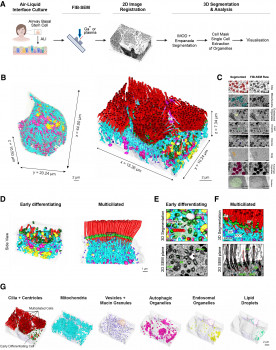
Researchers at Queen Mary University of London and University of Cambridge in collaboration with colleagues at HHMI Janelia and NIH, have created some of the most detailed three-dimensional maps ever generated of human airway cells, revealing how the specialised cells that protect our lungs are built and organised.
The study, ... [more]
17 July 2026
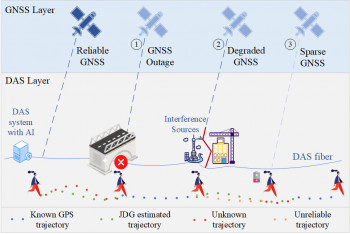
Researchers have unveiled a new location‑tracking system that could dramatically improve navigation in places where GPS signals routinely fail, such as tunnels, dense cities and underground transport routes.
In a new study presented at the IEEE International Conference on Communications in Glasgow, researchers from Queen Mary University of London ... [more]
16 July 2026
Researchers at the Centre for Molecular Cell Biology have discovered that tiny photosynthetic bacteria band together into protective "herds" when attacked by predators – a survival strategy that could also influence how carbon is stored in the world's waters.
Professor Conrad Mullineaux from the Centre for Molecular Cell Biology, said:
"It ... [more]
15 July 2026
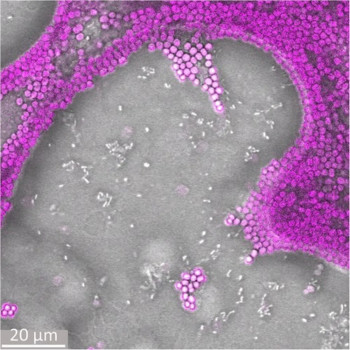
CBS member Professor Conrad Mullineaux and his team have discovered that tiny photosynthetic bacteria band together into protective "herds" when attacked by predators – a survival strategy that could also influence how carbon is stored in the world's waters. Here's the full story.
15 July 2026
Congratulations to Dr Hasan Shaheed, Dr Mohamed Adhnan Thaha, and Dr Julius Bernth on being granted their European patent for CE-Move, an innovative locomotion system for capsule endoscopes.
Today's capsule endoscopes are little more than pills, swallowed like any other pill. Once swallowed, the only movement comes from gravity and ... [more]