

Low Energy Electronics
The rapid uptake of Artificial Intelligence will put huge pressure on our electricity grids due to expansion of power-hungry data centres. Data centre electricity demand is predicted to grow six-fold over the next 10 years, and will consume >10% of grid electricity in the UK. London is home to one of the highest concentrations of data centres in Europe. Reducing the power consumption of AI computing is therefore vital for meeting net-zero goals. Work at QMUL on “2-dimensional materials” aims to cut the power consumption of computing by 90% or more.
Graphene, a single layer of carbon atoms arranged in a hexagonal lattice, and other 2D materials exhibit exceptional electronic performance, making them an exciting alternative to silicon, particularly as conventional semiconductor scaling approaches its physical limits. Paragraf, a spin-out company from Prof. Colin Humphreys, was the first company to bring graphene-based electronics to the marketplace, with potential impacts across computing, communications, healthcare, and quantum computing.” The success of Paragraf was a new way to manufacture large-area, transfer-free, contamination-free graphene suitable for the semiconductor industry. Our research has already focused on integrating graphene into magnetic sensors, LEDs and memory devices, but a large new project will develop the technology for the next generation of low-power computing.
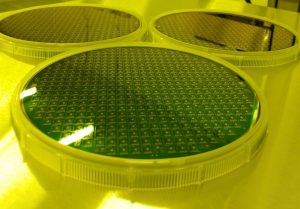
Graphene-based microelectronics
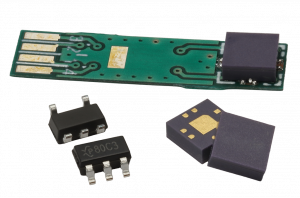
Hall senors made using graphene
- More information: Centre for Sustainable Engineering
- Contact: Prof. Oliver Fenwick, Prof Sir Colin Humphreys