

Seaweed-based Materials to Reduce Plastic Pollution
The impact, behaviour and fate of plastic polymers in the environment is the subject of global concern and debate. It is estimated that 12 billion tonnes of microplastics will be discarded globally by 2050. Additional particles derived through degradation of larger material and the resulting impacts on biota are predicted to cost in excess of $13 billion each year.
Traditional plastics, such as low-density polyethene, used extensively for plastic bags, are non-degradable, and this has led to an accelerated search for viable alternatives.
Professor Marina Resmini has collaborated with Notpla, a company that is transforming the packaging industry by developing biodegradable, seaweed-based packaging solutions. Seaweed grows fast, does not need fresh water or fertiliser and absorbs carbon dioxide as it grows. Furthermore, seaweed-based products are compostable and can even be eaten. This compares with other bioplastics, which still rely on industrial composting. Notpla’s products are having real-world impact, being used at large events and by major food delivery platforms.

Seaweed-based food packaging
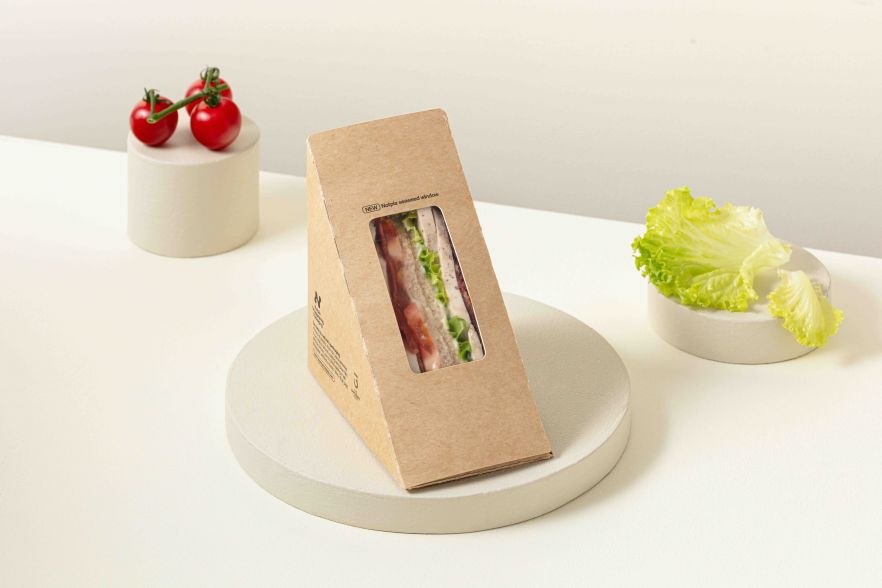
Seaweed-based food packaging
- More information: Centre for Chemical Research.
- Contact: Prof Marina Resmini