Dr Aman Nikhil
Postdoctoral Research Associate
School of Engineering and Materials Science
Queen Mary University of London
| Funder: | National Institute for Health Research |
| Project: | Precision Musculoskeletal Care |


Research
In vitro models, Bioengineering, Organ-on-chip, Implantable devices, 3D Printing, Hydrogel systems
Interests
My research interests focus on translational biomaterials, tissue engineering, and advanced in vitro models for musculoskeletal and regenerative medicine applications. I have experience developing biomaterial-supported 3D cell culture systems, osteochondral and scaffold-based models, and evaluating cellular and tissue responses. My broader work spans implantable scaffolds, cryogels, ceramic and polymeric biomaterials, exosome-based approaches. At QMUL, I am particularly interested in developing clinically relevant musculoskeletal organ-chip and 3D tissue models that can improve understanding of tissue repair, disease mechanisms and translational therapeutic testing.
Research Group
News
September 2026
24 September 2026
We are pleased to be hosting Peter McNamara for a year-long visit as part of his sabbatical from Bucknell University.
We asked him to tell us a bit about himself and his work.
Tell us about your academic journey so far.
Following undergrad at Trinity College Dublin, I did my ... [more]

22 September 2026
Professor Joshua Reiss, Professor of Audio Engineering in the School of Electronic Engineering and Computer Science has been awarded a prestigious Royal Academy of Engineering Research Chair.
Professor Reiss is one of five leading engineers selected for a Royal Academy of Engineering Research Chair or Senior Research Fellowship. Funded by ... [more]

21 September 2026
We're delighted to share that Professor Jan Mol has been awarded a Royal Academy of Engineering Research Chair in scaling graphene quantum electronics. The award recognises Jan's pioneering research and will support his work at Queen Mary to develop scalable graphene-based hardware for the next generation of quantum computers.
Quantum ... [more]
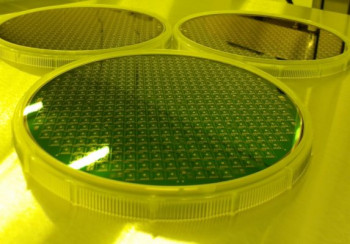
17 September 2026
Research from Queen Mary University of London explores how combining learner autonomy with student-led enquiry can create a more engaging and collaborative experience for international students learning academic English.
What happens when students are given more say in what they learn, how they learn it and which questions they want ... [more]

16 September 2026
From ballet studio to behavioural science: researchers uncover the best view for learning choreography.
New research from Queen Mary University of London finds that less experienced dancers learn choreography more effectively when they follow a teacher's movements from the same perspective, with implications far beyond dance.
A groundbreaking study led ... [more]

15 September 2026
New analysis of almost 300,000 kilometres of Roman roads reveals a complex network shaped by people, places and landscapes, in which Rome was less central than is often assumed.
A multidisciplinary team of researchers from Aarhus University in Denmark, Queen Mary University of London, and other European institutions analysed a dataset ... [more]

15 September 2026
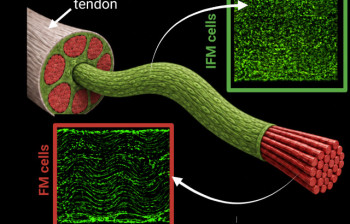
Study reveals how specialised tendon cells respond to changes in their physical environment, opening new possibilities for future research into tendon health and repair.
Researchers at Queen Mary University of London are now closer to understanding tendinopathy, a common condition that can cause persistent pain and impaired movement in people ... [more]
8 September 2026
A recent article by Anna Maltsev, Reader in Applied Probability in the Centre for Complex Systems, and colleagues at the National Institute on Aging in Baltimore (Maryland, USA) was featured on the cover of Circulation Research. Circulation Research is a prestigious medical journal published by the American Heart Association, covering ... [more]

3 September 2026
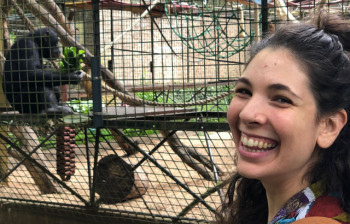
A study by Queen Mary University of London finds that young chimpanzees develop dialect, providing a new way of understanding ontogenetic evolution.
A study has found that young chimpanzees develop distinct population-specific vocal patterns as they mature (ontogeny), challenging the long-held assumption that their calls are inflexible and determined solely ... [more]
August 2026
26 August 2026
Queen Mary University of London researchers have discovered a new way to make wireless communication devices more adaptable, paving the way for smarter antennas, more efficient networks, and next-generation communication technologies.
Researchers at Queen Mary University of London have shown that making extremely small changes to the structure of a ... [more]

26 August 2026
Queen Mary University of London researchers develop a quantum computational spectroscopy approach that could open new ways of studying complex quantum systems.
Scientists could have a new way to explore the hidden behaviour of matter, thanks to research involving Queen Mary University of London that uses a quantum computer to ... [more]

22 August 2026
Dr Charalampos Saitis, Assistant Professor of digital music processing at Queen Mary University of London's Centre for Multimodal AI, member of the Centre for Digital Music and Director of the Communication Acoustics Lab, is a co-investigator on a major new international research partnership that sets out to broaden how timbre ... [more]

20 August 2026
Ian Morris, Reader in Mathematics in the Centre for Complex Systems, and Çağrı Sert from the University of Warwick, have found a remarkable generalisation of a landmark result about self-affine fractals to their projections or "shadows". Their study, entitled Projections of self-affine fractals, was published in the highly prestigious ... [more]

17 August 2026
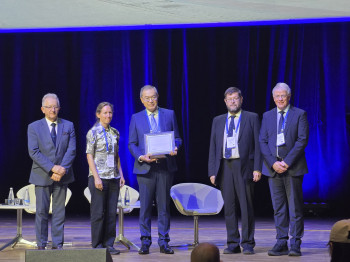
Queen Mary University of London is proud to announce that Professor Yang Hao, Professor of Antennas and Electromagnetics in the School of Electronic Engineering and Computer Science, has been awarded the International Union of Radio Science (URSI) Booker Gold Medal—one of the organisation's highest honours.
Professor Hao receives the ... [more]
13 August 2026
An artificial intelligence project developed at Queen Mary University of London to help academics provide faster, more detailed feedback to students has been selected for a national spinout programme.
EduGrade AI, an educator-controlled assessment and feedback platform, has been selected for the Innovate UK ICURe Exploit Business and Spinout Readiness ... [more]

12 August 2026
Researchers at Queen Mary University of London, Imperial College and University of Oxford have helped develop a new architecture that could overcome one of the biggest obstacles preventing photonic quantum computers from reaching their full potential.
Published in Nature Photonics, the international study introduces Clavina – a modular, programmable photonic quantum ... [more]

11 August 2026
Queen Mary University of London researchers develop intelligent communications system that dramatically improves data transmission when bandwidth is limited.
Anyone who has struggled through a poor phone call knows the frustration of missing half a conversation. Now, researchers at Queen Mary University of London, led by Paul Anthony Haigh, have ... [more]
7 August 2026
Queen Mary researchers develop a lightweight, electrically adjustable lens inspired by the flexibility of the human eye.
The ability to change focus instantly is something most people take for granted. Every day, our eyes effortlessly switch between reading a book, recognising a face across the room or watching a bird ... [more]
6 August 2026
Special Issue: Call for Papers
Please find the the deatils about this Speciall Issue on AI-native Smart Radio Environments for 6G within the IEEE Network Journal with Dr. Maged Elkashlan as Guest Editor. More details can be found at the following link:
https://www.comsoc.org/publications/magazines/ieee-network/cfp/... [more]

6 August 2026
Special Issue: Call for Papers
Please find the the deatils about this Speciall Issue on AI-native Smart Radio Environments for 6G published by IEEE Internet of Things Journal with Dr. Maged Elkashlan as Guest Editor.
Important Dates:
Submission Deadline: December 31, 2026
First Review Due: February 15, 2027
Revision Due: March 15, 2027
Second Reviews Due/... [more]