

Past Events
March 2026 | |
| Wed 11 Mar 2026 15:00 - 16:00 | Seminar: Orchisama Das: Efficient rendering of room acoustics in complex and connected spaces for eXtended Reality applications Centre for Multimodal AI Abstract XR applications such as gaming require high-quality 6DoF acoustic rendering to achieve perceptual immersion. In Virtual Reality (VR), room geometry and materials are known, whereas in Augmented Reality (AR) they must be inferred from... |
| Wed 11 Mar 2026 15:00 - 18:00 |  Conference: Triangle Seminars Conference: Triangle SeminarsCentre for Theoretical Physics and Astronomy Please register at: https://forms.gle/9fF2GWkoMWv4D2J19 15:00 - Marc Henneaux (Collège de France) Abstract: Asymptotic symmetries, sometimes also known as "large gauge transformations", provide important dynamical information on theories with a gauge freedom formulated on spacetimes having a "boundary at infinity". A review of asymptotic symmetries will be given following the Hamiltonian approach. General features (such as the form of the symmetry generators and the structure of the... |
| Tue 10 Mar 2026 14:30 - 15:30 |  GAnG Seminar: Suvendu Giri (Uppsala) GAnG Seminar: Suvendu Giri (Uppsala)Centre for Geometry, Analysis and Gravitation NOTE: No pre talk this week, so seminar starting at 2.30pm Title: A "dictionary" to test GR with GW: from observations to theory Abstract: GR, while one of the most successful and well-tested theories to date, is expected to receive corrections at high energies—through higher-curvature terms, additional degrees of freedom, or both. Given the vast landscape of possible extensions, how can we test them in a systematic way? I will present a general framework for interpreting deviations... |
| Fri 6 Mar 2026 14:30 - 15:30 |  Seminar: Gravitational instability revisited in the youngest discs - Alison Young Seminar: Gravitational instability revisited in the youngest discs - Alison YoungCentre for Theoretical Physics and Astronomy There is plenty of evidence now that planet formation begins very soon after the formation of the disc itself. At early stages, protostellar discs tend to be more massive and are therefore likely to be susceptible to the gravitational instability, which can play a key role in their evolution and in planet formation. As such, there is renewed interest from the planet formation community in exploring the role of the gravitational instability in building planets. So far, modelling has largely been... |
| Thu 5 Mar 2026 14:00 - 15:00 | Seminar: Helen Ogden (University of Southampton): Adaptively-Structured Mixed Models for Simple Clustered Data Centre for Probability, Statistics and Data Science I will describe a new class of flexible mixed-effects models for simple clustered or longitudinal data. The idea of these Adaptively-Structured Mixed Models (AdaStruMMs) is to replace pre-specified random-effects structure by unknowns to be... |
| Thu 5 Mar 2026 14:00 - 15:00 |  Seminar: Olaf Hohm (Hamburg U., Inst. Theor. Phys. II) Seminar: Olaf Hohm (Hamburg U., Inst. Theor. Phys. II)Centre for Theoretical Physics and Astronomy Color-kinematics duality from an algebra of superforms I give an introduction to an ongoing research program to find a first-principle and off-shell derivation of color-kinematics duality and the double-copy nature of gravity directly from field theory, using the framework of homotopy algebra. I focus on recent progress that maps the homotopy algebra of (color-stripped) Yang-Mills theory to the (de Rham) algebra of differential forms on a simple superspace. |
| Wed 4 Mar 2026 13:00 - 14:00 | Seminar: Sanjay Kumar (Banaras Hindu U): Stochastic Dynamics of Polymer Translocation Centre for Complex Systems Polymer translocation through narrow pores is a fundamental process with broad relevance, ranging from biological phenomena such as DNA transport through nuclear pores to the development of nanopore-based sequencing technologies. In this work, we... |
| Wed 4 Mar 2026 13:30 - 15:00 | 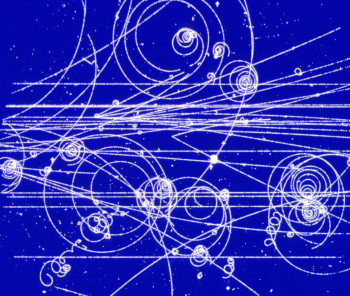 Seminar: ATLAS Muon Upgrade - Arisa Wada Seminar: ATLAS Muon Upgrade - Arisa WadaCentre for Theoretical Physics and Astronomy ATLAS Muon Upgrade - details to follow 13:30-14:00 - In person refreshments 14:00-15:00 - seminar |
| Wed 4 Mar 2026 15:00 - 16:00 |  Seminar: Inter-domain and multi-stakeholders system infrastructure orchestration Seminar: Inter-domain and multi-stakeholders system infrastructure orchestrationCentre for Networks, Communications and Systems Link to join the seminar will be provided. Speaker: Daphne Tuncer Abstract: The engineered systems of a city have traditionally been operated in silos, per domain, following vertical mode of collaboration. In the recent years, a number of applications in different areas of city systems (e.g.,energy, built environment, transport) have however been exploring the potential of horizontal collaboration to develop new types of services, such as smart charging solutions, green computing services,... |
| Wed 4 Mar 2026 15:00 - 16:00 | Seminar: CCMP Seminar Series. Dr Alston Misquitta: Symmetry-Adapted Relaxation Theory (SART): Exact theory of embedding and a new way of calculating interaction energies with infinite-order induction relaxation of the monomers
Centre for Experimental Physics and Quantum Technology Title: Symmetry-Adapted Relaxation Theory (SART): Exact theory of embedding and a new way of calculating interaction energies with infinite-order induction relaxation of the monomers Speaker: Dr Alston Misquitta (QMUL) Abstract: Symmetry... |
| Tue 3 Mar 2026 14:30 - 15:30 | GAnG Seminar: Allen Fang Centre for Geometry, Analysis and Gravitation NOTE: Pre talk intro for non experts starts at 2pm, with seminar starting at 2.30pm Speaker: Allen Fang Title: On the uniqueness of Kerr-de Sitter Abstract: The uniqueness of the Kerr-de Sitter family of black hole spacetimes as stationary solutions to the Einstein vacuum equations is a crucial ingredient to understanding the final states of positive cosmological constant universes, such as our physical universe. In the asymptotically flat case, Kerr was shown to be the unique... |
February 2026 | |
| Fri 27 Feb 2026 14:30 - 15:30 | Seminar: Data-Driven Closures for Hybrid Plasma Models in Space Plasmas - George Miloshevich Centre for Theoretical Physics and Astronomy Modelling turbulence kinetically in space remains challenging due to the multiscale nature of plasma. One approach is to adopt a fluid model hierarchy and close it using a phenomenological expression or law derived from local kinetic simulations. We address this challenge from the perspective of decaying turbulence in the near-Earth magnetosheath using fully kinetic particle-in-cell (PIC) simulations. We apply machine learning techniques to extract a non-local five-moment electron-pressure... |
| Thu 26 Feb 2026 13:00 - 14:00 | Seminar: Edon Kelmendi (QMUL): Decision Problems for Linear Dynamical Systems Centre for Complex Systems This talk is about algorithms for iterations of linear maps. Given a linear map in the form of a matrix M with rational entries, and some point x, what can we say algorithmically about the sequence Mx, M^2 x, M^3 x, … . In particular, is there an... |
| Thu 26 Feb 2026 14:00 - 15:00 | Seminar: Rafael Aoude (U. Edinburgh, Higgs Ctr. Theor. Phys.) Centre for Theoretical Physics and Astronomy Entanglement and Decoherence at colliders Recent measurements at the Large Hadron Collider have observed entanglement in the spins of top pairs. This has motivated a substantial body of theoretical work on various quantum observables (e.g., entanglement, magic and decoherence) for the spin degrees of freedom of SM particles. In this talk, I will revisit the recent top-pair entanglement proposal, its measurement analysis, and how one can go beyond that. In particular, the effects of new... |
| Thu 26 Feb 2026 14:00 - 15:00 | Seminar: Chengchun Shi (LSE): Doubly Robust Alignment for Large Language Models Centre for Probability, Statistics and Data Science This talk focuses on reinforcement learning from human feedback (RLHF) for aligning large language models with human preferences. While RLHF has demonstrated promising results, many algorithms are highly sensitive to misspecifications in the... |
| Wed 25 Feb 2026 14:00 - 15:00 | Seminar: Thomas Wolley (Cardiff University): The Power of Noise Centre for Probability, Statistics and Data Science Turing patterns have found huge success as a mechanism for explaining patterns in biology, chemistry and phyiscs. However, one of the problems of applying Turing's theory to biology is the "Robustness Problem". Namely, small changes to the input... |
| Wed 25 Feb 2026 14:00 - 15:00 |  Seminar: Towards Physical Neural Networks for Wireless Communications - Prof. Marco Di Renzo, King’s College London (UK) Seminar: Towards Physical Neural Networks for Wireless Communications - Prof. Marco Di Renzo, King’s College London (UK)Centre for Electronics Online Seminar Link Synopsis A physical neural network is a type of artificial neural network in which an electrically adjustable material is used to emulate the function of a neural neuron model. The term "physical" neural network is used to emphasize the reliance on physical hardware utilized to emulate neurons as opposed to software-based approaches. In this talk, we discuss the role of physical neural networks in the context of wave-domain information processing for wireless... |
| Tue 24 Feb 2026 14:30 - 15:30 | GAnG Seminar: Marcelo Malagutti (UCL) Centre for Geometry, Analysis and Gravitation NOTE: Pre talk intro for non experts starts at 2pm, with seminar starting at 2.30pm Title: Scattering for the Steklov problem on an infinite wedge Abstract: The Steklov problem is the spectral problem for the Dirichlet-to-Neumann map (DtN) for the Laplacian–an operator which appears, for example, in the Calderon problem and the Sloshing problem. Motivated by the Steklov problem on higher dimensional, piecewise smooth Lipschitz domains, we consider the massive DtN map (i.e. the DtN map... |
| Mon 23 Feb 2026 11:00 - 12:00 |  Seminar: Terahertz Commercial Opportunities 2026-2046 - Dr Peter Harrop, CEO at Zhar Research Seminar: Terahertz Commercial Opportunities 2026-2046 - Dr Peter Harrop, CEO at Zhar ResearchCentre for Electronics Seminar Online Link Synopsis This presentation gives an industry view of terahertz opportunities emerging 2026-2046. Terahertz frequencies attract for many reasons. Fusion MW-level gyrotrons are more efficient 0.1THz. 6G Communications can only meet most of its promises such as Tbps data rates and sub mS latency if it moves far beyond the 5G frequencies at launch 2030. 0.1-0.3THz for one kilometer in all-weather conditions? Military/ security THz market is largest, notably body scanners... |
| Fri 20 Feb 2026 14:30 - 15:30 | Seminar: Disentangling Galaxy Bias in Cross-Correlation Tomography - Sara Maleubre Molinero Centre for Theoretical Physics and Astronomy How do we reconstruct the Universe's thermal and star-forming history without being fooled by galaxy bias? Using the FLAMINGO hydrodynamic simulations, we show that cross-correlation tomography can be made robust against small-scale clustering effects. We build estimators for the halo bias-weighted electron pressure 〈bPe〉 and star-formation density 〈bρSFR〉—quantities accessible through tomographic analyses of the SZ and CIB signals—and demonstrate 1–3% accuracy across redshift and... |
| Thu 19 Feb 2026 13:00 - 14:00 | Seminar: Luke Davis (U Edinburgh): Stochastic geometry of active matter Centre for Complex Systems For equilibrium hard spheres the stochastic geometry of the insertion space, the room to accommodate another sphere, relates exactly to the equation of state. We begin to extend this idea to active matter, analyzing insertion space for repulsive... |
| Thu 19 Feb 2026 14:00 - 15:00 | Seminar: Jung-Wook Kim (CERN) Centre for Theoretical Physics and Astronomy Magnusian: an integrated approach to gravitational dynamic One of key theoretical inputs for gravitational wave detection is an analytic description of binary dynamics, which provides the foundation for constructing waveform models used to generate waveform templates for detection. The conventional approach to binary dynamics is to construct the effective two-body Hamiltonian, which provides the equations of motion of the binary source. Motivated by the eikonal approximation of 2-to-2... |
| Thu 19 Feb 2026 14:00 - 15:00 | Seminar: Edson Utazi (University of Southampton): Mapping the risk of Guinea worm disease in sub-Saharan Africa using geostatistical and machine learning approaches Centre for Probability, Statistics and Data Science High-resolution risk maps of infectious diseases such as Guinea worm disease (GWD, dracunculiasis) are crucial to guide the planning, implementation and monitoring of intervention strategies, including water treatment with Abate™ and surveillance... |
| Wed 18 Feb 2026 13:00 - 14:00 | Seminar: Pierre-François Rodriguez (ICL): Loop soups in 2 + epsilon dimensions Centre for Probability, Statistics and Data Science Abstract: the talk will be about a natural percolation model built from the so-called Brownian loop soup. We will give sense to studying it in dimension d = 2 + epsilon, with epsilon varying in [0,1], and discuss how to perform a rigorous "epsilon... |
| Wed 18 Feb 2026 14:00 - 15:00 | Seminar: Eleonora Secchi (ETH): Nonlinear rheology and mass transport in bacterial biofilms: a polymer-network perspective Centre for Probability, Statistics and Data Science Biofilms are aggregates of bacteria embedded in a self-secreted extracellular polymeric substance (EPS) matrix [1]. From a physical perspective, they can be regarded as living complex fluids [2]: soft, heterogeneous polymer networks that undergo... |
| Wed 18 Feb 2026 14:00 - 15:00 | Seminar: Chemistry Seminar Series - Dr Annina Lieberherr (Quantum Motion) Centre for Experimental Physics and Quantum Technology |
| Wed 18 Feb 2026 15:00 - 16:00 |  SEMS Seminars: Prof Sonja Billerbeck, Unlocking the Yeast Toxicome, Imperial College London SEMS Seminars: Prof Sonja Billerbeck, Unlocking the Yeast Toxicome, Imperial College LondonCentre for Bioengineering Title: The yeast toxicome: A potential source for new antifungals for biocontrol, food and human health. Abstract: Fungal pathogens are an emerging threat to human health and food security. Very few fungicides are available and resistance to these is rising. It is a long-standing challenge to develop new antifungals. As eukaryotic pathogens, fungi offer very few selective drug targets and we urgently need new strategies for antifungal development. Ascomycete yeasts – such as... |
| Wed 18 Feb 2026 15:00 - 16:00 |  Seminar: Integrated, Intelligent and Ubiquitous 6G: Beyond Just Communications Seminar: Integrated, Intelligent and Ubiquitous 6G: Beyond Just CommunicationsCentre for Networks, Communications and Systems Please register your attendance by using the link below. Registration Link: Centre for Networks, Communications, and Systems - Seminar [18/02/2026] Registration – Fill in form Speaker: Prof. Aryan Kaushik Abstract: Prof. Kaushik will present on the wireless evolution towards latest IMT-2030/6G framework, trends, challenges, standardization aspects, new spectrum opportunities, and related use cases. In particular we will discuss about achieving the "integrated", "intelligent" and ... |
| Tue 17 Feb 2026 14:00 - 15:00 | Seminar: You (Neil) Zhang: From Neural Fields to Perception-Informed Learning: Scalable and Perceptually Grounded HRTF Personalization Centre for Multimodal AI C4DM Seminar: You (Neil) Zhang: From Neural Fields to Perception-Informed Learning: Scalable and Perceptually Grounded HRTF Personalization QMUL, School of Electronic Engineering and Computer Science Centre for Digital Music Seminar Series ... |
| Tue 17 Feb 2026 14:30 - 15:30 | GAnG Seminar: Daniela Cors (Cambridge) Centre for Geometry, Analysis and Gravitation NOTE: Pre talk intro for non experts starts at 2pm, with seminar starting at 2.30pm Title: tbc. |
| Mon 16 Feb 2026 12:00 - 13:00 | Seminar: Raphaël Henry (Aix-Marseille University): Smooth words and their factor complexity Centre for Complex Systems Smooth words over an alphabet of integers {a,b} are infinite words that are infinitely derivable, the most famous example being the Oldenburger-Kolakoski word over {1,2}. We study here the factor complexity of these words: we first show bounds for... |
| Fri 13 Feb 2026 14:30 - 15:30 |  ML Seminar - Alexander Stapleton ML Seminar - Alexander StapletonCentre for Theoretical Physics and Astronomy Title: A path to natural language through tokenisation and transformers Abstract: Natural language exhibits robust statistical regularities, most notably Zipf's and Heaps' laws, yet how these relate to the tokenisation schemes used in transformer-based language models remains unclear. In this talk, I will examine how byte–pair encoding (BPE) reshapes corpus statistics and mediates between linguistic structure and transformer predictions. Starting from an idealised Zipfian setting, I... |
| Thu 12 Feb 2026 13:00 - 14:00 | Seminar: David Mguni (QMUL): Language, Learning, and Limits: Representations at the Frontier of General-Purpose AI Centre for Complex Systems Recent advances in large language models have encouraged the view that natural language, mediated through prompting, could act as a universal interface for general-purpose learning. In this talk, I challenge that assumption by analysing the... |
| Thu 12 Feb 2026 14:00 - 15:00 | Seminar: Chris Hull (Imperial Coll., London) Centre for Theoretical Physics and Astronomy Superstring Field Theory String field theory provides a 2nd quantised non-perturbative formulation of string theory. In this seminar, the field theory for the bosonic string is introduced and the extension to the superstring discussed. Sen's superstring field theory successfully formulates perturbative superstring theory but has a number of strange features. The action is not fully background independent and it does not have standard diffeomorphism symmetry - instead there is an exotic gauge... |
| Thu 12 Feb 2026 14:00 - 15:00 | Seminar: Dalia Chakrabarty (University of York): How Newton helps to forecast accurately Centre for Probability, Statistics and Data Science The state – i.e. "location" and "rate" – that a mechanistic system attains at a future time, is deterministically computable, given the state it is in now, since we know the potential function that causally connects any two states attained... |
| Thu 12 Feb 2026 14:00 - 15:00 | Seminar: ARQ Robotics Seminar: A Bowel Phantom for Testing Next-Generation Endoluminal Robots and Therapies, by Dr Carlo Alberto Seneci Centre for Advanced Robotics Title: A Bowel Phantom for Testing Next-Generation Endoluminal Robots and Therapies Abstract: Soft-robotic phantoms can accelerate translation of medical devices and procedures by offering a repeatable, ethically sustainable testing framework. The... |
| Wed 11 Feb 2026 13:00 - 14:00 | Seminar: Alexandre Stauffer (King's College London): Non-monotone phase transition in interacting particle systems Centre for Probability, Statistics and Data Science In this talk we will discuss a reaction-diffusion particle system which has a non-monotone phase transition. I will explain the techniques used to analyze monotone models and how they can be refined to analyze non-monotone particle systems.Based on... |
| Wed 11 Feb 2026 13:30 - 15:00 | Seminar: ATLAS Higgs - Chiara Arcangeletti Centre for Theoretical Physics and Astronomy ATLAS Higgs - details to follow 13:30-14:00 - In person refreshments 14:00-15:00 - seminar |
| Tue 10 Feb 2026 14:30 - 15:30 | GAnG Seminar: Prachi Sahjwani (Cardiff) Centre for Geometry, Analysis and Gravitation NOTE: Pre talk intro for non experts starts at 2pm, with seminar starting at 2.30pm Title: Stability of Quermassintegral and Minkowski-Type Inequalities in Curved Spaces Abstract: In this talk I will discuss stability results for geometric inequalities, with a focus on inequalities arising in curved spaces. After introducing the notion of stability through the classical isoperimetric inequality, I will present results from my PhD concerning the stability of quermassintegral... |
| Fri 6 Feb 2026 14:30 - 15:30 | Seminar: Probing the early history of the Milky Way through ancient stars - Anke Ardern-Arentsen Centre for Theoretical Physics and Astronomy The oldest, most metal-poor stars in the Milky Way formed in pristine environments in the early Universe and preserve unique clues to the first generations of stars and to our Galaxy's early assembly. The oldest stars are expected in the Milky Way's inner regions, and metal-poor populations across our Galaxy and its satellites inform our broader understanding of early galaxy formation. I will discuss current views on the Milky Way's early history from two perspectives: metal-poor stars in the... |
| Thu 5 Feb 2026 13:00 - 14:00 | Seminar: Martina Contisciani (CEU Vienna): Multiscale network modeling of migration flows in Austria Centre for Complex Systems Migration plays a crucial role in urbanization, segregation, gentrification, and numerous phenomena related to socioeconomic development. Understanding the diverse drivers of mobility not only provides a deeper comprehension of the underlying social... |
| Thu 5 Feb 2026 14:00 - 15:00 | Seminar: Enrico Pajer (Cambridge U., DAMTP) Centre for Theoretical Physics and Astronomy An open system approach to cosmology Cosmological models and predictions rely extensively on the well-established field theory framework of particle physics. However, a qualitatively new challenge arises: cosmological systems inherently contain substances with poorly constrained macroscopic properties and entirely unknown microphysics, such as the inflaton sector, dark matter, and dark energy. This results in a rich array of novel phenomena, including dissipation, stochastic fluctuations, out... |
| Wed 4 Feb 2026 13:30 - 15:00 | Seminar: Neutrino telescopes, as a bridge between multi-messenger astronomy and neutrino oscillation physics - Chiara Lastoria Centre for Theoretical Physics and Astronomy Neutrino telescopes have become essential tools at the intersection of astrophysics and particle physics. Originally conceived to provide insights into some of the most energetic and distant phenomena in the Universe, these large-scale detectors will also contribute to the precision measurement of the oscillation parameters. This seminar will focus on KM3NeT, which has recently uncharted the PeV energy territory with the detection of the most energetic neutrino ever observed so far. At the... |
| Tue 3 Feb 2026 14:30 - 15:30 | POSTPONED - GAnG Seminar: Charlie Hoy (Portsmouth) Centre for Geometry, Analysis and Gravitation This event is postponed due to speaker illness, further details to follow. NOTE: Pre talk intro for non experts starts at 2pm, with seminar starting at 2.30pm Title: Bridging Simulation and Inference: Numerical relativity informed Bayesian analyses Abstract: Inferring the properties of colliding black holes from gravitational-wave observations is subject to systematic errors arising from modelling uncertainties. Although the accuracy of each model can be calculated through... |
January 2026 | |
| Fri 30 Jan 2026 14:00 - 15:00 | ML Seminar - Thomas Harvey Centre for Theoretical Physics and Astronomy Title: Geometry and Learning Abstract: During gradient descent, a metric is imposed on the parameters, usually called the gradient preconditioner in the literature. This preconditioner determines how we measure distances in parameter space when taking optimisation steps. In standard stochastic gradient descent this is taken to be the Euclidean metric, but many other choices are possible: the Adam optimiser can be viewed as one such choice. With second-order methods proving intractable... |
| Thu 29 Jan 2026 13:00 - 14:00 | Seminar: Markus Whiteland (Loughborough): Automaticity aspects of combinatorial complexity functions of infinite words Centre for Complex Systems Infinite words can be used to encode interesting properties of the orbits of discrete dynamical systems. Analysing the complexity of such a system may then be analysed through this encoding. Combinatorially speaking, quite often its complexity is... |
| Thu 29 Jan 2026 14:00 - 15:00 | Seminar: Rowland Seymour (Birmingham): Comparative Judgement Modeling to Map Forced Marriage at Local Levels Centre for Probability, Statistics and Data Science Forcing someone into marriage against their will is a violation of their human rights. In 2021, the county of Nottinghamshire, UK, launched a strategy to tackle forced marriage and violence against women and girls. We set out to map the risk of... |
| Thu 29 Jan 2026 14:00 - 15:00 | Seminar: Luke Lippstreu (U. Edinburgh, Higgs Ctr. Theor. Phys.) Centre for Theoretical Physics and Astronomy Novel properties of QFTs with long-range interactions Infrared divergences obscure key analytic properties of scattering amplitudes, exposing gaps in our understanding of unitarity, causality, and crossing symmetry in theories with long-range forces. In this talk, I will use a simple model to illustrate novel analytic features of long-range theories, including modifications to the connectedness structure of amplitudes and to the general optical theorem. Since the LSZ reduction formula does... |
| Wed 28 Jan 2026 13:00 - 14:00 | Seminar: CogSci seminar series: "From Helpful to Valuable: What Changed and Why It Matters" Centre for Human-Centred Computing A few years ago, most chatbots were scripted FAQs that struggled outside the happy path. Today, assistants can understand free form questions, ask clarifying follow ups, ground answers in trusted information, and take useful actions, while knowing... |
| Tue 27 Jan 2026 14:30 - 15:30 | GAnG Seminar: Peter Cameron from Imperial College - Spacetime extensions in low regularity Centre for Geometry, Analysis and Gravitation NOTE: Pre talk intro for non experts starts at 2pm, with seminar starting at 2.30pm Title: Spacetime extensions in low regularity Abstract: It has been shown that the interior of a dynamical black hole (of the sort believed to occur in nature) contains a Cauchy horizon to which the spacetime metric extends continuously. However, Penrose's strong cosmic censorship conjecture states that in any such extension, the Christoffel symbols should fail to be locally square integrable (and... |
| Fri 23 Jan 2026 14:00 - 15:00 | Seminar: CMAI Seminar: Zhaokai Wang Centre for Multimodal AI C4DM Seminar: Zhaokai Wang: From Frames to Beats: Progress and Challenges in Video-to-Music Generation QMUL, School of Electronic Engineering and Computer Science Centre for Digital Music Seminar Series Seminar by: Zhaokai Wang Date/time:... |
| Thu 22 Jan 2026 13:00 - 14:00 | Seminar: Eng-Jon Ong (QMUL) Centre for Complex Systems |
| Thu 22 Jan 2026 14:00 - 15:00 | Seminar: Mathias Driesse (Humboldt U., Berlin) Centre for Theoretical Physics and Astronomy The Gravitational Compton Amplitude The gravitational Compton amplitude describes gravitational waves scattering off a single black hole and is therefore a one-body observable ideal for analyzing quadratic-in-curvature of generic (Kerr) black holes from an effective field theory point of view. Based on upcoming work together with Y. Fabian Bautista, Gustav Jakobsen, and Kays Haddad, in this talk, I will discuss what makes it worth studying and calculating explicitly. I briefly review... |
| Thu 22 Jan 2026 14:00 - 15:00 | Seminar: Cristina Gualdani (QMUL): Robust identification in repeated games: An Empirical approach to algorithmic competition Centre for Probability, Statistics and Data Science We develop an econometric framework for recovering structural primitives—-such as marginal costs—-from price or quantity data generated by firms whose decisions are governed by reinforcement-learning algorithms. Guided by recent theory and... |
| Wed 21 Jan 2026 13:30 - 15:00 | Seminar: Testing the laws of gravity and dark matter properties with cosmological observations - Dr Camille Bonvin Centre for Theoretical Physics and Astronomy In 1998, two groups of astrophysics discovered that the expansion of our Universe is accelerating, in direct contradiction with our expectations from General Relativity. This strange behaviour of our Universe could either be due to a new form of energy, called dark energy, or to a modification of the laws of gravity at large, cosmological scales. In this talk I will discuss how cosmological observations can be used to test the validity of General Relativity and the nature of dark matter. I will... |
| Fri 16 Jan 2026 11:00 - 12:00 | ML Seminar - Koji Hashimoto Centre for Theoretical Physics and Astronomy Title: Holography and optimal transport Abstract: Optimal transport and Wasserstein distance are often used in machine learning, in particular in diffusion models in which Fokker-Planck equation of the probability flow is optimized. We discuss how the idea of emergent spacetime in holography can fit the notion of optimal transport. We employ the simplest example of a single quantum harmonic oscillator and demonstrate that the Wasserstein distance of the optimal transport between... |
| Thu 15 Jan 2026 14:00 - 15:00 | Seminar: Sean A. Hartnoll (Cambridge U., DAMTP) Centre for Theoretical Physics and Astronomy Automorphic L-functions, primon gases and quantum cosmology I will review how the equations of general relativity near a spacetime singularity map onto an arithmetic hyperbolic billiard dynamics. The semiclassical quantum states for this dynamics are Maaβ cusp forms on fundamental domains of modular groups. For example, gravity in four spacetime dimensions leads to PSL(2,Z) while five dimensional gravity leads to PSL(2,Z[w]), with Z[w] the Eisenstein integers. The automorphic forms can be... |
| Wed 14 Jan 2026 14:00 - 15:00 | Seminar: Dr Ilham El Atmani - Neutrino–nucleus interactions and systematic uncertainties in next-generation oscillation experiments Centre for Theoretical Physics and Astronomy The next generation of long baseline experiments, DUNE and Hyper-Kamiokande, aim to measure CP violation and mass ordering with high precision. However, the sensitivity of these experiments is currently limited by systematic uncertainties related to interactions between neutrinos and nuclei. In this talk, we will examine the impact of nuclear effects, in particular multi-nucleon correlations (2p2h) and final-state Interactions (FSI), on energy reconstruction and parameter extraction. We will... |
| Mon 12 - Tue 13 Jan 2026 |  Conference: Geometric Methods in Probability Conference: Geometric Methods in ProbabilityCentre for Probability, Statistics and Data Science Monday 12th January will consist of a London Probability Day (LPD), a one-day conference in probability, with confirmed speakers: Annika Lang (Chalmers University of Technology and the University of Gothenburg) Iolo Jones (Durham University) Justin Salez (Université Paris-Dauphine & PSL) Tuesday 13th January will consist of a research workshop as part of the Tangents and New Normals (TnN) network. On this second day we will have motivational problems advertised by... |
| Wed 7 Jan 2026 13:30 - 15:00 | Seminar: Dr Alex Moor - Neutrinos: The Long and Short of It Centre for Theoretical Physics and Astronomy Neutrinos are tricky - no matter how massive they may be. We have been looking at them for nigh on a century and they still refuse to give up their secrets. This means we've been forced to get creative with ever more complex theories and equipment to pry at them. This seminar will look at two such sets of equipment - the Short Baseline Near Detector (SBND), and the Deep Underground Neutrino Experiment (DUNE). An overview of neutrino physics will also be discussed, along with some recent... |