

Past Events
September 2026 | |
| Fri 11 Sep 2026 15:00 - 17:00 | Seminar: The state of AI in practice Centre for Fundamentals of AI and Computational Theory An informal discussion with live examples of the state of AI in practice and its current capabilities, including a multi-agent demonstration of live coding and live mathematics and a discussion of how output can be validated (eg using Lean or test... |
| Thu 3 Sep 2026 14:00 - 15:00 |  Seminar: Yu Komiya (Kyoto) Seminar: Yu Komiya (Kyoto) Centre for Theoretical Physics and Astronomy Title: Axions, Monopoles, and Gravity Abstract: Phenomenological interest in axions originated from its potential to solve long-standing questions including the strong CP problem, their position as a candidate of dark matter, and their natural introduction through string compactifications. As several models appear to contain sequential symmetry breaking, the potential effects of axion theories on cosmology through their prediction of early universe defect formation gained it cosmological... |
| Tue 1 - Fri 4 Sep 2026 |  Conference: PSD14: International Conference on Position Sensitive Detectors Conference: PSD14: International Conference on Position Sensitive DetectorsCentre for Experimental Physics and Quantum Technology The conference will feature the latest developments in position sensitive radiation detectors from leading researchers around the world, and across a wide range of scientific disciplines. The conference has a strong multidisciplinary emphasis, and encourages cross-fertilisation and transfer of ideas between researchers working in many fields. In person participation is important. The PSD conference takes place every 3 years, with the first edition held in September 1986. All sessions are... |
August 2026 | |
| Mon 31 Aug - Fri 4 Sep 2026 | Conference: Quantum many-body systems out of equilibrium: Relaxation, thermalization, and ergodicity breaking Centre for Complex Systems This international forum brings together leading researchers and early-career scientists to explore equilibration, thermalization, atypical dynamics, Floquet physics and control of quantum many-body systems, fostering interdisciplinary exchange and... |
| Wed 26 Aug 2026 14:00 - 15:00 |  Seminar: "Empowering Connectivity: Wearable Antennas for Wi-Fi and 5G Applications", Dr Sima Noghanian - CommScope Ruckus Networks Seminar: "Empowering Connectivity: Wearable Antennas for Wi-Fi and 5G Applications", Dr Sima Noghanian - CommScope Ruckus NetworksCentre for Electronics Online Seminar Link Synopsis Wireless connectivity plays a major part in our daily lives. Wireless Local Area Network (WLAN), mostly operating through Wi-Fi technology, is one of the major technologies to provide this connectivity. 5G is another technology that promises a significant increase in data transmission speed. The goal of this talk is to highlight some of the aspects of the wearable antennas designed for applications in Wi-Fi and 5G, emphasizing their significance in enabling... |
| Wed 5 Aug 2026 15:00 - 16:00 | 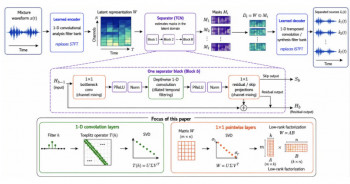 Seminar: An SVD view of Conv-TasNet: signal-processing structure, spectral dynamics, and low-rank compression Seminar: An SVD view of Conv-TasNet: signal-processing structure, spectral dynamics, and low-rank compressionCentre for Multimodal AI Abstract: Conv-TasNet is often presented as a neural time-domain separator, but its design is deeply rooted in acoustic signal processing: a learned analysis-synthesis filter bank replaces the STFT, masking is retained as the separation mechanism, and temporal convolutions implement structured finite-impulse-response filtering. This work studies Conv-TasNet through singular value decomposition (SVD). For depthwise temporal convolutions, we view each filter as a Toeplitz operator, linking its... |
| Wed 5 Aug 2026 15:00 - 16:00 | 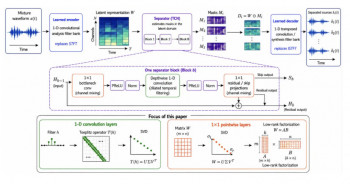 Seminar: An SVD view of Conv-TasNet: signal-processing structure, spectral dynamics, and low-rank compression Seminar: An SVD view of Conv-TasNet: signal-processing structure, spectral dynamics, and low-rank compressionCentre for Fundamentals of AI and Computational Theory Abstract: Conv-TasNet is often presented as a neural time-domain separator, but its design is deeply rooted in acoustic signal processing: a learned analysis-synthesis filter bank replaces the STFT, masking is retained as the separation mechanism, and temporal convolutions implement structured finite-impulse-response filtering. This work studies Conv-TasNet through singular value decomposition (SVD). For depthwise temporal convolutions, we view each filter as a Toeplitz operator, linking its... |
July 2026 | |
| Fri 31 Jul - Sun 2 Aug 2026 | Conference: 1st Satellite Meeting on the Evolution of Photosynthesis Centre for Molecular Cell Biology Join us for the 1st Satellite Meeting on the Evolution of Photosynthesis! The meeting will cover all subjects relevant to the topic ranging from deep time and origin questions to recent radiations and adaptations of photosynthetic organisms and... |
| Wed 29 Jul 2026 15:00 - 16:00 | 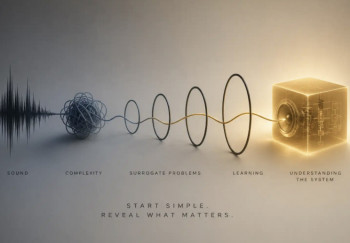 Seminar: Start Simple! Learning Sound-Producing Systems from Surrogate Problems Seminar: Start Simple! Learning Sound-Producing Systems from Surrogate ProblemsCentre for Multimodal AI Abstract: Modern generative models have transformed audio synthesis, yet they are primarily designed to reproduce signals rather than uncover the physical systems that generate them. This talk presents an alternative perspective on learning from sound, drawing on ideas from classical system identification and recent advances in representation learning. Rather than fitting increasingly complex models directly, it advocates for progressively learning through a sequence of surrogate problems that... |
| Tue 28 Jul 2026 14:30 - 16:30 |  Seminar: Chemistry Seminar: Prof. Patrick Guiry (University College Dublin) & Prof. Kevin Lam (University of Greenwich) Seminar: Chemistry Seminar: Prof. Patrick Guiry (University College Dublin) & Prof. Kevin Lam (University of Greenwich)Centre for Chemical Research Prof. Pat Guiry Seminar title: "Recent Advances in Asymmetric Synthesis and Catalysis" Information about Prof. Pat Guiry: Pat received his BSc (Honours) degree in Chemistry from University College Dublin, Ireland in 1986 and stayed to pursue his Ph.D. degree in Organic Chemistry, graduating in 1990, under the supervision of Professors Dervilla Donnelly (UCD) and Sir Derek Barton (Texas A&M). He completed his postdoctoral training at the University of Oxford with Dr John Brown FRS). He... |
| Fri 24 Jul 2026 15:00 - 16:00 |  Seminar: What AI Can't Hear: Human Judgment in Accessible Audio Design Seminar: What AI Can't Hear: Human Judgment in Accessible Audio DesignCentre for Multimodal AI For decades, accessibility was treated as an afterthought, a ramp added after the building was already built. Today, AI risks becoming the new missing ramp: assumed to solve access problems that, without human oversight, it quietly creates. In her second edition of Inclusive Design for a Digital World, Reginé Gilbert argues that AI is not judgment, and that automated tools test against a model user that most real users simply aren't. This talk examines where AI audio tools succeed, where... |
| Thu 16 Jul 2026 19:00 - 21:00 | 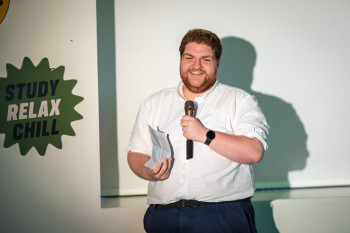 MINDS Neurodivergent Scientists' Comedy Night MINDS Neurodivergent Scientists' Comedy NightCentre for Human-Centred Computing On Thu 16th July, from 7-9pm, MINDS will be running a Neurodivergent Scientists' Comedy Night in collaboration with Queen Mary's Disability Society (SANDS) and Science Showoff at The Griff Bar, Garrod Building, at QMUL's Whitechapel Campus. Our MC for the evening will be Prof Steve Cross, and the acts will include professional scientist comedians Elizabeth Johnson and Ribs Norman, a colleague from Birmingham City, Craig Anderton, who does research on HCI and accessibility in VR, as well as... |
| Wed 15 Jul 2026 15:00 - 16:00 |  Seminar: Designing Interactive Generative Music Systems for Emotional Wellbeing Seminar: Designing Interactive Generative Music Systems for Emotional WellbeingCentre for Multimodal AI Title: Designing Interactive Generative Music Systems for Emotional Wellbeing Abstract: Within music therapy, the act of making music, exercising creative control, and developing a sense of ownership over a musical work has been proven to amplify the efficacy of music as a wellness solution over consuming static content. Yet receiving these enhanced benefits typically requires technical expertise and years of experience to achieve. Generative music platforms have been marketed as making... |
| Mon 13 - Fri 17 Jul 2026 | Conference: New Perspectives on Evolution Equations and Related Topics Centre for Geometry, Analysis and Gravitation The aim of this workshop is to explore key topics in the theory of evolution equations, both linear and nonlinear, which lie at the intersection of mathematical analysis and physics. The event is designed to foster collaboration between leading... |
| Mon 13 Jul 2026 13:00 - 14:30 | Seminar: Two post-ICALP speakers Centre for Fundamentals of AI and Computational Theory We have two post-ICALP speakers who will be visiting us this coming Monday: S P Rishal (Sarva Labs) and Panos Aivasiliotis (Potsdam). Talk 1: Set automata and limits of decidability of two-variable logic on data words S P Rishal (Sarva Labs) ... |
| Fri 10 Jul 2026 15:00 - 16:00 | Seminar: The Frame Rule for Free: Traced Monoidal Semantics of Separation Logic Centre for Fundamentals of AI and Computational Theory This Friday we will have two speakers. The first is by Vorashil Farzaliyev: Title: The Frame Rule for Free: Traced Monoidal Semantics of Separation Logic Vorashil Farzaliyev Abstract: Separation logic owes its power to the Frame Rule, which... |
| Fri 10 Jul 2026 16:00 - 17:00 | Seminar: Downward closures and homomorphism equivalence for indexed languages Centre for Fundamentals of AI and Computational Theory In the second of our talks this friday, Richard Mandel (Edon's new RA) will talk about Downward closures and homomorphism equivalence for indexed languages (joint work with Corto Mascle and Georg Zetzsche. |
| Wed 8 - Fri 10 Jul 2026 |  Conference: Bone Research Society Annual Meeting 2026 Conference: Bone Research Society Annual Meeting 2026Faculty of Science and Engineering Bone Research Society Annual Meeting 2026 Hosted by Queen Mary University of London We are delighted to announce that Queen Mary University of London will host the Bone Research Society (BRS) Annual Meeting 2026 from 8–10 July 2026 on the Mile End campus in London. For the first time in almost twenty years, the BRS Annual Meeting returns to the capital, bringing together researchers, clinicians, engineers, healthcare professionals, industry partners and early career investigators from... |
| Tue 7 Jul 2026 10:00 - 12:00 | 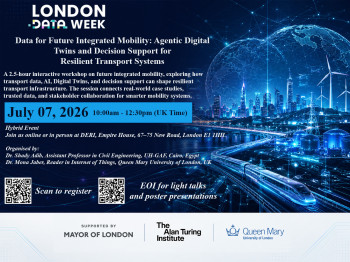 Conference: Data for Future Integrated Mobility Conference: Data for Future Integrated MobilityCentre for Networks, Communications and Systems [Registration Link]: https://londondataweek.org/ldw26-events/#data-for-future-integrated-mobility About the Event As urban mobility systems become increasingly complex, the need for data-driven, integrated, and sustainable transport solutions has never been greater. This event brings together researchers, practitioners, and policymakers to explore how advanced data analytics, AI, and digital infrastructure can shape the future of mobility in London and beyond. What to Expect ... |
| Tue 7 Jul 2026 14:00 - 15:00 | 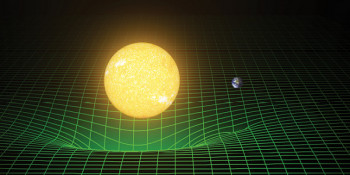 Special GAnG Seminar: Lewis Cole (Edinburgh U.). Special GAnG Seminar: Lewis Cole (Edinburgh U.).Centre for Geometry, Analysis and Gravitation Title: Gauge Theories and Integrability Abstract: Integrable systems are exactly solvable quantum field theories with infinitely many symmetries. In the past few years years, a novel perspective has emerged in which these systems are constructed from higher-dimensional gauge theories such as 4d Chern-Simons. This talk will provide a pedagogical introduction to this topic before reviewing some recent developments (e.g. 4d hBF). |
| Sat 4 - Tue 7 Jul 2026 | 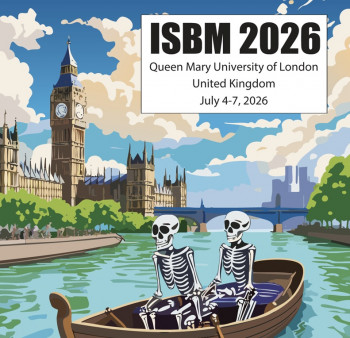 Conference: International Society of Bone Morphometry 2026 Conference: International Society of Bone Morphometry 2026
Faculty of Science and Engineering International Conference on Bone Morphometry and Skeletal Imaging Hosted by Queen Mary University of London We are delighted to announce that Queen Mary University of London will host the XVIIth Congress of the International Society of Bone Morphometry (ISBM 2026) from 4–7 July 2026. Bringing together leading researchers, clinicians, engineers, imaging specialists and industry partners from around the world, the congress will showcase the latest advances in quantitative skeletal imaging,... |
| Fri 3 Jul 2026 16:00 - 17:00 |  Special Mathematics Colloquium: On lines and particles Special Mathematics Colloquium: On lines and particlesCentre for Geometry, Analysis and Gravitation Join us for a Special Mathematics Colloquium delivered by Professor Bernd Sturmfels (Max Planck Institute for Mathematics in the Sciences, Leipzig). Title: On lines and particles Abstract: Momentum twistors in particle physics are lines in 3-space. We explain how this works and what it means for configurations of lines. Algebraic geometry provides a common language for line incidences, rigidity theory of graphs, and Feynman integrals for scattering amplitudes. |
| Wed 1 Jul 2026 11:00 - 12:00 |  Seminar: Implicit music evaluation and the dynamics of popularity Seminar: Implicit music evaluation and the dynamics of popularityCentre for Multimodal AI The seminar is structured in two parts. The first part will present a new testing procedure for the implicit assessment of the emotional-semantic content of music. The procedure is based on the well-known effects of film music that can shift the emotional-semantic perception of visual scenes and it has been developed in the context of evaluating audio branding assets. The second part considers evaluation and liking at the collective level and presents a new computational model for analysing the... |
| Wed 1 Jul 2026 14:00 - 15:00 |  Seminar: Chemistry Seminar: Prof. M. Clelia Righi (University of Bologna, Italy) Seminar: Chemistry Seminar: Prof. M. Clelia Righi (University of Bologna, Italy)Centre for Chemical Research Title: "Advancing solid interfaces and lubricants by materials modeling and design" Abstract: Tribology is an interdisciplinary field involving knowledge from physics, chemistry, and mechanics, focused on the study of interface phenomena, including adhesion, friction, lubrication, and wear. By advancing materials to reduce friction and wear, significant energy savings and reductions in carbon oxide emissions can be achieved. However, this is not an easy task due to the complexity of the... |
June 2026 | |
| Mon 29 Jun - Fri 3 Jul 2026 |  Conference: Amplitudes 2026 Conference: Amplitudes 2026Centre for Theoretical Physics and Astronomy The Centre for Theoretical Physics and Astronomy at the School of Physical and Chemical Sciences is delighted to announce that Queen Mary University of London will host Amplitudes 2026, the international conference on scattering amplitudes, from 29 June to 3 July 2026. Amplitudes is an annual international conference series focused on scattering amplitudes in quantum field theory, string theory, and related areas of high-energy theoretical physics. The series has become since its inception in... |
| Mon 29 Jun 2026 11:00 - 12:00 | 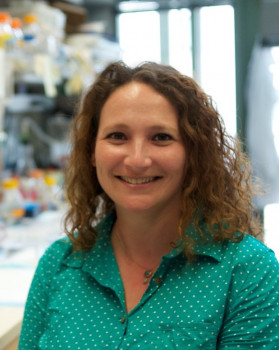 Seminar: The Goldilocks Histone: How Genomic Stability Requires Centromeres to Be Epigenetically “Just Right” Seminar: The Goldilocks Histone: How Genomic Stability Requires Centromeres to Be Epigenetically “Just Right”Centre for Molecular Cell Biology Dr Yael Nechemia-Arbely Assistant Professor of Pharmacology and Chemical Biology, University of Pittsburg, PA, USA Summary Centromere protein A (CENP-A) is a heritable epigenetic mark that determines centromere identity and is essential for the accurate segregation of chromosomes during cell division. Here I will discuss the role of DNA methylation in maintaining centromere and neocentromere position, size, and function, and how CENP-A overexpression drives genome instability and... |
| Thu 25 - Fri 26 Jun 2026 |  Logic and Graph Neural Networks Meeting. Logic and Graph Neural Networks Meeting.
Centre for Fundamentals of AI and Computational Theory This workshop brings together researchers working on the connections between logic and graph neural networks. It focuses on expressive power, verification, logical explainability and interpretability, rule learning and knowledge discovery, and computational complexity, with the aim of discussing recent results, ongoing work, and future directions. Please see the event website (https://pwalega.github.io/logic-gnn-2026/) for programmes, times and other information. About the speaker/s: ... |
| Wed 24 Jun 2026 12:00 - 17:00 | The 15th meeting of the Southern and Midlands Logic Seminar Centre for Fundamentals of AI and Computational Theory The 15th meeting of the Southern and Midlands Logic Seminar, which is coorganised by QMULs Fredrik Dahlqvist, will take place at UCL on Wednesday 24 June from 12:00 until 17:00 (see https://leolob.ski/SMLS/smls15). Confirmed speakers include ... |
| Wed 24 Jun 2026 15:00 - 16:00 | 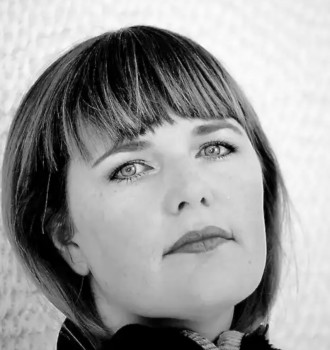 Seminar: Songwriting as a System: The Semantic Machine, a Song That Changes with the World Around You Seminar: Songwriting as a System: The Semantic Machine, a Song That Changes with the World Around YouCentre for Multimodal AI Abstract Recorded songs are often defined by repetition: one structure, one set of lyrics, one definitive version. This talk proposes an alternative model of songwriting through Transmutable Music, an overarching term for music that can change in response to data, interaction, system behaviour, and contextual information, creating new kinds of listening experiences. The talk presents The Semantic Machine, a mobile-app artwork and song-based transmutable composition developed by Tracy Redhead... |
| Tue 23 Jun 2026 13:00 - 14:30 | Grant Writing Online Retreat: Brains and Bits Centre for Fundamentals of AI and Computational Theory A research programme and grant writing retreat about Brains and Bits |
| Fri 19 Jun 2026 10:30 - 11:30 |  Seminar: "Exploring the Potential of 3D Printing Technologies for Antenna Design and Fabrication - Challenges and Opportunities", Prof. Bing Zhang - Sichuan University, China Seminar: "Exploring the Potential of 3D Printing Technologies for Antenna Design and Fabrication - Challenges and Opportunities", Prof. Bing Zhang - Sichuan University, ChinaCentre for Electronics Online Seminar Link Synopsis The 3D printing technology, as a representative of additive manufacturing technology, has shown considerable application prospects and enormous development potential in various fields. Compared with traditional subtractive manufacturing, 3D printing as an additive manufacturing technology has unique advantages, such as a short turn-around cycle, less material waste, and ease of fabricating complex structures. The advantage of 3D printing gives antenna... |
| Fri 19 Jun 2026 16:00 - 17:00 |  Seminar: Tapping into the full potential of the Stratosphere Seminar: Tapping into the full potential of the StratosphereCentre for Networks, Communications and Systems Speaker: Professor Mohamed-Slim Alouini (King Abdullah University of Science and Technology (KAUST)) Abstract: High-Altitude Platform Stations (HAPS) are emerging as a key complement to LEO satellite mega-constellations, offering a scalable solution for global connectivity and bridging digital divides where terrestrial and satellite networks fall short. Operating from the stratosphere, HAPS leverage advanced beamforming and free-space optics (FSO) to deliver high-capacity and low-latency... |
| Thu 18 Jun 2026 | Research Exchange Day Centre for Complex Systems |
| Wed 17 Jun 2026 11:00 - 12:00 | Seminar: Harold Thimbleby: New thinking on computational thinking Centre for Human-Centred Computing New thinking on computational thinking Harold Thimbleby, Emeritus professor of computer science at Swansea University will talk about his research in Human Factors, Dependable Computing, and Computational Thinking. Abstract I recently... |
| Tue 16 Jun 2026 14:00 - 15:00 |  Chemistry Seminar: Dr Elisa Collado Fregoso (Deputy Editor of Advanced Materials and Solar RRL) Chemistry Seminar: Dr Elisa Collado Fregoso (Deputy Editor of Advanced Materials and Solar RRL)Centre for Chemical Research Talk Title: Publishing impactful research – editorial tips Abstract: In this presentation, I will provide an overview of the article publishing process, from an Editorial perspective. I will include tips on how to "ace" the writing process and improve writing skills and how Editors assess manuscripts. I will also talk about Open Access, research integrity, and the use of Gen-AI for scientific writing. Biography: Elisa has a major in Chemistry from the National Autonomous University of... |
| Fri 12 Jun 2026 15:00 - 16:00 | Seminar: Marc Roth: Weisfeiler-Leman Dimension of Relational Database Queries Centre for Fundamentals of AI and Computational Theory Marc Roth will talk about his work with his former PI at Oxford, Leslie Goldberg, and with Andreas Goebel from HPI on the "Weisfeiler-Leman Dimension of Relational Database Queries" |
| Fri 12 Jun 2026 16:00 - 17:00 | Designing Rules for Safe AI markets Centre for Fundamentals of AI and Computational Theory Konstantinos (Kostas) E. Zachariadis, Professor and Director of Research, School of Economics and Finance will discuss the issues around designing safe markets when AIs are involved, including ideas of how formal verification could play a part. |
| Thu 11 Jun 2026 15:00 - 16:00 | Seminar: CIS seminar: Aligning Data Strategies in 3D Vision: From Virtual Humans to Neural Rendering and VLM Reasoning Centre for Multimodal AI You are cordially invited to the Centre for Intelligent Sensing seminar from an external speaker: Dr Youngkyoon Jang: Aligning Data Strategies in 3D Vision: From Virtual Humans to Neural Rendering and VLM Reasoning When: Thursday, 11th June, 15... |
| Mon 8 Jun 2026 09:30 - 17:30 |  Conference: 2026 RSC Chemical Biology and Bio-organic Group Postgraduate Symposium Conference: 2026 RSC Chemical Biology and Bio-organic Group Postgraduate SymposiumCentre for Molecular Cell Biology The RSC Chemical Biology and Bio-organic Group invite you to their annual postgraduate meeting which will take place in-person at Queen Mary University. This meeting is designed to give early career researchers, from across a broad range of chemical biology backgrounds, a platform to share their latest research. In addition to our excellent plenary speaker, Prof. Mark Bradley, there will also be opportunities for postgraduate students to present their work through short talks and posters.... |
| Mon 8 Jun 2026 14:00 - 15:30 |  Seminar: Chemistry Seminar: Prof Olexandr Ivanov and Prof Pavlo Prysyazhnyuk (Ivano-Frankivsk University, Ukraine) Seminar: Chemistry Seminar: Prof Olexandr Ivanov and Prof Pavlo Prysyazhnyuk (Ivano-Frankivsk University, Ukraine)Centre for Chemical Research Talk title: "Towards Tungsten-Free Superhard Borides: an MLIP-Driven Crystal-Structure-Prediction Workflow with a DFT Calibration Gate, and Case Studies in Mn–Ti–B and Mn–V–B Systems" Abstract: Tungsten-based cemented carbides (WC–Co) have been the workhorse of cutting tools and wear-resistant coatings for nearly a century, but rising tungsten prices, EU and US critical-raw-material classifications, and tightening export controls now make the systematic search for tungsten-free... |
| Thu 4 Jun 2026 14:00 - 15:00 |  Seminar: Ida Zadeh (Southampton U.) Seminar: Ida Zadeh (Southampton U.)Centre for Theoretical Physics and Astronomy Title: Asymmetric Orbifolds, Rank Reduction and Heterotic Islands Abstract: Exploring unknown regions of the moduli space of 2-dimensional conformal field theories plays an important role in understanding properties of theories of quantum gravity. In this talk I will discuss a family of world-sheet conformal field theories, asymmetric orbifolds, that describe some of these unexplored loci in the moduli space. I will focus on the application of asymmetric orbifolds to toroidal... |
| Wed 3 Jun 2026 11:30 - 12:30 | 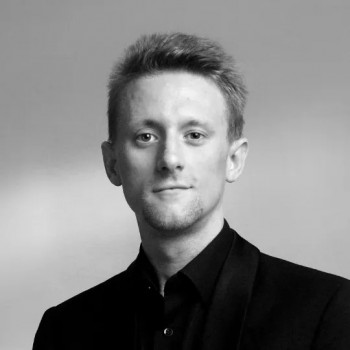 Seminar: Keeping Score: Computational Methods for the Analysis of Encoded “Symbolic” Musical Scores Seminar: Keeping Score: Computational Methods for the Analysis of Encoded “Symbolic” Musical ScoresCentre for Multimodal AI This talk presents work in progress from a large project combining the book Keeping Score with an associated software library, AMADS. The project focuses on computational methods for the analysis of encoded, or "symbolic", musical scores. For the C4DM audience, the talk will highlight new algorithms and ideas from the project's "Step Further" sections, including musically informed approaches to reconstructing fractional values from floating-point errors, a definition of syncopation based on... |
| Wed 3 Jun 2026 14:00 - 15:30 | Centre colloquium - Claudia de Rham (Imperial College) Centre for Theoretical Physics and Astronomy Colloquium title: Positivity in the sky Abstract: I will discuss the subtle interplay between the understanding of the laws of Nature as we observe them or test them in our "everyday experiments", and their underlying embedding within an ultimate high energy completion. I will highlight how the notion of causality enables us to connect some of the laws of physics at low energy with their behaviour at much higher energy, and clarify how the notion of causality is manifested with gravity, a... |
| Wed 3 Jun 2026 16:00 - 17:00 | 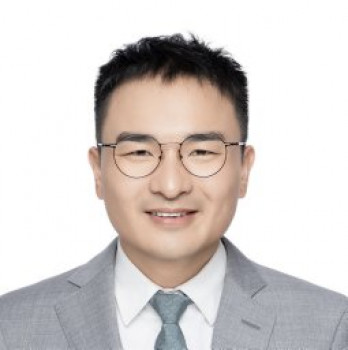 Seminar: Human behaviour analysis and motion modelling Seminar: Human behaviour analysis and motion modelling Centre for Multimodal AI Abstract: Large language models contain rich and diverse knowledge, giving them the potential to perform well on tasks far beyond language. However, directly applying them to non-linguistic tasks such as human behavior analysis or motion modeling is often challenging, because the inputs for these tasks (e.g., videos or skeletal sequences) are not naturally compatible with the desired input of language models. This talk introduces a "linguistic" perspective on addressing this issue: transforming... |
| Tue 2 Jun 2026 11:00 - 12:00 | 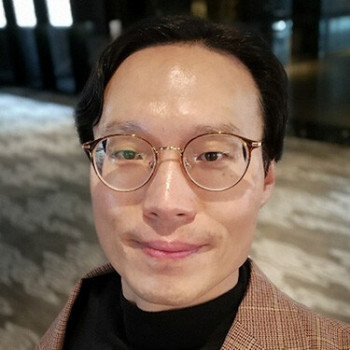 Seminar: "Sub-THz Wavefront Engineering for Near-field Communications Beyond 6G: From Theory to Experiments" - Dr Doohwan Lee, NTT Network Innovation Laboratories, Japan Seminar: "Sub-THz Wavefront Engineering for Near-field Communications Beyond 6G: From Theory to Experiments" - Dr Doohwan Lee, NTT Network Innovation Laboratories, JapanCentre for Electronics Online Seminar Link SYNOPSIS As 6G networks evolve towards higher frequency bands including sub-terahertz (sub-THz) and centimeter-wave spectrum, the shortened wavelengths enable exploitation of physical properties of electromagnetic waves that have remained largely underutilized in conventional wireless systems. This tutorial introduces the revolutionary concept of "multishape radio," which leverages unique electromagnetic wave characteristics such as non-diffracting propagation, orbital... |
| Tue 2 Jun 2026 14:00 - 15:00 | Special Gravity Seminar: Jan Kożuszek Centre for Geometry, Analysis and Gravitation The premise of massive gravity is simple - adding a mass term to the graviton action. Yet it was only in 2010 that a permissible non-linear massive gravity Lagrangian, now known as the dRGT Lagrangian, was first written down. Since then, dRGT theory has generated considerable interest, but many fundamental questions about it remain unanswered. In this talk, I will briefly review the motivations and history of massive gravity, before moving on to discuss some of our recent progress on... |
| Tue 2 Jun 2026 14:00 - 15:00 | Exceptional Seminar: Lorenzo De Lillo (Turin) Centre for Theoretical Physics and Astronomy Title: N=2 Universality at strong coupling Abstract: We present a detailed analysis of integrated correlators for an N = 2 superconformal field theory on a squashed sphere with SU(N) gauge group and fundamental/anti-symmetric matter. Employing the matrix model arising from supersymmetric localisation, we compute derivatives of the partition function Z with respect to the fundamental mass (µ), the anti-symmetric mass (m) and the squashing parameter (b), corresponding to integrated... |
| Tue 2 Jun 2026 15:00 - 17:00 |  Conference: LSBC Summer meeting Conference: LSBC Summer meeting Centre for Molecular Cell Biology Join us at the LSBC Summer meeting! 4 talks from scientists across London institutes, followed by a free drinks reception. All welcome! The meeting will be held on Tuesday, 2nd June from 15:00-17:00 in in the Clark Kennedy Lecture Theatre, Queen Mary Innovation Centre. The Queen Mary Innovation Centre is just a 5 min walk from Whitechapel tube station. Entrance via Walden Street. Programme Callum Haste, The Institute of Cancer Research (Basil Greber Lab): Visualisation of... |
May 2026 | |
| Fri 29 May 2026 12:30 - 13:30 | Seminar: Leonardo Brogi (U Siena): Trade Elasticities under Geopolitical Conflict and
Cooperation Centre for Complex Systems This paper provides a comprehensive macroeconomic assessment of how geopolitical friction and diplomatic cooperation shape international trade patterns. Utilizing high-frequency event data from the Integrated Crisis Early Warning System (ICEWS)... |
| Fri 29 May 2026 13:00 - 14:00 | 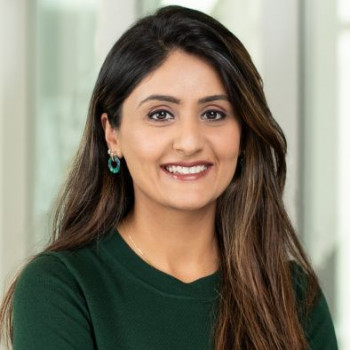 Seminar: Coexistence of Cellular-Connected Terrestrial and Aerial Users in 6G and Beyond Seminar: Coexistence of Cellular-Connected Terrestrial and Aerial Users in 6G and BeyondCentre for Networks, Communications and Systems Speaker: Professor Qurrat-Ul-Ain Nadeem (New York University (NYU) Abu Dhabi) Abstract: The rapid emergence of unmanned aerial vehicles (UAVs) is enabling transformative applications ranging from aerial surveillance and precision agriculture to emergency response and urban logistics. Supporting these applications at scale, however, requires reliable and ubiquitous wireless connectivity for aerial users operating alongside conventional terrestrial users. Existing cellular networks were... |
| Fri 29 May 2026 15:00 - 17:00 | Discussion of ZKsnarks Centre for Fundamentals of AI and Computational Theory In this week's theory group meeting we will discuss ZKsnarks which are a form of Non-interactive zero-knowledge proof used in cryptocurrency applications. |
| Thu 28 May 2026 11:00 - 15:00 | Mini-retreat AI:Brains and Bits Centre for Fundamentals of AI and Computational Theory We will hold a second mini-retreat to continue the conversations from the first retreat. This series brings together researchers from across Science and Engineering to discuss the Fundamentals of AI including issues of how AI works and how it should... |
| Thu 28 May 2026 14:00 - 15:00 | Seminar: Gabriel Wallin (Lancaster): A Framework for Detecting Structural Heterogeneity in Latent Variable Models Centre for Probability, Statistics and Data Science Latent variable models are widely used in the social, behavioural, and health sciences to learn the latent structure underlying multivariate data. These models typically assume that the relationship between the set of latent variables and observed... |
| Thu 28 May 2026 14:00 - 15:00 | Seminar: Ana-Maria Raclariu (KCL) Centre for Theoretical Physics and Astronomy Title: On bulk reconstruction in Lorentzian AdS and its flat space limit Abstract: We revisit the reconstruction of a free scalar in 4-dimensional Lorentzian Anti-de-Sitter spacetime in terms of primary operators in the boundary 3d CFT. We show that the positive and negative energy subspaces of solutions to the Klein–Gordon equation in AdS can be spanned with bulk-to-boundary propagators with appropriate time orderings. As a result, free scalar fields on a codimension-1 bulk hypersurface... |
| Wed 27 May 2026 14:00 - 15:00 | 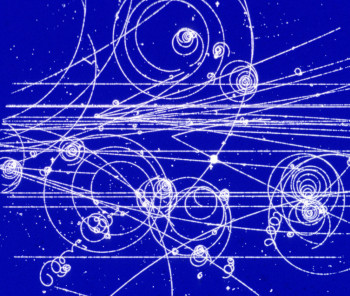 Seminar: Dr Andrea Knue - Elusive romance of top-quark pairs observed at the LHC Seminar: Dr Andrea Knue - Elusive romance of top-quark pairs observed at the LHC
Centre for Experimental Physics and Quantum Technology The top quark is the heaviest elementary particle known to date. With this very large mass come interesting consequences, like its extremely short lifetime. Unlike other quarks, which can form bound states, the top quarks lifetime does not allow for a stable bond. If two top quarks are produced almost at rest however, they can briefly exchange gluons before they then decay individually. This pseudo-bound state was already predicted in 1987, before the top quark was even discovered. It was... |
| Wed 27 May 2026 15:00 - 16:00 | 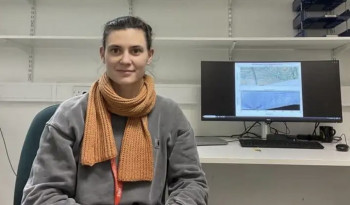 Seminar: Adaptation and generalization to head-related transfer functions Seminar: Adaptation and generalization to head-related transfer functionsCentre for Multimodal AI Abstract: Adaptation to altered or non-individual head-related transfer functions (HRTFs) has been widely studied in individuals with normal hearing. Studies have shown that after an adaptation period, individuals can significantly improve their sound localization performance with altered auditory cues. Recently, it has been shown that after training with one set of HRTFs, improvements can also be observed with another set, a phenomenon referred to as generalization. This talk will discuss the... |
| Tue 26 May 2026 15:00 - 16:00 | Seminar: "Bridging the Gap: From Lab-Scale Research to Mass Production in Silicon Photonics" - Dr Young Chul Kim, Process Design Engineer at Samsung Electronics Centre for Electronics Seminar Online Link Synopsis As the demand for high-speed data processing in AI and data centers grows, Silicon Photonics has emerged as a key technology to overcome the limits of traditional electrical interconnects. However, moving a device... |
| Fri 22 May 2026 11:00 - 12:00 | 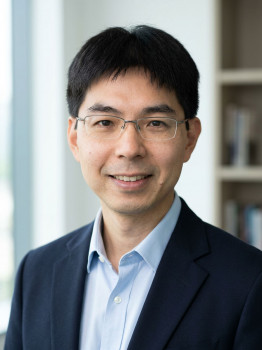 Seminar: Going beyond generic deep learning for wireless communications Seminar: Going beyond generic deep learning for wireless communicationsCentre for Networks, Communications and Systems Title: Going beyond generic deep learning for wireless communications Speaker: Professor Yik-Chung Wu (University of Hong Kong) Date/time: 22-May-2026 (11 AM) Location: Graduate Centre: GC205 Abstract: In recent years, deep learning has become an essential component of wireless communication design. However, most attempts simply utilize generic modules such as Multi-Layer Perceptron (MLP), Convolutional Neural Network (CNN), and others. While these generic designs have proven to be... |
| Fri 22 May 2026 17:00 - 18:00 |  ML Seminar - Alexandru Lupsasca ML Seminar - Alexandru LupsascaCentre for Theoretical Physics and Astronomy Title: Accelerating Scientific Discovery with AI Abstract: Large language models are rapidly becoming useful partners in scientific work: they can now reason through complex problems, carry out long computations, and even provide valuable insights. These emerging capabilities are beginning to compress the research loop from idea to verified result. I will give some examples of what frontier models can now do in practice, focusing in particular on a novel theoretical-physics result that was... |
| Thu 21 May 2026 13:00 - 14:00 | Seminar: Evans Harrell: Extremal spectral problems for quantum graphs Centre for Complex Systems "Spectral optimization" refers to the study of how shapes affect eigenvalues of self-adjoint operators by trying to maximize or minimize an eigenvalue, or some combination of eigenvalues, under reasonable constraints. This is a well-developed... |
| Thu 21 May 2026 14:00 - 15:00 | Graham Brown (Edinburgh) Centre for Theoretical Physics and Astronomy Title: Unexpected Symmetries of Kerr Black Hole Scattering Abstract: Recent years have seen considerable progress in computing scattering observables for spinning black holes at high PM orders, using both amplitude based and worldline methods. In this talk we will use these results to investigate the integrability properties of scattering Kerr black holes, both in the probe limit and beyond. We will begin by reviewing the radial action and the recently introduced Dirac bracket formalism,... |
| Thu 21 May 2026 14:00 - 15:00 | Seminar: CANCELLED: Sandipan Roy (University of Bath): Double Adjacency Based Spectral Clustering in Networks Centre for Probability, Statistics and Data Science Spectral clustering has been used widely as a popular tool for community detection in data with network structure. However, spectral clustering does not perform well on certain network structures, particularly core-periphery networks. To improve... |
| Thu 21 May 2026 15:00 - 16:00 |  Seminar: C4DM Seminar: The importance of multimodal data in the computational understanding of music Seminar: C4DM Seminar: The importance of multimodal data in the computational understanding of musicCentre for Multimodal AI Abstract: Music is multimodal, perceived not only through hearing but also through vision, touch, and movement. Humans naturally integrate these sensory streams to interpret a music performance. Similarly, in order to achieve a high-level computational music understanding, multimodal data is essential. This approach is put into practice through a five-category framework for music context, which guides computational systems to analyze instrumentation, performance dynamics, spatial arrangements... |
| Wed 20 May 2026 |  Conference: One-Day Ergodic Theory Meeting Conference: One-Day Ergodic Theory MeetingCentre for Complex Systems 1pm: Mélodie Andrieu (Université Littoral): A Normality conjecture on rational base number systems 2pm: José Alves (Universidade do Porto): Linear response for skew-product maps 3.30pm: Selim Ghazouani (University College London): Speculations about parabolic dynamical systems 4.30pm: Zhiyuan Zhang (Imperial College London): Ergodicity of conservative random dynamics Abstracts: Mélodie Andrieu: A Normality conjecture on rational base number systems The rational base... |
| Wed 20 May 2026 14:00 - 15:00 | Seminar: Dr Chilufya Mwewa - Testing Electroweak Symmetry Breaking through Same-Charge WW Scattering at the LHC and beyond
Centre for Experimental Physics and Quantum Technology Within the Standard Model (SM) of particle physics, weak vector bosons are allowed to be massive as a result of the spontaneously broken electroweak symmetry which is said to have resulted from a phase transition of the Higgs potential in the early universe. Measurements of the scattering of weak vector bosons—referred to as Vector Boson Scattering (VBS)—provide a powerful probe of the electroweak interaction and offer insight into the mechanism of electroweak symmetry breaking. In this... |
| Wed 20 May 2026 14:00 - 15:30 | 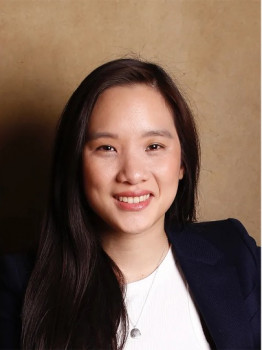 RSC Prize Lecture: Dr Florence Huynh - Rising Star in Industry Prize RSC Prize Lecture: Dr Florence Huynh - Rising Star in Industry PrizeCentre for Chemical Research As vice president of innovations at Polymateria, Florence leads a team working on biotransformation technology, an innovative solution to tackle plastic pollution on land before it reaches the oceans. This is a solution for the most highly polluted forms of plastic in the world, which ensures polyolefins will fully and swiftly biodegrade in the natural environment in two years, leaving behind no microplastics or toxic substances, as well as being compatible with recycling. The technology is... |
| Tue 19 May 2026 13:00 - 14:00 | Seminar: Inter-Group Presentation Workshop: Daniel Gill: Identification of Differences in Haptic Interaction for Neurodivergent Adults. Centre for Human-Centred Computing Speaker: Daniel Gill (Website). Bio: Daniel is a PhD candidate and researcher at Queen Mary University of London, working on robotics and psychology. He aims to understand where neurodivergent people have different sensory and motor experiences... |
| Tue 19 May 2026 13:00 - 14:00 | 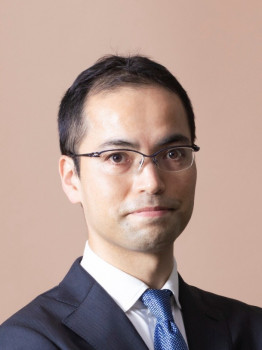 Seminar: The ‘scrap-or-build’ switch and the traffic sign: How tiny structural shifts in microtubules tune dynamics and molecular affinity Seminar: The ‘scrap-or-build’ switch and the traffic sign: How tiny structural shifts in microtubules tune dynamics and molecular affinity
Centre for Molecular Cell Biology Dr Tomohiro Shima Assistant Professor, University of Tokyo, Japan Summary Microtubules are among the principal cytoskeletal components that maintain the shape and architecture of eukaryotic cells. Their dynamic growth and shrinkage are exquisitely regulated across space and time, driving essential cellular processes such as cell division, migration, and morphological changes during differentiation. Furthermore, microtubules serve as tracks for motor proteins, enabling the targeted... |
| Fri 15 May 2026 11:00 - 12:00 | 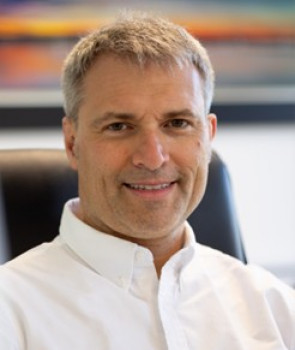 Seminar: The Drummond Lecture 2026 Seminar: The Drummond Lecture 2026Centre for Molecular Cell Biology Professor Alessio Ciulli FRS FRSE FRSC Professor of Chemical Structural Biology, Founder and Director, Centre for Targeted Protein Degradation, Faculty of Life Sciences, University of Dundee, Dundee, United Kingdom Protein degraders as pharmacological tools and drugs Our laboratory at the Centre for Targeted Protein Degradation (CeTPD) reveals molecular information on protein interactions and ubiquitination complexes and mechanisms to design novel therapeutic concepts. Protein degraders... |
| Fri 15 May 2026 15:00 - 17:00 | The Shor algorithm Centre for Fundamentals of AI and Computational Theory Our theory group meeting this week will be a general discussion of the Shor algorithm. It is a quantum algorithm developed in 1994 by Peter Shor for finding the prime factors of an integer. It was developed in 1994 by the American mathematician Peter... |
| Thu 14 May 2026 13:00 - 14:00 | Seminar: Alejandro Lage-Castellanos (U Havana): From Informal Trades to Limit Order Books: A Mean-Field View of the Cuban Peso Market Centre for Complex Systems Understanding price formation in markets with no central exchange—such as the informal currency market for the Cuban peso—has traditionally been challenging due to the lack of order books, tick rules, or centralized liquidity. In the first part... |
| Thu 14 May 2026 14:00 - 15:00 | Seminar: Emiko Dupont (University of Bath): TBC Centre for Probability, Statistics and Data Science Hybrid: MB503, SMS, QMUL, or via the Teams link below |
| Thu 14 May 2026 14:00 - 15:00 | Seminar: Facundo Rost (Scuola Normale Superiore) Centre for Theoretical Physics and Astronomy Title: The Cosmological Grassmannian Abstract: Massless spinning cosmological correlators are highly nontrivial and their structure is still poorly understood. I will show that four-point correlators can be dramatically simplified using a novel geometric object: the Cosmological Grassmannian. This framework makes key properties manifest—such as symmetries, factorization, and the flat-space limit—and reveals the hidden simplicity of these correlators. |
| Wed 13 May 2026 10:30 - 13:00 | Seminar: Fundamentals of AI Reading Group: LLM and Human Modes of Representation
Centre for Fundamentals of AI and Computational Theory LLM and Human Modes of Representation Shalom Lappin Queen Mary University of London, University of Gothenburg, and King's College London Much work on the cognitive foundations of AI has focussed on comparisons between the ways in which Large... |
| Wed 13 May 2026 13:00 - 14:00 | Seminar: What I learned from CS336: A deep dive into the modern LLMs Centre for Human-Centred Computing For this week's CogSci Seminar, we will be returning to an in-person format with our own PhD student, Yuan Liang talk about what she learned from the Stanford CS336 module, which will include a deep dive into the modern LLMs regarding the details of... |
| Wed 13 May 2026 15:00 - 16:00 | Seminar: Dr Ilham El Atmani - Neutrino–nucleus interactions and systematic uncertainties in next-generation oscillation experiments Centre for Experimental Physics and Quantum Technology The next generation of long baseline experiments, DUNE and Hyper-Kamiokande, aim to measure CP violation and mass ordering with high precision. However, the sensitivity of these experiments is currently limited by systematic uncertainties related to interactions between neutrinos and nuclei. In this talk, we will examine the impact of nuclear effects, in particular multi-nucleon correlations (2p2h) and final-state Interactions (FSI), on energy reconstruction and parameter extraction. We will... |
| Mon 11 May 2026 11:00 - 15:00 | Seminar: Modern AI: From Engineering to Scientific Approaches AND An Experienced Guide's Playbook for the ERC Centre for Fundamentals of AI and Computational Theory These events will be of interest to members of the centre: The school of mathematical sciences will be hosting Professor Enrique Alba (University of Málaga) for two talks on the 11th of May. Modern AI: From Engineering to Scientific Approaches â€... |
| Mon 11 May 2026 14:00 - 15:30 | 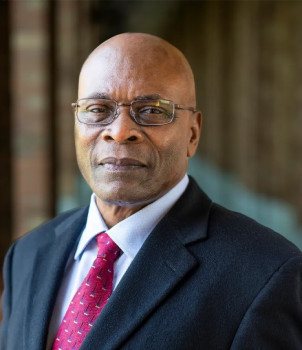 RSC Prize Lecture: Prof. Samson A. Jenekhe FRSC RSC Prize Lecture: Prof. Samson A. Jenekhe FRSC Centre for Chemical Research Title: Organic Electronics: From OLEDs and Photovoltaics to Neuromorphic Computing Abstract: Organic semiconductors have enabled a range of new technologies. In the case of organic light-emitting diodes (OLEDs), the materials and devices have reached commercial applications in full-color displays in smart phones and televisions and in lighting. For organic solar cells or photovoltaics, advances in materials and devices have also substantially addressed the twin fundamental challenges of large... |
| Fri 8 May 2026 16:00 - 17:00 | ML Seminar - Daniel Kunin Centre for Theoretical Physics and Astronomy Title: Gradients, Groups, and Grids: How Neural Networks Learn Features in Algebraic Tasks Abstract: Understanding how neural networks learn structured representations from data remains a central challenge in deep learning theory. I will present recent work introducing Alternating Gradient Flows (AGF), an analytic framework for understanding feature learning in two-layer networks. In small-initialization regimes, gradient flow exhibits a characteristic staircase dynamic: neurons first align... |
| Thu 7 May 2026 14:00 - 15:00 | Seminar: Zizang Qiu (Edinburgh) Centre for Theoretical Physics and Astronomy Title: Warm Inflation and Thermalised Cosmic Magnetic Fields Abstract: Warm inflation modifies the standard supercooled picture of inflation by allowing the inflaton to interact continuously with other degrees of freedom during accelerated expansion. These interactions can ultimately sustain a radiation bath that is close to thermal equilibrium. The inflaton sector is naturally viewed as an open quantum system from this perspective, with dissipation and stochastic noise arising as... |
| Thu 7 May 2026 14:00 - 15:00 | Seminar: CANCELLED: Emma Simpson (UCL): Accounting for Missing Data When Modelling Block Maxima Centre for Probability, Statistics and Data Science Modeling block maxima using the generalized extreme value (GEV) distribution is a classical and widely used method for studying univariate extremes. It allows for theoretically-motivated estimation of return levels, including extrapolation beyond... |
| Thu 7 May 2026 15:00 - 16:00 | 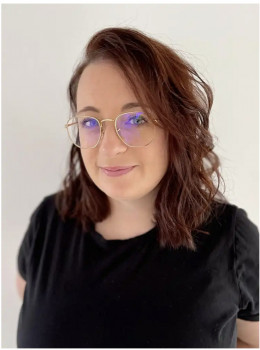 Seminar: Designing and Evaluating auditory-cognitive training through the HEaring and LIstening eXperience (HELIX) app Seminar: Designing and Evaluating auditory-cognitive training through the HEaring and LIstening eXperience (HELIX) appCentre for Multimodal AI Abstract: In recent years, serious games have become a promising way to support both auditory and cognitive training, especially because they help keep people motivated and engaged. In this seminar, I'll share how we used a participatory design approach to create HELIX, a new auditory‑cognitive training app built around a sentence‑discrimination and recall task set within six everyday listening scenarios. The development process involved two cycles of participatory design with 18... |
| Wed 6 May 2026 13:00 - 14:00 | Seminar: Behavioural signals for frictionless authentication: from controlled experiment to deployment Centre for Human-Centred Computing Title: Behavioural signals for frictionless authentication: from controlled experiment to deployment Speaker: Alexandra Uma, Zally (Alexandra is a past PhD student in Massimo's group) Abstract: Every interaction with a device leaves... |
| Wed 6 May 2026 13:30 - 15:00 | Seminar: Prof Jeff Hartnell - LiquidO opaque scintillator detectors and the physics opportunities Centre for Experimental Physics and Quantum Technology Radiation detectors enable many aspects of our modern lives, from the light sensors in our smartphone cameras to PET scanners that inform treatment of cancer. Particle physicists have often led the development and exploitation of cutting edge radiation detectors to identify particles while measuring their energies, positions and directions. Many radiation detectors use scintillators, which traditionally have nearly always been transparent to allow detection of the light. Our new counter... |
| Wed 6 May 2026 15:00 - 16:00 | Seminar: CCMP seminar: Particle characterization through super-resolution spectral microscopy Centre for Experimental Physics and Quantum Technology Luis Bibiano will give a seminar: Particle characterization through super-resolution spectral microscopy - abstract below: Spectroscopic Single Molecule Localization Microscopy (sSMLM) is a far-field spectroscopic imaging technique which is capable... |
| Tue 5 May 2026 10:30 - 16:00 | AI: Brains and Bits Research Planning retreat Centre for Fundamentals of AI and Computational Theory The Centre for Fundamentals of AI and Computational Theory is holding a research planning/grant writing retreat on the AI: Brains and Bits theme. We will discuss: Social Science of AI agents; Neuroscience methods for evaluation AI ... |
| Fri 1 May 2026 15:00 - 17:00 | Seminar: Theory Seminar: Algorithms for Checking Infinite Descent / The Emptiness Problem for Quantum Automata Centre for Fundamentals of AI and Computational Theory This week Theory meeting will have an invited speaker (hosted by Fred Dahlqvist), followed by a talk by Edon Kelmendi (details below) Speaker 1: Reuben Rowe (Royal Holloway) Title: Algorithms for Checking Infinite Descent Abstract: The ... |
April 2026 | |
| Thu 30 Apr 2026 14:00 - 15:00 | Seminar: Fabrizio Caola (Oxford) Centre for Theoretical Physics and Astronomy Title: Scattering amplitudes as a window into high-energy QCD High-energy scattering poses very intriguing challenges in theoretical physics, with implications ranging from the structure of the proton to trans-Planckian gravitational scattering. In this regime, quantum chromodynamics (QCD) exhibits a remarkably rich and intricate structure, where expectations based on naive factorisation break down. New dynamical phenomena emerge, playing a crucial role in ensuring the unitarity of the... |
| Wed 29 Apr 2026 10:30 - 13:00 | Seminar: CANCELLED: Fundamentals of AI Reading Group:
Shared Representations for Speech and Music? Evidence from Frozen Transfer Centre for Fundamentals of AI and Computational Theory THIS EVENT HAS SADLY HAD TO BE CANCELLED DUE TO UNFORSEEN CIRCUMSTANCES. At this week's reading group, Farida Yusuf will present their work on: Shared Representations for Speech and Music? Evidence from Frozen Transfer Abstract: Recent work in... |
| Tue 28 Apr 2026 12:00 - 13:00 |  SEMS seminars: Professor in Cariology in relation to Minimally Invasive Dentistry (MID), Prof Aylin Baysan, Faculty of Medicine and Dentistry, Queen Mary University of London SEMS seminars: Professor in Cariology in relation to Minimally Invasive Dentistry (MID), Prof Aylin Baysan, Faculty of Medicine and Dentistry, Queen Mary University of LondonCentre for Bioengineering Title: Futuristic Materials in Caries Management: A Minimally Invasive Strategy Abstract: Dental caries remains one of the most prevalent chronic diseases in clinical practice. Despite advances in prevention, many healthcare systems still rely on invasive and resource-intensive treatments that do not fully address the underlying disease or patient quality of life. This talk will highlight the growing importance of Evidence-Based Dentistry (EBD) and Minimally Invasive Dentistry (MID) as... |
| Mon 27 Apr 2026 11:00 - 12:00 |  Seminar: "Advanced RF Technology Solutions" - Dr Farhan Abdul Ghaffar, Lakehead University, Canada Seminar: "Advanced RF Technology Solutions" - Dr Farhan Abdul Ghaffar, Lakehead University, CanadaCentre for Electronics Online Seminar Link SYNOPSIS The continuing rapid proliferation and progress in wireless electronics technologies requires corresponding advancements in the field of radio frequency (RF) circuit, antenna and system designs. These advancements include compact, agile and efficient RF components and systems that can provide high-performing yet low-cost solutions. Against this backdrop, the talk will focus on two different aspects of modern RF engineering i) Solutions for Biomedical... |
| Fri 24 Apr 2026 14:30 - 15:30 | ML Seminar - Christian Ferko Centre for Theoretical Physics and Astronomy Title: Neural Networks and Quantum Field Theory Abstract: The neural network-field theory (NN-FT) correspondence proposes that certain quantum field theories can be defined by specifying an appropriate neural network architecture and parameter density. I will review some of the recent progress in this area, including the construction of the 2d Liouville conformal field theory. Interactions in Liouville theory can be implemented by breaking statistical independence of neural network parameters... |
| Thu 23 Apr 2026 14:00 - 15:00 | Seminar: Haiyan Zheng (University of Bath): TBC Centre for Probability, Statistics and Data Science TBC |
| Thu 23 Apr 2026 14:00 - 15:00 | Seminar: Mehregan Doroudiani (Southampton U.) Centre for Theoretical Physics and Astronomy Title: Scattering amplitude of massless closed strings at genus one Abstract: Perturbative calculations of string amplitudes are twofold: an expansion in the string coupling (the genus expansion of the worldsheet) and a low-energy expansion in the momenta. In this talk, I will focus on the low-energy expansion of closed string amplitudes at genus one, specifically for four- and five-point massless states of type IIB superstrings in flat spacetime. Evaluating these amplitudes involves... |
| Wed 22 Apr 2026 14:00 - 15:00 | Seminar: CANCELLED Dr Ilham El Atmani - Neutrino–nucleus interactions and systematic uncertainties in next-generation oscillation experiments Centre for Experimental Physics and Quantum Technology This event will no longer run, but will hopefully be rescheduled to a future date. |
| Wed 22 Apr 2026 14:00 - 15:30 | Centre colloquium: Ruth Gregory (King's College London) Centre for Theoretical Physics and Astronomy Title: Black Hole Spectroscopy from a Giant Quantum Vortex Abstract: Black-hole spectroscopy aims to infer physical properties of black holes by detecting the spectrum of quasi-normal modes (QNMs) they emit while settling towards equilibrium. Gravitational analogs aim to explore aspects of black hole systems by building laboratory experiments that share features of the black hole and its perturbations. A particularly interesting aspect of QNMs is the phenomenon of spectral instability: the... |
| Tue 21 Apr 2026 09:00 - 17:00 |  Russell Binions PhD Research Symposium Russell Binions PhD Research SymposiumCentre for Bioengineering The Russell Binions Research Symposium is the School of Engineering and Materials Sciences annual PhD Students Research Event. Both talks and posters from PhD students will be shown. All the centres will have sessions and prizes will be awarded both for the best presentations on the day and on papers published in the last year. https://www.sems.qmul.ac.uk/staff/r.binions/ |
| Tue 21 Apr 2026 11:00 - 00:00 | Seminar: Inter Group PhD Presentation Workshop.
RAVE: Retrieval and Scoring Aware Verifiable Claim Detection Centre for Human-Centred Computing This wee's speaker is Yufeng Li, a third-year PhD student in the Cogsci Group working with Arkaitz, who will be presenting her recently accepted paper at ICASSP ????to EECS PhD students. Snacks and Sandwiches will be available at the end of the... |
| Mon 20 - Wed 22 Apr 2026 | Conference: Statistical Physics Methods for Sustainable Energy Systems Centre for Complex Systems Focus topics: microgrids, digital twins, solar panels, data analytics, load shedding, stochastic modelling, wind power forecasting, machine learning techniques, interdisciplinary applications, storage and battery solutions, complex network approaches... |
| Fri 17 Apr 2026 15:00 - 17:00 | Seminar: Theory Group Seminar: Equality Saturation and Industrial Circuit Design Centre for Fundamentals of AI and Computational Theory Title: Equality Saturation and Industrial Circuit Design. Abstract: Equality saturation is a term rewriting approach that avoids challenges around picking an order to apply your rewrites in. In this talk I'll give an overview on e-graphs and... |
| Thu 16 Apr 2026 13:00 - 14:00 | Seminar: CANCELLED: Sabine Klapp (TU Berlin): Nonreciprocal active and decision-making systems: Connections between particle and continuum scale Centre for Complex Systems This event has been cancelled. Nonreciprocal systems have recently received much interest in the statistical physics community and beyond. One intriguing feature of such systems is their unusual collective behavior including, e.g., spontaneous... |
| Thu 16 Apr 2026 14:00 - 15:00 | Seminar: Abhinav Venkatesh Natarajan (Oxford): Chromatic Delaunay Triangulations for Labelled Datasets Centre for Probability, Statistics and Data Science TBC |
| Wed 15 Apr 2026 10:30 - 13:00 | Seminar: Fundamentals of AI Reading Group:
Tropical Geometry of Deep Neural Networks by Liwen Zhang, Gregory Naitzat and Lek-Heng Lim Centre for Fundamentals of AI and Computational Theory Fredrik Dahlqvist will be presenting Tropical Geometry of Deep Neural Networks by Liwen Zhang, Gregory Naitzat and Lek-Heng Lim. Please RSVP to Gabryel Thomas Mason-Williams if you are coming or not so we can get numbers for catering. ... |
| Wed 15 Apr 2026 11:50 - 12:50 |  Technical trials for 6G: Antennas and Communications Research - Prof David Owens, Virgin Media O2, UK Technical trials for 6G: Antennas and Communications Research - Prof David Owens, Virgin Media O2, UKCentre for Electronics Online Seminar Link Biography Professor David Owens, PhD MSc CEng FIET AFWES, is Head of Technical Trials at Virgin Media O2, where he leads external technology trials and innovation programmes in collaboration with the UK Government, start-ups, and academic institutions. He is also a Professor in Practice at the University of Glasgow's James Watt School of Engineering and has been a long-term supporter and contributor to the 5GIC, now the 6GIC at the University of Surrey. David has... |
| Wed 15 Apr 2026 13:00 - 14:30 | Seminar: Faithful Contouring: Near-Lossless 3D Voxel Representation Free from Iso-surface. Centre for Human-Centred Computing For this week's CogSci Seminar, Yihao Luo from Imperial will present his recent CVPR paper titled "Faithful Contouring: Near-Lossless 3D Voxel Representation Free from Iso-surface." Yihao is a 3rd-year PhD student at Imperial, working on high... |
| Wed 15 Apr 2026 13:30 - 15:00 | Seminar: Dr Maria Violaris - Breaking the quantum status quo: from error correction to the multiverse
Centre for Experimental Physics and Quantum Technology Every so often, our beliefs about what's possible using quantum theory get overturned. I will overview two shifts in quantum error correction related to my work on building quantum computers at OQC: the ability to design hardware with built-in quantum error detection, and the surprising possibility of local error-correcting codes with high encoding rates. I will also summarise two thought experiments from my research in quantum foundations, which change our understanding of locality and... |
| Tue 14 Apr 2026 11:00 - 12:00 |  Seminar: "Emerging Transceiver Architectures and Technologies for Future Wireless" - Prof. Ke Wu, Polytechnique Montréal, Quebec, Canada Seminar: "Emerging Transceiver Architectures and Technologies for Future Wireless" - Prof. Ke Wu, Polytechnique Montréal, Quebec, CanadaCentre for Electronics Online Seminar Link Synopsis Data communication, parametric sensing, and power transmission are the three fundamental functions of wireless technology. They have so far been independently enabled by various RF and wireless transceivers. Recent transceiver architecture research has spurred the development of emerging system solutions featuring low-power, self-adaptation and scalable integration. In future intelligent systems, the fusion of multiple wireless functions will categorically... |
| Mon 13 Apr 2026 10:30 - 16:30 |  AI: Brains and Bits - First Symposium AI: Brains and Bits - First SymposiumCentre for Fundamentals of AI and Computational Theory The first QMUL AI: Brains and Bits symposium will bring together researchers from across Science and Engineering to discuss the Fundamentals of AI including issues of how AI works and how it should work. It will include talks from investigators from Biology, the Blizzard Institute, Physics, Maths, Electronic Engineering and Computer Science. It will include refreshments and lunch with plenty of time for discussion on collaborative projects. If you would like to attend, please use the... |
| Fri 10 Apr 2026 14:30 - 15:30 | ML Seminar - Suvrat Raju - 10/04/26 Centre for Theoretical Physics and Astronomy Title: A model of errors in transformers Abstract: We study the error rate of LLMs on tasks like arithmetic that require a deterministic output, and repetitive processing of tokens drawn from a small set of alternatives. By analyzing the accumulation of errors in the attention mechanism, we theoretically derive a quantitative two-parameter relationship between the accuracy and the complexity of the task. We empirically verify our formula across a range of tasks and state-of-the art LLMs find... |
| Thu 9 Apr 2026 13:00 - 14:00 | Seminar: Anzhi Sheng (KTH Stockholm): Evolutionary game dynamics on complex networks Centre for Complex Systems Evolutionary game theory provides a powerful framework to study strategic interactions in biological, social, and technological systems. When spatial structure is introduced, the interplay between local interactions and global dynamics can lead to... |
| Thu 9 Apr 2026 14:00 - 15:00 | Seminar: Tom Berrett (Warwick): Density Ratio Permutation Tests with connections to distributional shifts and conditional two-sample testing Centre for Probability, Statistics and Data Science We introduce novel hypothesis tests to allow for statistical inference for density ratios. More precisely, we introduce the Density Ratio Permutation Test (DRPT) for testing $H_0: g \propto r f$ based on independent data drawn from distributions with... |
| Thu 9 Apr 2026 14:00 - 15:00 | Seminar: ARQ Seminar: Navigating Academic Publishing: Opportunities and Support at World Scientific
Centre for Advanced Robotics Speaker: Laurent Chaminade Abstract Choosing where to publish your research can be a daunting prospect. In this seminar, World Scientific will be presenting on the unique merits and benefits of publishing books and journal articles with them. This... |
| Thu 2 Apr 2026 14:00 - 15:00 | Seminar: Rajen Shah (Cambridge): Hunt and test for assessing the fit of semiparametric regression models Centre for Probability, Statistics and Data Science We consider testing the goodness of fit of semiparametric regression models, such as generalised additive models, partially linear models, or quantile additive regression models. We propose an approach that involves first splitting the data in two... |
| Wed 1 Apr 2026 13:00 - 14:00 | Seminar: John Moriarty (QMUL): Branched harmonic majorants: representations for multidimensional optimal stopping Centre for Probability, Statistics and Data Science We give a constructive characterisation of the least superharmonic majorant arising in the optimal stopping problem for $d$-dimensional Brownian motion ($d\ge 2$) absorbed at the boundary of the unit ball, with continuous gain function $g$.... |
| Wed 1 Apr 2026 13:00 - 14:00 | Seminar: RAVE: Retrieval and Scoring Aware Verifiable Claim Detection Centre for Human-Centred Computing For this week's CogSci Seminar, our own PhD student, Yufeng Li, will present her recent paper "RAVE: Retrieval and Scoring Aware Verifiable Claim Detection". Yufeng is a student of Arkaitz working on fact-checking. |
| Wed 1 Apr 2026 14:00 - 15:00 | Rainer Klages (QMUL): Modelling the movements of organisms: Movement ecology meets active particles and anomalous diffusion Centre for Probability, Statistics and Data Science Organisms living at very different spatio-temporal scales, from migrating in the microworld to foraging across the earth, display random-looking movement paths. Understanding these complex patterns by constructing mathematical models from data... |
March 2026 | |
| Tue 31 Mar 2026 11:30 - 12:30 | Seminar: Maximilian Engel (Amsterdam/Berlin): Transitions between order and chaos in stochastic environments Centre for Complex Systems The talk will present some steps towards a mathematical framework for studying transient (finite-time) phenomena in random dynamical systems. It is a natural property of such systems to exhibit several co-existing, metastable regimes in state... |
| Tue 31 Mar 2026 14:30 - 15:30 | GAnG Seminar: Julien Barrat (DESY) Centre for Geometry, Analysis and Gravitation NOTE: Pre talk intro for non experts starts at 2pm, with seminar starting at 2.30pm Speaker: Julien Barrat Title: Bootstrapping thermal CFTs Abstract: Thermal conformal field theories (CFTs) describe quantum systems at finite temperature, with applications ranging from laboratory systems to the holographic description of black holes. Although the thermal background breaks global conformal symmetry, key local data of the zero-temperature theory—such as the spectrum and operator... |
| Fri 27 Mar 2026 | ML Seminar - Marika Taylor Centre for Theoretical Physics and Astronomy Title: Bayesian PINNs and overconfidence Abstract: Bayesian physics informed neural networks (B-PINNs) merged data with the governing equations of a physical system, to solve differential equations under uncertainty. However, interpretation of uncertainty and overconfidence in B-PINNs can be subtle. Overconfidence can reflect warranted precision, enforced by physical constraints, rather than miscalibration. In this talk we will explore overconfidence in B-PINNs through several physical... |
| Fri 27 Mar 2026 14:30 - 15:30 | 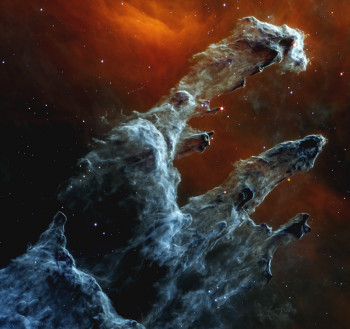 Seminar: Radio pulsars: a polarized perspective - Lucy Oswald Seminar: Radio pulsars: a polarized perspective - Lucy OswaldCentre for Theoretical Physics and Astronomy Radio pulsars are used as high precision tools to probe extremes of physics, reveal hidden galaxy structures and search for gravitational waves. However, we do not yet fully understand the physics driving their radio emission, which is fundamental to advancing these areas of science. Studying the polarimetry of pulsar radio emission provides a unique way to address this problem. In 1969, Radhakrishnan and Cooke proposed the "rotating vector model" to explain the polarization of radio pulses... |
| Thu 26 Mar 2026 13:00 - 14:00 | Seminar: Constantino Tsallis (Rio de Janeiro): Complexity: what is it, and how does it relate to possibly nonadditive entropic functionals? Centre for Complex Systems Boltzmann-Gibbs statistical mechanics is, together with Newton, Einstein and quantum mechanics, and Maxwell electromagnetism, one of the pillars of contemporary theoretical physics. This theory satisfactorily handles uncountably many physical systems... |
| Thu 26 Mar 2026 14:00 - 15:00 | Seminar: Euan McGonigle (University of Southampton): General purpose time series segmentation using estimating functions Centre for Probability, Statistics and Data Science In time series analysis, many data sets of practical interest contain abrupt changes in structure, such as the canonical setting of change points in the mean. We propose new methodology based on estimating functions in a general framework for... |
| Wed 25 Mar 2026 14:00 - 15:00 | Seminar: Anuraag Bukkuri (City St George's University of London): Mathematical Models of Cancer Evolutionary Ecology and Cancer Social Science Centre for Probability, Statistics and Data Science The Bukkuri Lab develops and applies mathematical and philosophical methods to pose and address questions at the interface of cancer, evolutionary ecology, and social science. In this talk, I will focus on our cancer evolutionary ecology theme. I... |
| Tue 24 Mar 2026 14:30 - 15:30 | GAnG Seminar: Jingeon An (U. Basel) Centre for Geometry, Analysis and Gravitation NOTE: Pre talk intro for non experts starts at 2pm, with seminar starting at 2.30pm Speaker: Jingeon An, University of Basel. Title: Minimal surfaces and Allen-Cahn equations. Abstract: Minimal surfaces and Allen–Cahn equations are central topics in geometric partial differential equations and geometric measure theory. We provide a brief overview of the research history, with particular focus on the interface regularity of Allen–Cahn equations. We then introduce a promising new... |
| Fri 20 Mar 2026 15:00 - 17:00 | Seminar: Theory Seminar: informal talks by Paolo Olive and Frederik Dahlqvist Centre for Fundamentals of AI and Computational Theory This week's theory seminar session will be two informal talks/discussions. The first discussion will be led by Paulo be on negation and strong negation (ideas connected to Gurevich logic, modal logic, linear logic). The other discussion led by... |
| Thu 19 Mar 2026 | Seminar: Xiaowen Dong (Oxford): Bayesian optimisation of graph-based functions Centre for Probability, Statistics and Data Science The increasing availability of graph-structured data motivates a new type of optimisation problems over graph-based functions, i.e., searching for the graph or node that maximises the value of an underlying function. Such optimisation problems are... |
| Thu 19 Mar 2026 11:00 - 12:00 |  Seminar: Metasurfaces: building blocks for tomorrow’s Technologies - Prof. Mohsen Rahmani and Dr. Lei Xu, Nottingham Trent University (UK) Seminar: Metasurfaces: building blocks for tomorrow’s Technologies - Prof. Mohsen Rahmani and Dr. Lei Xu, Nottingham Trent University (UK)Centre for Electronics Seminar Online Link Synopsis Light-matter interactions can be highly controlled via nanoscale structures, hundreds of times thinner than human hair. Indeed, a single layer of designed and engineered subwavelength nanostructures, so-called metasurfaces, can resonantly couple to incident light and manipulate its behaviour on demand. Indeed, metasurfaces are a valuable tool for enhancing nanoscale light-matter interactions by exciting both optically induced electric and magnetic Mie... |
| Thu 19 Mar 2026 13:00 - 14:00 | Seminar: Karl J. Friston (UCL): The physics of sentience Centre for Complex Systems How can we understand ourselves as sentient creatures? And what are the principles that underwrite sentient behaviour? This presentation uses the free energy principle to furnish an account in terms of active inference. First, we will try to... |
| Thu 19 Mar 2026 14:00 - 15:00 |  Seminar: Kostas Skenderis (Southampton U.) Seminar: Kostas Skenderis (Southampton U.)
Centre for Theoretical Physics and Astronomy Gravitational charges and radiation in de Sitter I will present a first principles rigorous derivation of gravitational charges in de Sitter using (suitably adapted version of) Noether's theorem, and show that they satisfy a flux-balance law. The variational problem in de Sitter gravity requires that one specifies a conformal class up to diffeomorpshisms at future and past infinity. Gravitational radiation is possible only when the conformal class is non-trivial. I will illustrate the... |
| Wed 18 Mar 2026 10:30 - 12:00 | 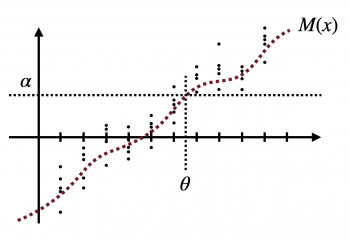 Seminar: Paulo Oliva: Stochastic Approximation. Fundamentals of AI reading group Seminar: Paulo Oliva: Stochastic Approximation. Fundamentals of AI reading groupCentre for Fundamentals of AI and Computational Theory Paulo Oliva will talk about Stochastic Approximation, from its birth in 1952 (Robbins-Monro method), through Dvoretzky's generalisation (1956), the development of stochastic gradient descent (Kiefer-Wolfowitz and Rosenblatt, 1958), and the formalisation of backpropagation (1986), up to more recent developments. After Paulo's talk and discussions, there will be lunch from 12:00. |
| Wed 18 Mar 2026 13:00 - 14:00 | Seminar: Codina Cotar (UCL): Some new results on non-convex random gradient Gibbs measures Centre for Probability, Statistics and Data Science In this talk we consider a class of gradient models with and without disorder. The simplest example of such models is the (lattice) Gaussian Free Field, which has quadratic potential V(s)=s^2/2. A well known result of Funaki and Spohn asserts that,... |
| Wed 18 Mar 2026 13:00 - 14:00 | Seminar: Making Dialogue Grounding Data Rich: A Three-Tier Data Synthesis Framework for Generalized Referring Expression Comprehension Centre for Human-Centred Computing In this week's CogSci Seminar our own PhD Student Juexi Shao will present his recent paper on "Making Dialogue Grounding Data Rich: A Three-Tier Data Synthesis Framework for Generalized Referring Expression Comprehension". Juexi is a PhD student of... |
| Wed 18 Mar 2026 13:30 - 15:00 | 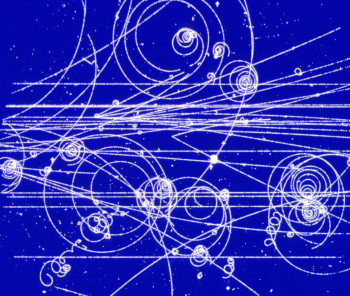 Seminar: Lex Millins - The MIGDAL experiment: Measuring a rare atomic process to aid the search for dark matter Seminar: Lex Millins - The MIGDAL experiment: Measuring a rare atomic process to aid the search for dark matter
Centre for Theoretical Physics and Astronomy Many dark matter experiments are exploiting the Migdal effect, a rare atomic process, to improve sensitivity to low-mass WIMP-like dark matter candidates. Following the recent first observation of the Migdal effect in nuclear scattering [1] the characterisation of the effect and measurements of the cross-section in a range of elements is of great importance to the DM community. The MIGDAL experiment aims to characterise the Migdal Effect in a range of species and test theoretical predictions of... |
| Wed 18 Mar 2026 15:00 - 16:00 | Seminar: Antonio Criscuolo: Intra- and inter-individual variability in body-brain-behavioral rhythms: an ongoing multimodal study with smart wearables Centre for Multimodal AI Abstract: Our sensory landscape features a multitude of semi-periodic input streams: there are temporal regularities in speech and music, as well as in bodily physiological activity. The brain displays (semi-)rhythmic patterns of activity, too:... |
| Tue 17 Mar 2026 11:00 - 12:00 | 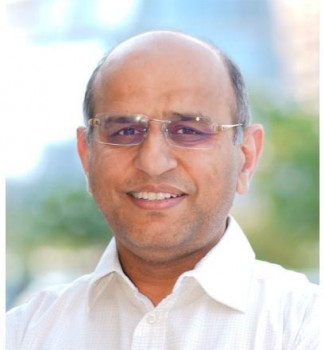 Seminar: Flexible Printed Electronics for Robotics and Interactive Systems - Prof. Ravinder Dahiya, Northeastern University (USA) Seminar: Flexible Printed Electronics for Robotics and Interactive Systems - Prof. Ravinder Dahiya, Northeastern University (USA)Centre for Electronics Seminar Online Link Synopsis The miniaturization of electronics has enabled rapid advancements in computing and communication over the past several decades. However, as we look toward the next frontier of technological innovation, it is increasingly evident that miniaturization alone is not enough. A new class of emerging applications—including wearable systems, soft robotics, biomedical implants, interactive devices, and flexible displays—demands electronic systems that not only... |
| Tue 17 Mar 2026 13:00 - 18:00 | 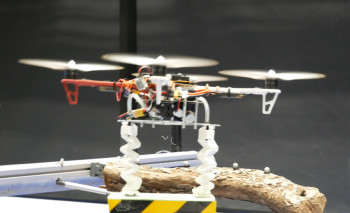 Cross-sector Aerial Robotics Workshop: Identifying Applications, Common Challenges and Opportunities Across Sectors Cross-sector Aerial Robotics Workshop: Identifying Applications, Common Challenges and Opportunities Across SectorsCentre for Advanced Robotics Supported and funded by the UK Robotics and Autonomous Systems (UK-RAS) Network under the Aerial Physical Intelligence Topic Group, we are hosting a cross-sector workshop on 17h March 2026, at Queen Mary University of London, focused on the future of aerial robotics beyond inspection. This is a satellite event of Queen Mary University of London's Night of Science and Engineering. Aerial systems are moving rapidly from passive sensing toward physical interaction, manipulation, and deployment... |
| Tue 17 Mar 2026 14:30 - 15:30 | GAnG Seminar: Javier Subils Centre for Geometry, Analysis and Gravitation NB: Pre seminar for non experts starts at 2pm, main talk 2.30pm Title: Inhomogeneous static black branes as critical bubbles in phase transitions Abstract: First-order phase transitions in the early Universe or in neutron stars can leave observable gravitational wave imprints. But predicting these signals requires precise understanding of bubble dynamics and, in particular, the nucleation of critical bubbles of the stable phase within a metastable plasma. Using holography, I present a... |
| Mon 16 Mar 2026 11:00 - 12:00 | Seminar: Intelligent Light Sensing with Bandgap Engineering - Prof. Zhipei Sun, Aalto University, Finland Centre for Electronics Click to Join the Online Seminar Synopsis Intelligent light sensing is central to applications in spectroscopy, imaging, communications, and environmental monitoring. Bandgap engineering provides an exciting approach for such technologies,... |
| Mon 16 Mar 2026 14:00 - 15:00 | Seminar: Dr Supriya Pan - Probing New Physics Scenarios in DUNE Using Accelerator and Atmospheric Neutrinos
Centre for Experimental Physics and Quantum Technology The Deep Underground Neutrino Experiment (DUNE) is a next-generation long-baseline neutrino experiment designed to determine the remaining unknown parameters of the standard three-flavor neutrino oscillation framework, including the octant of θ23, the neutrino mass hierarchy, and the CP-violating phase. In addition to its primary oscillation program, DUNE will provide a powerful platform to probe several physics beyond the Standard Model. In this talk, I will explore the sensitivity of DUNE to... |
| Fri 13 Mar 2026 12:30 - 13:30 | Seminar: Seminar: Assembly and epigenetic inheritance of human centromeres
Centre for Molecular Cell Biology Speaker: Lars Jensen, Professor of Molecular Genetics, Department of Biochemistry at the University of Oxford Abstract: The centromere is a specialized chromatin domain that drives accurate chromosome segregation. Remarkably, centromere... |
| Thu 12 Mar 2026 14:00 - 15:00 | Seminar: Yu Luo (KCL): General Bayesian updating using loss functions Centre for Probability, Statistics and Data Science In the usual Bayesian setting, a full probabilistic model is required to link the data and parameters, and the form of this model and the inference and prediction mechanisms are specified via de Finetti's representation. In general, such a... |
| Thu 12 Mar 2026 14:30 - 15:30 | GAnG Seminar: Michal P. Heller (Ghent University / Jagiellonian University) Centre for Geometry, Analysis and Gravitation Title: Quasinormal perspective on nonthermal fixed points Abstract: I will present nonthermal fixed points as paradigmatic far from equilibrium weak coupling phenomena characterised by a self-similar evolution in time. I will then discuss what strong coupling perspective based on the quasinormal modes insights into holographic thermalization and hydrodynamics can teach us about nonthermal fixed points. Based on 2307.07545, 2502.01622 and 2504.18754. |
| Wed 11 Mar 2026 15:00 - 16:00 | Seminar: Orchisama Das: Efficient rendering of room acoustics in complex and connected spaces for eXtended Reality applications Centre for Multimodal AI Abstract XR applications such as gaming require high-quality 6DoF acoustic rendering to achieve perceptual immersion. In Virtual Reality (VR), room geometry and materials are known, whereas in Augmented Reality (AR) they must be inferred from... |
| Wed 11 Mar 2026 15:00 - 18:00 |  Conference: Triangle Seminars Conference: Triangle SeminarsCentre for Theoretical Physics and Astronomy Please register at: https://forms.gle/9fF2GWkoMWv4D2J19 15:00 - Marc Henneaux (Collège de France) Abstract: Asymptotic symmetries, sometimes also known as "large gauge transformations", provide important dynamical information on theories with a gauge freedom formulated on spacetimes having a "boundary at infinity". A review of asymptotic symmetries will be given following the Hamiltonian approach. General features (such as the form of the symmetry generators and the structure of the... |
| Tue 10 Mar 2026 14:30 - 15:30 | GAnG Seminar: Suvendu Giri (Uppsala) Centre for Geometry, Analysis and Gravitation NOTE: No pre talk this week, so seminar starting at 2.30pm Title: A "dictionary" to test GR with GW: from observations to theory Abstract: GR, while one of the most successful and well-tested theories to date, is expected to receive corrections at high energies—through higher-curvature terms, additional degrees of freedom, or both. Given the vast landscape of possible extensions, how can we test them in a systematic way? I will present a general framework for interpreting deviations... |
| Fri 6 Mar 2026 14:30 - 15:30 | Seminar: Gravitational instability revisited in the youngest discs - Alison Young Centre for Theoretical Physics and Astronomy There is plenty of evidence now that planet formation begins very soon after the formation of the disc itself. At early stages, protostellar discs tend to be more massive and are therefore likely to be susceptible to the gravitational instability, which can play a key role in their evolution and in planet formation. As such, there is renewed interest from the planet formation community in exploring the role of the gravitational instability in building planets. So far, modelling has largely been... |
| Fri 6 Mar 2026 15:00 - 17:00 | Søren Riis: Drift and Selection in LLM Text Ecosystems. Theory Seminar
Centre for Fundamentals of AI and Computational Theory This Friday Søren Riis will talk on Drift and Selection in LLM Text Ecosystems Abstract: AI-generated text increasingly feeds back into the public record that later AI systems learn from. This talk develops a mathematical framework that... |
| Thu 5 Mar 2026 14:00 - 15:00 | Seminar: Helen Ogden (University of Southampton): Adaptively-Structured Mixed Models for Simple Clustered Data Centre for Probability, Statistics and Data Science I will describe a new class of flexible mixed-effects models for simple clustered or longitudinal data. The idea of these Adaptively-Structured Mixed Models (AdaStruMMs) is to replace pre-specified random-effects structure by unknowns to be... |
| Thu 5 Mar 2026 14:00 - 15:00 | Seminar: Olaf Hohm (Hamburg U., Inst. Theor. Phys. II) Centre for Theoretical Physics and Astronomy Color-kinematics duality from an algebra of superforms I give an introduction to an ongoing research program to find a first-principle and off-shell derivation of color-kinematics duality and the double-copy nature of gravity directly from field theory, using the framework of homotopy algebra. I focus on recent progress that maps the homotopy algebra of (color-stripped) Yang-Mills theory to the (de Rham) algebra of differential forms on a simple superspace. |
| Wed 4 Mar 2026 13:00 - 14:00 | Seminar: Sanjay Kumar (Banaras Hindu U): Stochastic Dynamics of Polymer Translocation Centre for Complex Systems Polymer translocation through narrow pores is a fundamental process with broad relevance, ranging from biological phenomena such as DNA transport through nuclear pores to the development of nanopore-based sequencing technologies. In this work, we... |
| Wed 4 Mar 2026 13:30 - 15:00 | Seminar: ATLAS Muon Upgrade - Arisa Wada Centre for Theoretical Physics and Astronomy ATLAS Muon Upgrade - details to follow 13:30-14:00 - In person refreshments 14:00-15:00 - seminar |
| Wed 4 Mar 2026 15:00 - 16:00 |  Seminar: Inter-domain and multi-stakeholders system infrastructure orchestration Seminar: Inter-domain and multi-stakeholders system infrastructure orchestrationCentre for Networks, Communications and Systems Link to join the seminar will be provided. Speaker: Daphne Tuncer Abstract: The engineered systems of a city have traditionally been operated in silos, per domain, following vertical mode of collaboration. In the recent years, a number of applications in different areas of city systems (e.g.,energy, built environment, transport) have however been exploring the potential of horizontal collaboration to develop new types of services, such as smart charging solutions, green computing services,... |
| Wed 4 Mar 2026 15:00 - 16:00 | Seminar: CCMP Seminar Series. Dr Alston Misquitta: Symmetry-Adapted Relaxation Theory (SART): Exact theory of embedding and a new way of calculating interaction energies with infinite-order induction relaxation of the monomers
Centre for Experimental Physics and Quantum Technology Title: Symmetry-Adapted Relaxation Theory (SART): Exact theory of embedding and a new way of calculating interaction energies with infinite-order induction relaxation of the monomers Speaker: Dr Alston Misquitta (QMUL) Abstract: Symmetry... |
| Tue 3 Mar 2026 14:30 - 15:30 | GAnG Seminar: Allen Fang Centre for Geometry, Analysis and Gravitation NOTE: Pre talk intro for non experts starts at 2pm, with seminar starting at 2.30pm Speaker: Allen Fang Title: On the uniqueness of Kerr-de Sitter Abstract: The uniqueness of the Kerr-de Sitter family of black hole spacetimes as stationary solutions to the Einstein vacuum equations is a crucial ingredient to understanding the final states of positive cosmological constant universes, such as our physical universe. In the asymptotically flat case, Kerr was shown to be the unique... |
February 2026 | |
| Fri 27 Feb 2026 14:30 - 15:30 | Seminar: Data-Driven Closures for Hybrid Plasma Models in Space Plasmas - George Miloshevich Centre for Theoretical Physics and Astronomy Modelling turbulence kinetically in space remains challenging due to the multiscale nature of plasma. One approach is to adopt a fluid model hierarchy and close it using a phenomenological expression or law derived from local kinetic simulations. We address this challenge from the perspective of decaying turbulence in the near-Earth magnetosheath using fully kinetic particle-in-cell (PIC) simulations. We apply machine learning techniques to extract a non-local five-moment electron-pressure... |
| Thu 26 Feb 2026 13:00 - 14:00 | Seminar: Edon Kelmendi (QMUL): Decision Problems for Linear Dynamical Systems Centre for Complex Systems This talk is about algorithms for iterations of linear maps. Given a linear map in the form of a matrix M with rational entries, and some point x, what can we say algorithmically about the sequence Mx, M^2 x, M^3 x, … . In particular, is there an... |
| Thu 26 Feb 2026 14:00 - 15:00 | Seminar: Rafael Aoude (U. Edinburgh, Higgs Ctr. Theor. Phys.) Centre for Theoretical Physics and Astronomy Entanglement and Decoherence at colliders Recent measurements at the Large Hadron Collider have observed entanglement in the spins of top pairs. This has motivated a substantial body of theoretical work on various quantum observables (e.g., entanglement, magic and decoherence) for the spin degrees of freedom of SM particles. In this talk, I will revisit the recent top-pair entanglement proposal, its measurement analysis, and how one can go beyond that. In particular, the effects of new... |
| Thu 26 Feb 2026 14:00 - 15:00 | Seminar: Chengchun Shi (LSE): Doubly Robust Alignment for Large Language Models Centre for Probability, Statistics and Data Science This talk focuses on reinforcement learning from human feedback (RLHF) for aligning large language models with human preferences. While RLHF has demonstrated promising results, many algorithms are highly sensitive to misspecifications in the... |
| Wed 25 Feb 2026 14:00 - 15:00 | Seminar: Thomas Wolley (Cardiff University): The Power of Noise Centre for Probability, Statistics and Data Science Turing patterns have found huge success as a mechanism for explaining patterns in biology, chemistry and phyiscs. However, one of the problems of applying Turing's theory to biology is the "Robustness Problem". Namely, small changes to the input... |
| Wed 25 Feb 2026 14:00 - 15:00 |  Seminar: Towards Physical Neural Networks for Wireless Communications - Prof. Marco Di Renzo, King’s College London (UK) Seminar: Towards Physical Neural Networks for Wireless Communications - Prof. Marco Di Renzo, King’s College London (UK)Centre for Electronics Online Seminar Link Synopsis A physical neural network is a type of artificial neural network in which an electrically adjustable material is used to emulate the function of a neural neuron model. The term "physical" neural network is used to emphasize the reliance on physical hardware utilized to emulate neurons as opposed to software-based approaches. In this talk, we discuss the role of physical neural networks in the context of wave-domain information processing for wireless... |
| Tue 24 Feb 2026 14:30 - 15:30 | GAnG Seminar: Marcelo Malagutti (UCL) Centre for Geometry, Analysis and Gravitation NOTE: Pre talk intro for non experts starts at 2pm, with seminar starting at 2.30pm Title: Scattering for the Steklov problem on an infinite wedge Abstract: The Steklov problem is the spectral problem for the Dirichlet-to-Neumann map (DtN) for the Laplacian–an operator which appears, for example, in the Calderon problem and the Sloshing problem. Motivated by the Steklov problem on higher dimensional, piecewise smooth Lipschitz domains, we consider the massive DtN map (i.e. the DtN map... |
| Mon 23 Feb 2026 11:00 - 12:00 |  Seminar: Terahertz Commercial Opportunities 2026-2046 - Dr Peter Harrop, CEO at Zhar Research Seminar: Terahertz Commercial Opportunities 2026-2046 - Dr Peter Harrop, CEO at Zhar ResearchCentre for Electronics Seminar Online Link Synopsis This presentation gives an industry view of terahertz opportunities emerging 2026-2046. Terahertz frequencies attract for many reasons. Fusion MW-level gyrotrons are more efficient 0.1THz. 6G Communications can only meet most of its promises such as Tbps data rates and sub mS latency if it moves far beyond the 5G frequencies at launch 2030. 0.1-0.3THz for one kilometer in all-weather conditions? Military/ security THz market is largest, notably body scanners... |
| Fri 20 Feb 2026 14:30 - 15:30 | Seminar: Disentangling Galaxy Bias in Cross-Correlation Tomography - Sara Maleubre Molinero Centre for Theoretical Physics and Astronomy How do we reconstruct the Universe's thermal and star-forming history without being fooled by galaxy bias? Using the FLAMINGO hydrodynamic simulations, we show that cross-correlation tomography can be made robust against small-scale clustering effects. We build estimators for the halo bias-weighted electron pressure 〈bPe〉 and star-formation density 〈bρSFR〉—quantities accessible through tomographic analyses of the SZ and CIB signals—and demonstrate 1–3% accuracy across redshift and... |
| Thu 19 Feb 2026 13:00 - 14:00 | Seminar: Luke Davis (U Edinburgh): Stochastic geometry of active matter Centre for Complex Systems For equilibrium hard spheres the stochastic geometry of the insertion space, the room to accommodate another sphere, relates exactly to the equation of state. We begin to extend this idea to active matter, analyzing insertion space for repulsive... |
| Thu 19 Feb 2026 14:00 - 15:00 | Seminar: Jung-Wook Kim (CERN) Centre for Theoretical Physics and Astronomy Magnusian: an integrated approach to gravitational dynamic One of key theoretical inputs for gravitational wave detection is an analytic description of binary dynamics, which provides the foundation for constructing waveform models used to generate waveform templates for detection. The conventional approach to binary dynamics is to construct the effective two-body Hamiltonian, which provides the equations of motion of the binary source. Motivated by the eikonal approximation of 2-to-2... |
| Thu 19 Feb 2026 14:00 - 15:00 | Seminar: Edson Utazi (University of Southampton): Mapping the risk of Guinea worm disease in sub-Saharan Africa using geostatistical and machine learning approaches Centre for Probability, Statistics and Data Science High-resolution risk maps of infectious diseases such as Guinea worm disease (GWD, dracunculiasis) are crucial to guide the planning, implementation and monitoring of intervention strategies, including water treatment with Abate™ and surveillance... |
| Wed 18 Feb 2026 13:00 - 14:00 | Seminar: Pierre-François Rodriguez (ICL): Loop soups in 2 + epsilon dimensions Centre for Probability, Statistics and Data Science Abstract: the talk will be about a natural percolation model built from the so-called Brownian loop soup. We will give sense to studying it in dimension d = 2 + epsilon, with epsilon varying in [0,1], and discuss how to perform a rigorous "epsilon... |
| Wed 18 Feb 2026 14:00 - 15:00 | Seminar: Eleonora Secchi (ETH): Nonlinear rheology and mass transport in bacterial biofilms: a polymer-network perspective Centre for Probability, Statistics and Data Science Biofilms are aggregates of bacteria embedded in a self-secreted extracellular polymeric substance (EPS) matrix [1]. From a physical perspective, they can be regarded as living complex fluids [2]: soft, heterogeneous polymer networks that undergo... |
| Wed 18 Feb 2026 14:00 - 15:00 | Seminar: Chemistry Seminar Series - Dr Annina Lieberherr (Quantum Motion) Centre for Experimental Physics and Quantum Technology |
| Wed 18 Feb 2026 15:00 - 16:00 |  SEMS Seminars: Prof Sonja Billerbeck, Unlocking the Yeast Toxicome, Imperial College London SEMS Seminars: Prof Sonja Billerbeck, Unlocking the Yeast Toxicome, Imperial College LondonCentre for Bioengineering Title: The yeast toxicome: A potential source for new antifungals for biocontrol, food and human health. Abstract: Fungal pathogens are an emerging threat to human health and food security. Very few fungicides are available and resistance to these is rising. It is a long-standing challenge to develop new antifungals. As eukaryotic pathogens, fungi offer very few selective drug targets and we urgently need new strategies for antifungal development. Ascomycete yeasts – such as... |
| Wed 18 Feb 2026 15:00 - 16:00 |  Seminar: Integrated, Intelligent and Ubiquitous 6G: Beyond Just Communications Seminar: Integrated, Intelligent and Ubiquitous 6G: Beyond Just CommunicationsCentre for Networks, Communications and Systems Please register your attendance by using the link below. Registration Link: Centre for Networks, Communications, and Systems - Seminar [18/02/2026] Registration – Fill in form Speaker: Prof. Aryan Kaushik Abstract: Prof. Kaushik will present on the wireless evolution towards latest IMT-2030/6G framework, trends, challenges, standardization aspects, new spectrum opportunities, and related use cases. In particular we will discuss about achieving the "integrated", "intelligent" and ... |
| Tue 17 Feb 2026 14:00 - 15:00 | Seminar: You (Neil) Zhang: From Neural Fields to Perception-Informed Learning: Scalable and Perceptually Grounded HRTF Personalization Centre for Multimodal AI C4DM Seminar: You (Neil) Zhang: From Neural Fields to Perception-Informed Learning: Scalable and Perceptually Grounded HRTF Personalization QMUL, School of Electronic Engineering and Computer Science Centre for Digital Music Seminar Series ... |
| Tue 17 Feb 2026 14:30 - 15:30 | GAnG Seminar: Daniela Cors (Cambridge) Centre for Geometry, Analysis and Gravitation NOTE: Pre talk intro for non experts starts at 2pm, with seminar starting at 2.30pm Title: tbc. |
| Mon 16 Feb 2026 12:00 - 13:00 | Seminar: Raphaël Henry (Aix-Marseille University): Smooth words and their factor complexity Centre for Complex Systems Smooth words over an alphabet of integers {a,b} are infinite words that are infinitely derivable, the most famous example being the Oldenburger-Kolakoski word over {1,2}. We study here the factor complexity of these words: we first show bounds for... |
| Fri 13 Feb 2026 14:30 - 15:30 | ML Seminar - Alexander Stapleton Centre for Theoretical Physics and Astronomy Title: A path to natural language through tokenisation and transformers Abstract: Natural language exhibits robust statistical regularities, most notably Zipf's and Heaps' laws, yet how these relate to the tokenisation schemes used in transformer-based language models remains unclear. In this talk, I will examine how byte–pair encoding (BPE) reshapes corpus statistics and mediates between linguistic structure and transformer predictions. Starting from an idealised Zipfian setting, I... |
| Thu 12 Feb 2026 13:00 - 14:00 | Seminar: David Mguni (QMUL): Language, Learning, and Limits: Representations at the Frontier of General-Purpose AI Centre for Complex Systems Recent advances in large language models have encouraged the view that natural language, mediated through prompting, could act as a universal interface for general-purpose learning. In this talk, I challenge that assumption by analysing the... |
| Thu 12 Feb 2026 14:00 - 15:00 | Seminar: Chris Hull (Imperial Coll., London) Centre for Theoretical Physics and Astronomy Superstring Field Theory String field theory provides a 2nd quantised non-perturbative formulation of string theory. In this seminar, the field theory for the bosonic string is introduced and the extension to the superstring discussed. Sen's superstring field theory successfully formulates perturbative superstring theory but has a number of strange features. The action is not fully background independent and it does not have standard diffeomorphism symmetry - instead there is an exotic gauge... |
| Thu 12 Feb 2026 14:00 - 15:00 | Seminar: Dalia Chakrabarty (University of York): How Newton helps to forecast accurately Centre for Probability, Statistics and Data Science The state – i.e. "location" and "rate" – that a mechanistic system attains at a future time, is deterministically computable, given the state it is in now, since we know the potential function that causally connects any two states attained... |
| Thu 12 Feb 2026 14:00 - 15:00 | Seminar: ARQ Robotics Seminar: A Bowel Phantom for Testing Next-Generation Endoluminal Robots and Therapies, by Dr Carlo Alberto Seneci Centre for Advanced Robotics Title: A Bowel Phantom for Testing Next-Generation Endoluminal Robots and Therapies Abstract: Soft-robotic phantoms can accelerate translation of medical devices and procedures by offering a repeatable, ethically sustainable testing framework. The... |
| Wed 11 Feb 2026 13:00 - 14:00 | Seminar: Alexandre Stauffer (King's College London): Non-monotone phase transition in interacting particle systems Centre for Probability, Statistics and Data Science In this talk we will discuss a reaction-diffusion particle system which has a non-monotone phase transition. I will explain the techniques used to analyze monotone models and how they can be refined to analyze non-monotone particle systems.Based on... |
| Wed 11 Feb 2026 13:30 - 15:00 | Seminar: ATLAS Higgs - Chiara Arcangeletti Centre for Theoretical Physics and Astronomy ATLAS Higgs - details to follow 13:30-14:00 - In person refreshments 14:00-15:00 - seminar |
| Tue 10 Feb 2026 14:30 - 15:30 | GAnG Seminar: Prachi Sahjwani (Cardiff) Centre for Geometry, Analysis and Gravitation NOTE: Pre talk intro for non experts starts at 2pm, with seminar starting at 2.30pm Title: Stability of Quermassintegral and Minkowski-Type Inequalities in Curved Spaces Abstract: In this talk I will discuss stability results for geometric inequalities, with a focus on inequalities arising in curved spaces. After introducing the notion of stability through the classical isoperimetric inequality, I will present results from my PhD concerning the stability of quermassintegral... |
| Fri 6 Feb 2026 14:30 - 15:30 | Seminar: Probing the early history of the Milky Way through ancient stars - Anke Ardern-Arentsen Centre for Theoretical Physics and Astronomy The oldest, most metal-poor stars in the Milky Way formed in pristine environments in the early Universe and preserve unique clues to the first generations of stars and to our Galaxy's early assembly. The oldest stars are expected in the Milky Way's inner regions, and metal-poor populations across our Galaxy and its satellites inform our broader understanding of early galaxy formation. I will discuss current views on the Milky Way's early history from two perspectives: metal-poor stars in the... |
| Thu 5 Feb 2026 13:00 - 14:00 | Seminar: Martina Contisciani (CEU Vienna): Multiscale network modeling of migration flows in Austria Centre for Complex Systems Migration plays a crucial role in urbanization, segregation, gentrification, and numerous phenomena related to socioeconomic development. Understanding the diverse drivers of mobility not only provides a deeper comprehension of the underlying social... |
| Thu 5 Feb 2026 14:00 - 15:00 | Seminar: Enrico Pajer (Cambridge U., DAMTP) Centre for Theoretical Physics and Astronomy An open system approach to cosmology Cosmological models and predictions rely extensively on the well-established field theory framework of particle physics. However, a qualitatively new challenge arises: cosmological systems inherently contain substances with poorly constrained macroscopic properties and entirely unknown microphysics, such as the inflaton sector, dark matter, and dark energy. This results in a rich array of novel phenomena, including dissipation, stochastic fluctuations, out... |
| Wed 4 Feb 2026 13:30 - 15:00 | Seminar: Neutrino telescopes, as a bridge between multi-messenger astronomy and neutrino oscillation physics - Chiara Lastoria Centre for Theoretical Physics and Astronomy Neutrino telescopes have become essential tools at the intersection of astrophysics and particle physics. Originally conceived to provide insights into some of the most energetic and distant phenomena in the Universe, these large-scale detectors will also contribute to the precision measurement of the oscillation parameters. This seminar will focus on KM3NeT, which has recently uncharted the PeV energy territory with the detection of the most energetic neutrino ever observed so far. At the... |
| Tue 3 Feb 2026 14:30 - 15:30 | POSTPONED - GAnG Seminar: Charlie Hoy (Portsmouth) Centre for Geometry, Analysis and Gravitation This event is postponed due to speaker illness, further details to follow. NOTE: Pre talk intro for non experts starts at 2pm, with seminar starting at 2.30pm Title: Bridging Simulation and Inference: Numerical relativity informed Bayesian analyses Abstract: Inferring the properties of colliding black holes from gravitational-wave observations is subject to systematic errors arising from modelling uncertainties. Although the accuracy of each model can be calculated through... |
January 2026 | |
| Fri 30 Jan 2026 14:00 - 15:00 | ML Seminar - Thomas Harvey Centre for Theoretical Physics and Astronomy Title: Geometry and Learning Abstract: During gradient descent, a metric is imposed on the parameters, usually called the gradient preconditioner in the literature. This preconditioner determines how we measure distances in parameter space when taking optimisation steps. In standard stochastic gradient descent this is taken to be the Euclidean metric, but many other choices are possible: the Adam optimiser can be viewed as one such choice. With second-order methods proving intractable... |
| Thu 29 Jan 2026 13:00 - 14:00 | Seminar: Markus Whiteland (Loughborough): Automaticity aspects of combinatorial complexity functions of infinite words Centre for Complex Systems Infinite words can be used to encode interesting properties of the orbits of discrete dynamical systems. Analysing the complexity of such a system may then be analysed through this encoding. Combinatorially speaking, quite often its complexity is... |
| Thu 29 Jan 2026 14:00 - 15:00 | Seminar: Rowland Seymour (Birmingham): Comparative Judgement Modeling to Map Forced Marriage at Local Levels Centre for Probability, Statistics and Data Science Forcing someone into marriage against their will is a violation of their human rights. In 2021, the county of Nottinghamshire, UK, launched a strategy to tackle forced marriage and violence against women and girls. We set out to map the risk of... |
| Thu 29 Jan 2026 14:00 - 15:00 | Seminar: Luke Lippstreu (U. Edinburgh, Higgs Ctr. Theor. Phys.) Centre for Theoretical Physics and Astronomy Novel properties of QFTs with long-range interactions Infrared divergences obscure key analytic properties of scattering amplitudes, exposing gaps in our understanding of unitarity, causality, and crossing symmetry in theories with long-range forces. In this talk, I will use a simple model to illustrate novel analytic features of long-range theories, including modifications to the connectedness structure of amplitudes and to the general optical theorem. Since the LSZ reduction formula does... |
| Wed 28 Jan 2026 13:00 - 14:00 | Seminar: CogSci seminar series: "From Helpful to Valuable: What Changed and Why It Matters" Centre for Human-Centred Computing A few years ago, most chatbots were scripted FAQs that struggled outside the happy path. Today, assistants can understand free form questions, ask clarifying follow ups, ground answers in trusted information, and take useful actions, while knowing... |
| Wed 28 Jan 2026 13:00 - 14:00 | Seminar: From Helpful to Valuable: What Changed and Why It Matters Centre for Human-Centred Computing For this week's CogSci seminar, we are pleased to have a guest speaker, Ayodele Olabiyi (a former MSc student of Yuntao), who leads the Digital Care Data and AI team at Vodafone AI. He will share his real-world experience in deploying the GenAI... |
| Tue 27 Jan 2026 14:30 - 15:30 | GAnG Seminar: Peter Cameron from Imperial College - Spacetime extensions in low regularity Centre for Geometry, Analysis and Gravitation NOTE: Pre talk intro for non experts starts at 2pm, with seminar starting at 2.30pm Title: Spacetime extensions in low regularity Abstract: It has been shown that the interior of a dynamical black hole (of the sort believed to occur in nature) contains a Cauchy horizon to which the spacetime metric extends continuously. However, Penrose's strong cosmic censorship conjecture states that in any such extension, the Christoffel symbols should fail to be locally square integrable (and... |
| Fri 23 Jan 2026 14:00 - 15:00 | Seminar: CMAI Seminar: Zhaokai Wang Centre for Multimodal AI C4DM Seminar: Zhaokai Wang: From Frames to Beats: Progress and Challenges in Video-to-Music Generation QMUL, School of Electronic Engineering and Computer Science Centre for Digital Music Seminar Series Seminar by: Zhaokai Wang Date/time:... |
| Fri 23 Jan 2026 15:00 - 17:00 | Seminar: Nicholas Pischke: Recent progress in proof mining and probability theory Centre for Fundamentals of AI and Computational Theory Nicholas Pischke from Bath, will be a guest speaker talking about proof mining On the surface, the theory of probability measures requires the use of proof theoretically strong principles to already develop some of the most basic notions. Contrary... |
| Thu 22 Jan 2026 13:00 - 14:00 | Seminar: Eng-Jon Ong (QMUL) Centre for Complex Systems |
| Thu 22 Jan 2026 14:00 - 15:00 | Seminar: Mathias Driesse (Humboldt U., Berlin) Centre for Theoretical Physics and Astronomy The Gravitational Compton Amplitude The gravitational Compton amplitude describes gravitational waves scattering off a single black hole and is therefore a one-body observable ideal for analyzing quadratic-in-curvature of generic (Kerr) black holes from an effective field theory point of view. Based on upcoming work together with Y. Fabian Bautista, Gustav Jakobsen, and Kays Haddad, in this talk, I will discuss what makes it worth studying and calculating explicitly. I briefly review... |
| Thu 22 Jan 2026 14:00 - 15:00 | Seminar: Cristina Gualdani (QMUL): Robust identification in repeated games: An Empirical approach to algorithmic competition Centre for Probability, Statistics and Data Science We develop an econometric framework for recovering structural primitives—-such as marginal costs—-from price or quantity data generated by firms whose decisions are governed by reinforcement-learning algorithms. Guided by recent theory and... |
| Wed 21 Jan 2026 13:30 - 15:00 | Seminar: Testing the laws of gravity and dark matter properties with cosmological observations - Dr Camille Bonvin Centre for Theoretical Physics and Astronomy In 1998, two groups of astrophysics discovered that the expansion of our Universe is accelerating, in direct contradiction with our expectations from General Relativity. This strange behaviour of our Universe could either be due to a new form of energy, called dark energy, or to a modification of the laws of gravity at large, cosmological scales. In this talk I will discuss how cosmological observations can be used to test the validity of General Relativity and the nature of dark matter. I will... |
| Fri 16 Jan 2026 11:00 - 12:00 | ML Seminar - Koji Hashimoto Centre for Theoretical Physics and Astronomy Title: Holography and optimal transport Abstract: Optimal transport and Wasserstein distance are often used in machine learning, in particular in diffusion models in which Fokker-Planck equation of the probability flow is optimized. We discuss how the idea of emergent spacetime in holography can fit the notion of optimal transport. We employ the simplest example of a single quantum harmonic oscillator and demonstrate that the Wasserstein distance of the optimal transport between... |
| Thu 15 Jan 2026 14:00 - 15:00 | Seminar: Sean A. Hartnoll (Cambridge U., DAMTP) Centre for Theoretical Physics and Astronomy Automorphic L-functions, primon gases and quantum cosmology I will review how the equations of general relativity near a spacetime singularity map onto an arithmetic hyperbolic billiard dynamics. The semiclassical quantum states for this dynamics are Maaβ cusp forms on fundamental domains of modular groups. For example, gravity in four spacetime dimensions leads to PSL(2,Z) while five dimensional gravity leads to PSL(2,Z[w]), with Z[w] the Eisenstein integers. The automorphic forms can be... |
| Wed 14 Jan 2026 14:00 - 15:00 | Seminar: Dr Ilham El Atmani - Neutrino–nucleus interactions and systematic uncertainties in next-generation oscillation experiments Centre for Theoretical Physics and Astronomy The next generation of long baseline experiments, DUNE and Hyper-Kamiokande, aim to measure CP violation and mass ordering with high precision. However, the sensitivity of these experiments is currently limited by systematic uncertainties related to interactions between neutrinos and nuclei. In this talk, we will examine the impact of nuclear effects, in particular multi-nucleon correlations (2p2h) and final-state Interactions (FSI), on energy reconstruction and parameter extraction. We will... |
| Mon 12 - Tue 13 Jan 2026 | 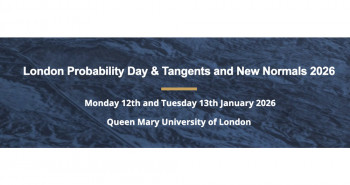 Conference: Geometric Methods in Probability Conference: Geometric Methods in ProbabilityCentre for Probability, Statistics and Data Science Monday 12th January will consist of a London Probability Day (LPD), a one-day conference in probability, with confirmed speakers: Annika Lang (Chalmers University of Technology and the University of Gothenburg) Iolo Jones (Durham University) Justin Salez (Université Paris-Dauphine & PSL) Tuesday 13th January will consist of a research workshop as part of the Tangents and New Normals (TnN) network. On this second day we will have motivational problems advertised by... |
| Wed 7 Jan 2026 13:30 - 15:00 | Seminar: Dr Alex Moor - Neutrinos: The Long and Short of It Centre for Theoretical Physics and Astronomy Neutrinos are tricky - no matter how massive they may be. We have been looking at them for nigh on a century and they still refuse to give up their secrets. This means we've been forced to get creative with ever more complex theories and equipment to pry at them. This seminar will look at two such sets of equipment - the Short Baseline Near Detector (SBND), and the Deep Underground Neutrino Experiment (DUNE). An overview of neutrino physics will also be discussed, along with some recent... |