


News
October 2026
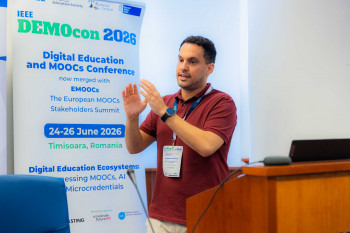
Queen Mary lecturer publishes research on innovative teaching methods in transnational mathematics education
Faculty of Science and Engineering
22 October 2026Two research papers led by Dr Dimitris Chiotis, Lecturer in Mathematics at Queen Mary University of London's Hainan transnational education (TNE) partnership, have been published by the Institute of Electrical and Electronics Engineers (IEEE), highlighting both individual scholarship and collaborative educational innovation in undergraduate mathematics teaching. Drawing on teaching practice ... [more]
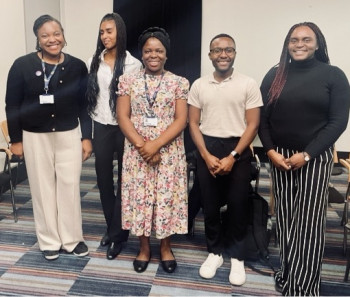
SEMS Black History Month Event
Faculty of Science and Engineering
22 October 2026As part of the School of Engineering and Materials Science (SEMS) celebration of Black History Month 2026, an event highlighting underrepresented voices in science and engineering was held on 21 October 2026. The event was extremely well attended, attracting a large audience both in person and online, demonstrating the strong interest within our ... [more]
Foundation programme welcomes more than 950 students thanks to exceptional teamwork across Science and Engineering
Faculty of Science and Engineering
19 October 2026This academic year, the Faculty of Science and Engineering's Foundation Programme has welcomed more than 950 students, creating pathways into degree programmes spanning mathematics, engineering, physics, chemistry, biology and computer science. Supporting such a large and diverse cohort is a significant undertaking. All foundation students complete the SEF042 Science and Engineering ... [more]
Scientists are a step closer to understanding and extending lifespan
Faculty of Science and Engineering
1 October 2026Researchers from Queen Mary University of London finds that directly activating a key cellular energy sensor extended lifespan in yeast, worms and flies, offering new clues about the biology of ageing. Scientists have taken an important step towards understanding how the biological processes of ageing might one day be targeted ... [more]
September 2026
New partnership with UIBE launches two AI-focused programmes in Beijing
Faculty of Science and Engineering
30 September 2026Queen Mary University of London has launched a new transnational education partnership with the University of International Business and Economics (UIBE) in Beijing, bringing two new undergraduate programmes to students in China. Embedded within the School of Mathematical Sciences, the partnership marks an important step in the Faculty of Science ... [more]
Professor Dino Distefano elected Fellow of the Royal Academy of Engineering
Faculty of Science and Engineering
24 September 2026Professor Dino Distefano, Professor of Software Verification at Queen Mary University of London, has been elected as a Fellow of the Royal Academy of Engineering. Professor Distefano is among 75 new Fellows elected by the Academy this year, recognising engineers and engineering researchers whose work has made an important contribution to ... [more]
Queen Mary scientist awarded prestigious £1.4 million UKRI Future Leaders Fellowship to uncover biodiversity's hidden benefits to people
Faculty of Science and Engineering
22 September 2026Dr Samuel Pironon, Lecturer in Conservation Biology in Queen Mary University of London's Faculty of Science and Engineering, has been awarded a highly competitive UK Research and Innovation (UKRI) Future Leaders Fellowship worth £1.4 million over four years, with the potential for further extension. The Future Leaders Fellowships programme supports talented ... [more]
First 'backwards' planet discovered around a small star challenges ideas about how planets form
Faculty of Science and Engineering
21 September 2026Queen Mary researchers help reveal an unusual exoplanet orbit that could provide new clues about the formation and evolution of planetary systems. Astronomers have discovered the first known planet orbiting a small, cool star on a retrograde orbit, travelling around its star in the opposite direction to the star's rotation. ... [more]
Giving students a voice in how they learn could transform the classroom experience
Faculty of Science and Engineering
17 September 2026Research from Queen Mary University of London explores how combining learner autonomy with student-led enquiry can create a more engaging and collaborative experience for international students learning academic English. What happens when students are given more say in what they learn, how they learn it and which questions they want ... [more]
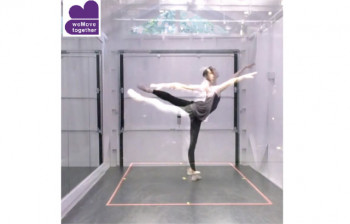
Scientists and leading dance institutions discover a better way to teach dance online
Faculty of Science and Engineering
16 September 2026From ballet studio to behavioural science: researchers uncover the best view for learning choreography. New research from Queen Mary University of London finds that less experienced dancers learn choreography more effectively when they follow a teacher's movements from the same perspective, with implications far beyond dance. A groundbreaking study led ... [more]

Not all roads lead to Rome: Study challenges what we think we know about Roman roads
Faculty of Science and Engineering
15 September 2026New analysis of almost 300,000 kilometres of Roman roads reveals a complex network shaped by people, places and landscapes, in which Rome was less central than is often assumed. A multidisciplinary team of researchers from Aarhus University in Denmark, Queen Mary University of London, and other European institutions analysed a dataset ... [more]
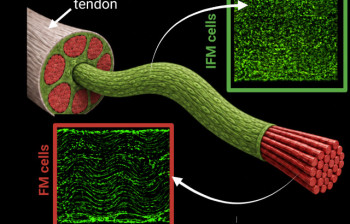
Scientists are one step closer to healing tendon disease in people and animals
Faculty of Science and Engineering
15 September 2026Study reveals how specialised tendon cells respond to changes in their physical environment, opening new possibilities for future research into tendon health and repair. Researchers at Queen Mary University of London are now closer to understanding tendinopathy, a common condition that can cause persistent pain and impaired movement in people ... [more]
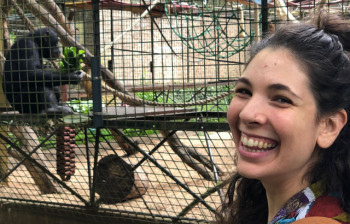
Chimpanzees have accents too, study finds
Faculty of Science and Engineering
3 September 2026A study by Queen Mary University of London finds that young chimpanzees develop dialect, providing a new way of understanding ontogenetic evolution. A study has found that young chimpanzees develop distinct population-specific vocal patterns as they mature (ontogeny), challenging the long-held assumption that their calls are inflexible and determined solely ... [more]
August 2026

Tiny atomic changes could lead to smarter wireless technology
Faculty of Science and Engineering
26 August 2026Queen Mary University of London researchers have discovered a new way to make wireless communication devices more adaptable, paving the way for smarter antennas, more efficient networks, and next-generation communication technologies. Researchers at Queen Mary University of London have shown that making extremely small changes to the structure of a ... [more]

Quantum computers could give scientists a new way to explore the hidden behaviour of matter
Faculty of Science and Engineering
26 August 2026Queen Mary University of London researchers develop a quantum computational spectroscopy approach that could open new ways of studying complex quantum systems. Scientists could have a new way to explore the hidden behaviour of matter, thanks to research involving Queen Mary University of London that uses a quantum computer to ... [more]

Queen Mary academic joins £1.4M international network reshaping how music is created, studied and experienced across cultures
22 August 2026Dr Charalampos Saitis, Assistant Professor of digital music processing at Queen Mary University of London's Centre for Multimodal AI, member of the Centre for Digital Music and Director of the Communication Acoustics Lab, is a co-investigator on a major new international research partnership that sets out to broaden how timbre ... [more]
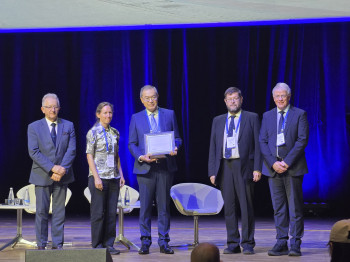
Professor Yang Hao awarded prestigious URSI Booker Gold Medal
Faculty of Science and Engineering
17 August 2026Queen Mary University of London is proud to announce that Professor Yang Hao, Professor of Antennas and Electromagnetics in the School of Electronic Engineering and Computer Science, has been awarded the International Union of Radio Science (URSI) Booker Gold Medal—one of the organisation's highest honours. Professor Hao receives the ... [more]

From teaching challenge to potential spinout: Queen Mary AI assessment project takes next step
Faculty of Science and Engineering
13 August 2026An artificial intelligence project developed at Queen Mary University of London to help academics provide faster, more detailed feedback to students has been selected for a national spinout programme. EduGrade AI, an educator-controlled assessment and feedback platform, has been selected for the Innovate UK ICURe Exploit Business and Spinout Readiness ... [more]

Researchers help unlock a more versatile future for quantum computing
Faculty of Science and Engineering
12 August 2026Researchers at Queen Mary University of London, Imperial College and University of Oxford have helped develop a new architecture that could overcome one of the biggest obstacles preventing photonic quantum computers from reaching their full potential. Published in Nature Photonics, the international study introduces Clavina – a modular, programmable photonic quantum ... [more]
AI gives tomorrow's wireless networks a clearer voice
Faculty of Science and Engineering
11 August 2026Queen Mary University of London researchers develop intelligent communications system that dramatically improves data transmission when bandwidth is limited. Anyone who has struggled through a poor phone call knows the frustration of missing half a conversation. Now, researchers at Queen Mary University of London, led by Paul Anthony Haigh, have ... [more]
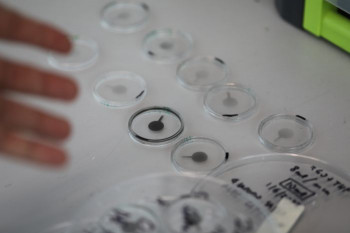
New graphene-powered soft lens could pave the way for smarter glasses, cameras and medical devices
Faculty of Science and Engineering
7 August 2026Queen Mary researchers develop a lightweight, electrically adjustable lens inspired by the flexibility of the human eye. The ability to change focus instantly is something most people take for granted. Every day, our eyes effortlessly switch between reading a book, recognising a face across the room or watching a bird ... [more]
July 2026
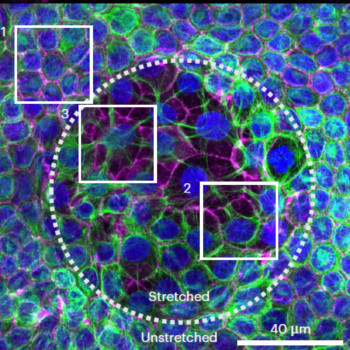
Under pressure: when tension builds up, the nucleus escapes
Faculty of Science and Engineering
27 July 2026Researchers at Queen Mary University of London and IBEC have discovered that epithelial tissues adapt to prolonged stretching by slowly reorganising their keratin cytoskeleton into large multicellular networks. Using advanced live imaging, engineered tissue models and computational simulations, the team found that this process eventually pushes the cell nucleus out ... [more]
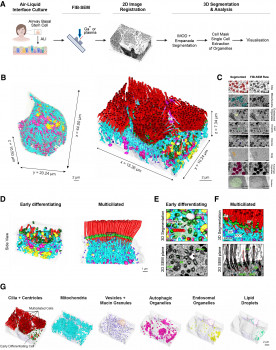
Scientists create the first 3D nanoscale maps of human airway epithelium, revealing the hidden architecture of lung defence cells
Faculty of Science and Engineering
23 July 2026Researchers at Queen Mary University of London and University of Cambridge in collaboration with colleagues at HHMI Janelia and NIH, have created some of the most detailed three-dimensional maps ever generated of human airway cells, revealing how the specialised cells that protect our lungs are built and organised. The study, ... [more]
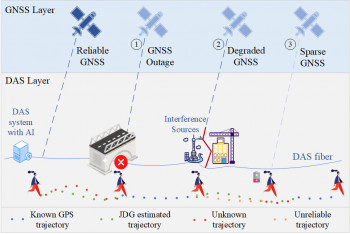
New hybrid positioning system promises reliable tracking where GPS fails
Faculty of Science and Engineering
17 July 2026Researchers have unveiled a new location‑tracking system that could dramatically improve navigation in places where GPS signals routinely fail, such as tunnels, dense cities and underground transport routes. In a new study presented at the IEEE International Conference on Communications in Glasgow, researchers from Queen Mary University of London ... [more]
Innovative capsule endoscope designed by Queen Mary researchers granted patent
Faculty of Science and Engineering
15 July 2026Congratulations to Dr Hasan Shaheed, Dr Mohamed Adhnan Thaha, and Dr Julius Bernth on being granted their European patent for CE-Move, an innovative locomotion system for capsule endoscopes. Today's capsule endoscopes are little more than pills, swallowed like any other pill. Once swallowed, the only movement comes from gravity and ... [more]
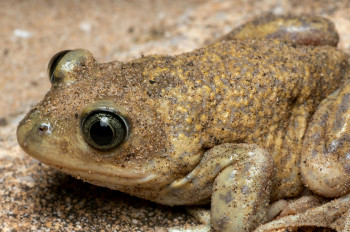
Climate change is forcing amphibians to change their diet – but they can only adapt so far
Faculty of Science and Engineering
14 July 2026New research involving Queen Mary University of London reveals that amphibians can change what they eat to cope with rising temperatures, but that this natural survival strategy has limits. Published in Scientific Reports, the international study found that tadpoles actively alter their diet as temperatures increase, consuming more plant material ... [more]

Queen Mary expert helps shape new Department for Education guidance on screen use in early years settings
Faculty of Science and Engineering
13 July 2026Professor Rachael Bedford, from the Centre for Brain and Behaviour at Queen Mary University of London, helps shape new Department for Education (DfE) guidance on screen use for children in early years settings, ensuring the latest evidence informs practice across nurseries, preschools and childminding settings. Published by the Department for ... [more]
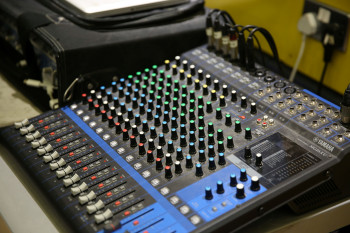
New AI benchmark helps music generation systems better understand human preference
Faculty of Science and Engineering
9 July 2026Researchers at Queen Mary University of London have developed a new benchmark and evaluation system designed to help AI-generated music better align with human preferences, marking an important step towards more creative, controllable, and human-centred music-generation technologies. The study, CMI-RewardBench: Evaluating Music Reward Models with Compositional Multimodal Instruction, introduces a ... [more]
Experts should focus on a "Neurodevelopmental spectrum" to support children rather than considering conditions like ADHD and autism in isolation
Faculty of Science and Engineering
3 July 2026Largest study to date to look at how traits of different neurodevelopmental conditions strongly overlap with each other and relate to wider emotional and behavioural challenges and real-world outcomes from childhood through adolescence. A paper published in the leading journal Molecular Psychiatry led by researchers from Queen Mary University of ... [more]
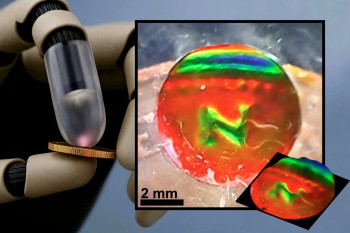
Robots can now "see" touch thanks to a new colour-changing tactile sensor
Faculty of Science and Engineering
3 July 2026Engineers at Queen Mary University of London built a new colour-changing tactile sensor, which allows robots to "see" and touch in real-time. The novel idea was invented by Giacomo Sasso, a postdoctoral researcher at the School of Engineering and Materials Science at Queen Mary University of London, and it works ... [more]
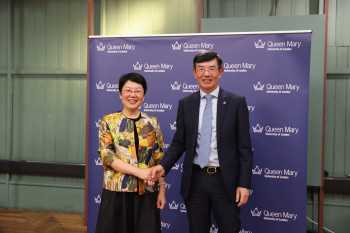
Queen Mary welcomes first cohort of students through new transnational education partnership in China
Faculty of Science and Engineering
1 July 2026Queen Mary University of London will welcome the first cohort of 240 students through a new transnational education (TNE) partnership with the University of International Business and Economics (UIBE) in Beijing, following approval by China's Ministry of Education. The partnership will deliver two new undergraduate joint programmes, BSc Actuarial Science with ... [more]
June 2026
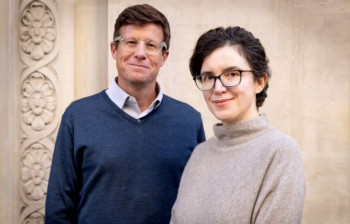
Mathematician's Prestigious Fellowship Drives New Discoveries in Marine Microbiology
Faculty of Science and Engineering
29 June 2026Professor Natasha Blitvic's successful Simons Foundation Pivot Fellowship highlights the power of interdisciplinary research and the value of one of the world's most distinctive research awards. A Queen Mary University of London mathematician has been recognised by the Simons Foundation for the success of her ground-breaking transition into marine microbiology, ... [more]

Climate-anxious youth from poorer countries "unheard" due to digital disconnection
Faculty of Science and Engineering
26 June 2026As rising temperatures around the world trigger climate-related anxiety, new research shows that those most in need of mental health support may be cut off from it. Young people from the lower-income countries most vulnerable to the effects of the climate crisis, including the toll it takes on their mental ... [more]

New research reimagines undergraduate degrees for the AI era
Faculty of Science and Engineering
25 June 2026A new academic paper from researchers at Queen Mary University of London is proposing a radical redesign of undergraduate education, blending the best elements of degree apprenticeships with traditional university teaching to create a model fit for the age of artificial intelligence (AI). Since the UK introduced Degree and Higher-Level ... [more]
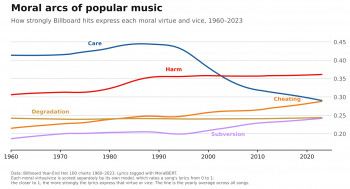
From virtue to vice: how the morality of popular music lyrics has changed since the 1960s
Faculty of Science and Engineering
24 June 2026Researchers at Queen Mary University of London found that the moral themes in popular music lyrics shifted over the past 60 years, with moral vices appearing more frequently than virtues. Popular music may be reflecting a growing culture of vices, according to new research from the Centre for Digital Music at ... [more]
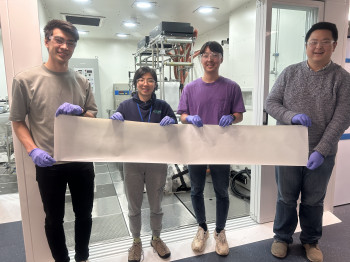
New Membrane Technology Could Transform Hydrocarbon Processing by Slashing Energy Use
Faculty of Science and Engineering
18 June 2026Researchers develop ultrathin polymer membranes that enable fast, selective separation of crude oil components, offering a scalable, low‑energy alternative to distillation. A team of international researchers have developed a new class of ultrathin polymer membranes that can rapidly and selectively separate complex hydrocarbon mixtures, potentially transforming how crude oil ... [more]
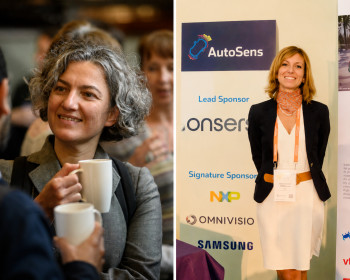
International Women in Engineering Day: meet Mona Jaber and Valentina Donzella.
Faculty of Science and Engineering
18 June 2026In celebration of International Women in Engineering Day, we highlight the innovative research of Mona Jaber and Valentina Donzella. Dr Mona Jaber is Head of the Centre for Networks, Communications and Systems. As a child, Mona was fascinated by how engineering could solve real-world problems and she knew then that ... [more]
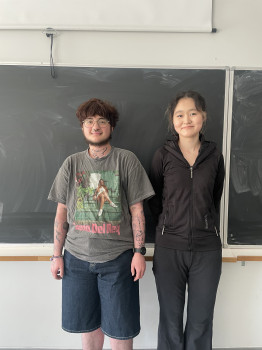
Summer research internships for undergraduate students
Faculty of Science and Engineering
13 June 2026Ten talented undergraduate students from across a wide range of Science and Engineering programmes are embarking on exciting summer research internships under the mentorship of academic supervisors. This fantastic opportunity has been made possible through the QMUL Summer Training Research Initiative to Support Diversity and Equality (STRIDE) and the London ... [more]
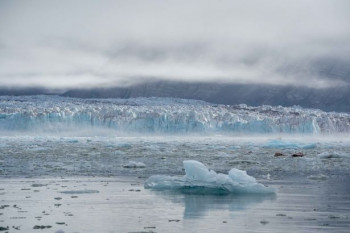
Fungi help lock carbon into Arctic fjord sediments
Faculty of Science and Engineering
11 June 2026Hidden fungi on the Arctic seafloor may play an important role in climate-relevant carbon storage. Arctic fjords are effective natural environments for trapping and burying carbon. But as the Arctic warms around four times faster than the global average, fjord ecosystems are changing rapidly, and researchers are still working to ... [more]

Children's motivation and attitudes towards learning play a key role in academic success, study finds
Faculty of Science and Engineering
9 June 2026New study reveals how motivation and curiosity help turn genetic potential into school achievement. A major new study led by researchers at Queen Mary University of London has revealed that non-cognitive skills — such as motivation, curiosity, academic interest, and self-belief — play a key role in translating children's genetic dispositions into ... [more]
Freshwater methane emissions maximised by global warming
Faculty of Science and Engineering
5 June 2026It is not just cows that emit the powerful greenhouse gas methane – microbial emissions from the natural world will inevitably increase as our planet continues to warm. A new study led by Professor Mark Trimmer of Queen Mary University of London, published in the journal Nature Climate Change, explains how ... [more]

Behind the research: Freshwater methane emissions maximised by global warming
Faculty of Science and Engineering
5 June 2026This "behind-the-research" blog by Mark Trimmer, Professor of Biogeochemistry, takes readers beyond the published findings to reveal the motivations, challenges, and human stories that shaped the study. Say methane and most people think of cows, yet nearly half of all methane is produced by microbes in freshwaters. While we know ... [more]

Sarah Brown to give plenary address at international preterm birth conference
Faculty of Science and Engineering
2 June 2026UK Preterm Birth Conference 2027 hosted at Queen Mary University of London from 18 and 19 January 2027. Sarah Brown, global health campaigner and Chair of the international children's charity Theirworld, will give a plenary address with Professor James Boardman, Scientific Director of the Jennifer Brown Research Laboratory, at the UK Preterm Birth Conference 2027, ... [more]
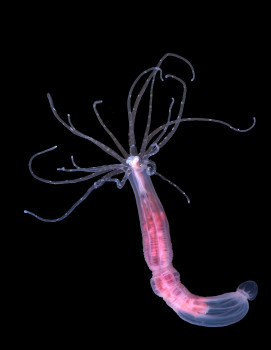
Epigenetic changes can be inherited without changing DNA in animals
Faculty of Science and Engineering
1 June 2026Beyond DNA: Scientists discover how traits can be passed on without genetic changes. In a new study by researchers at Queen Mary University of London, a sea anemone has revealed that epigenetic changes can be inherited across generations, offering rare experimental evidence that information beyond DNA sequence can persist in ... [more]
May 2026
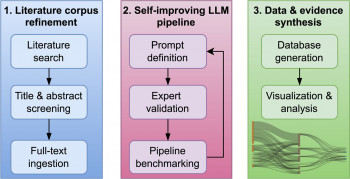
New AI system could help scientists keep up with the explosion of research papers
Faculty of Science and Engineering
28 May 2026Queen Mary University researchers have developed a new AI-powered framework, MetaBeeAI, designed to help scientists review and analyse vast amounts of literature faster, more transparently, and with greater human oversight. Dr. Rachel Parkinson, who is the leading researcher on this project, states that MetaBeeAI could potentially transform how evidence is ... [more]
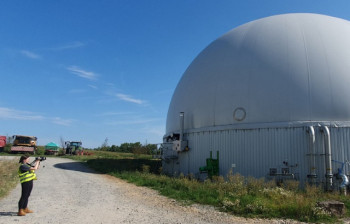
New European Study Reveals Methane Emissions from Biogas Plants Are Higher Than Previously Estimated – But Most Could Be Easily Reduced
Faculty of Science and Engineering
27 May 2026A major new study led by Queen Mary University of London has revealed that methane emissions from biogas plants across Europe are higher than some estimates suggest—yet, once identified, the majority of these emissions could be eliminated at no net cost. A biogas plant is a facility that turns ... [more]
Tropical butterflies "hedge their bets" with mating tactics to adapt to extreme seasons
Faculty of Science and Engineering
26 May 2026Butterfly reproduction findings provide key insights into how climate crisis might affect tropical ecosystems. New research from Queen Mary University of London shows how extreme seasonal patterns are causing rainforest butterflies to adapt their reproductive strategies at a rapid pace, with implications for species resilience under accelerating climate disruption. The ... [more]
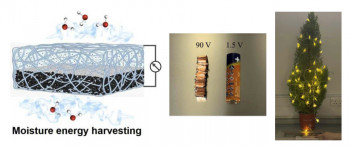
Scientists generate electricity from ambient moisture using everyday ingredients
Faculty of Science and Engineering
21 May 2026An international research team led by scientists at Queen Mary University of London has developed an innovative method to power wearable electronics using ambient moisture and simple, non-toxic materials commonly found in the kitchen. In a study published in Nano Energy, researchers from Queen Mary, the University of Warwick, Imperial ... [more]
Queen Mary strengthens UK-Brazil research partnerships
Faculty of Science and Engineering
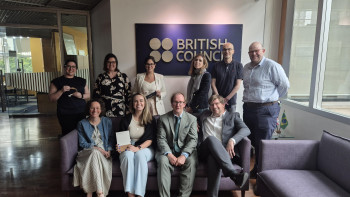
21 May 2026An academic delegation from Queen Mary University of London visited Brazil to explore opportunities for collaboration with universities, research institutes and innovation organisations in areas including AI, health, sustainability and inclusive innovation. The visit was supported by the UK's International Science Partnerships Fund (ISPF), bringing together colleagues from Queen Mary's ... [more]
Innovation paves way to make 'clean' chemicals, plastics and food using solar energy
Faculty of Science and Engineering
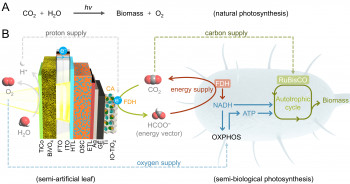
19 May 2026Integrated solar reactor uses sunlight, water, CO2 and engineered bacteria to grow biomass in a single beaker. A new study led by Dr Lin Su of Queen Mary University of London, published today in the Journal of the American Chemical Society, describes a new integrated solar reactor in which engineered ... [more]
12 May: International Women in Mathematics Day
Faculty of Science and Engineering
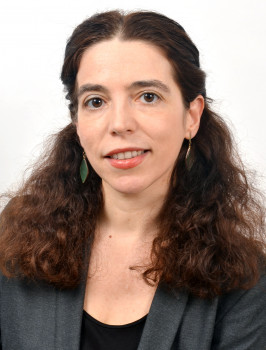
11 May 2026International Women in Mathematics Day is celebrated on 12 May, marking the birthday of Maryam Mirzakhani, the first woman to receive the Fields Medal in 2014. Born in Iran, Mirzakhani made groundbreaking contributions to mathematics before her life was cut short at a young age. Her legacy continues to inspire women and ... [more]
Thawing Arctic soil awakens only half of soil microbes, new study reveals
Faculty of Science and Engineering
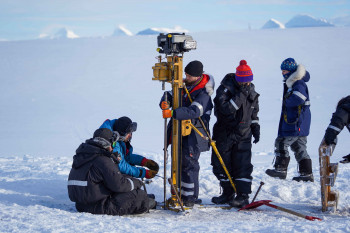
7 May 2026As Arctic temperatures rise, frozen soils are thawing for longer periods—but new research shows this doesn't fully activate the life hidden underground. Instead, only about half of soil microbes "wake up," meaning greenhouse gas release depends on which microbes respond, and how quickly, rather than warming alone. A partially ... [more]
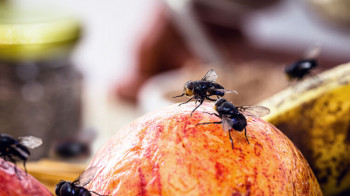
Tiny insect brain discovery offers a blueprint for faster and more efficient AI and robots
Faculty of Science and Engineering
5 May 2026The secret behind insects' lightning fast reactions could offer a blueprint for more energy efficient robots and self-driving cars, according to a new study challenging our understanding of how brains process information. The secret behind insects' lightning fast reactions could offer a blueprint for more energy efficient robots and self-driving ... [more]
April 2026

Meet one of our academics: Tyler Kelly
Faculty of Science and Engineering
29 April 2026Tyler Kelly is a professor in the Centre for Combinatorics, Algebra and Number Theory and a Future Leader Fellow working on open mirror geometry for Landau-Ginzburg models. Their inspiring commitment to EDI has been recognised by the appointment to prestigious learned societies and advisory boards, as the London Mathematical Society ... [more]

How touch and emotion combine to shape our memories and relationships
Faculty of Science and Engineering
24 April 2026New paper in Neuroscience & Biobehavioural Review proposes first neurobiological model for how emotionally meaningful touch stays in our memory and influences our connections with others. Why does a comforting touch stay with us for years, while other sensations quickly fade from our minds? A new paper offers a novel answer, ... [more]
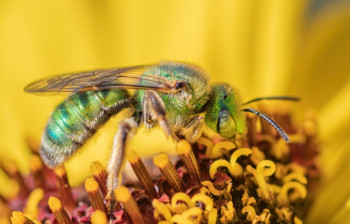
'Chameleon' bees change colour with the weather
Faculty of Science and Engineering
22 April 2026Study reveals some bees shift colour depending on humidity – and may explain why the same species can look different across climates. Some bees really do change colour with the weather, according to new research that shows humidity can temporarily alter the shimmering hues of certain species. In a study published ... [more]
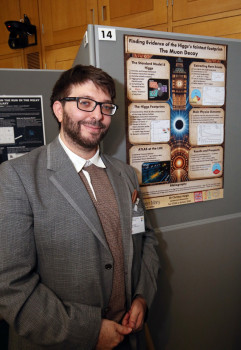
Queen Mary physicist showcases Higgs boson research in Parliament
Faculty of Science and Engineering
20 April 2026Early Career Researcher Christos Vergis represents Queen Mary University of London at prestigious STEM for Britain event. A Queen Mary University of London research team has taken its work to the heart of UK democracy, with physicist Dr Christos Vergis shortlisted to present his research at the House of Commons ... [more]
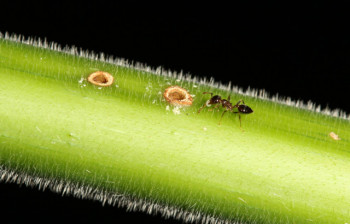
Wasps move in on ant–plant partnership, disrupting a 10‑million‑year mutualism
Faculty of Science and Engineering
15 April 2026New research reveals unexpected intruders in a classic tropical tree–ant relationship, raising concerns for forest recovery in human‑altered landscapes. An international team of scientists from Queen Mary University of London, the Royal Botanic Gardens, Kew, the Biology Centre of the Czech Academy of Sciences and other institutions has ... [more]
March 2026
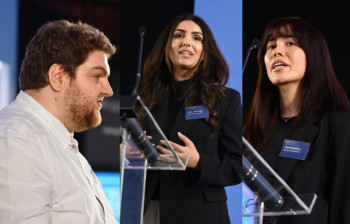
Queen Mary PhD Students Champion Neurodivergent Inclusion at Night of Science and Engineering
Faculty of Science and Engineering
19 March 2026Three Queen Mary University of London PhD students took centre stage at this year's Night of Science and Engineering, sharing research that pushes forward understanding, equity and inclusion for neurodivergent people. Their work—spanning mental health, human‑centred technology and maternal health—showcases the powerful role of research in creating ... [more]
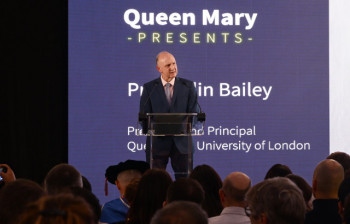
Queen Mary's Night of Science and Engineering celebrates innovation, partnership, and impact
Faculty of Science and Engineering
18 March 2026Yesterday (Tuesday 17 March) Queen Mary University of London's Faculty of Science and Engineering welcomed partners, collaborators, and invited guests to its annual Night of Science and Engineering. The event, now in its fourth year, showcases the world leading research, innovation, and partnership carried out across the Faculty. This year's event, ... [more]
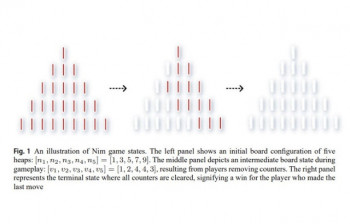
AI's game-playing still has flaws, research shows
Faculty of Science and Engineering
13 March 2026New research published in Machine Learning shows pattern learning is not enough to train AI to tackle games – and abstract representations or hybrid approaches may help. Many AI researchers describe game-playing as the "Formula 1" of AI: it's a controlled test environment with clear rules and clear success criteria. This paper ... [more]

Queen Mary scientists seek to slash carbon footprint of medicine manufacturing through new bio-based solvents.
Faculty of Science and Engineering
10 March 2026By working with industry partners, bio-based solvents could replace fossil derived materials by the 2030s. A new British-based consortium aims to cut emissions by 60% compared to conventional fossil-derived solvents. Pharma's emissions per dollar of revenue are higher than the car industry. Solvents are a major culprit, but essential to making ... [more]
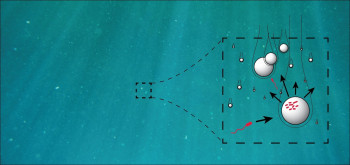
Why averages fail for bacteria in the open ocean
Faculty of Science and Engineering
10 March 2026How can bacteria that forage on organic particles survive in vast ocean regions where such particles are extremely sparse? A new study by researchers from Queen Mary University of London and ETH Zurich shows that variability at the level of individual bacteria plays a central role. Using a probabilistic population ... [more]
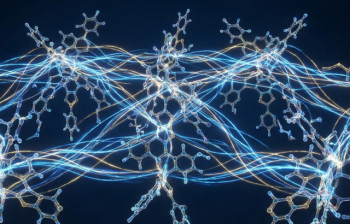
Delocalised Electronic States: Powering Molecular Photovoltaics
Faculty of Science and Engineering
9 March 2026Queen Mary Researchers Help Unlock the Secrets Behind 20% Efficient Organic Solar Cells. Researchers at Queen Mary University of London, working closely with collaborators at Imperial College London and the Spanish National Research Council (CSIC), have uncovered how the latest generation of organic solar cell materials achieve record‑breaking efficiencies of ... [more]
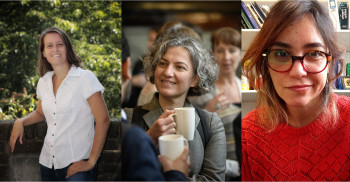
Three women leading research in Science and Engineering
Faculty of Science and Engineering
1 March 2026To mark International Women's Day, we spotlight three women leading research in Science and Engineering. Meet Silvia Liverani (Head of the Centre for Probability, Statistics and Data Science) Mona Jaber (Head of the Centre for Networks, Communications, and Systems) and Ana Sobrido (Head of the Centre for Centre for Sustainable ... [more]
February 2026
Meet one of our academics: Stefaan Verbruggen
Faculty of Science and Engineering
18 February 2026I am a lecturer in Medical Technology and a member of the Centre for Bioengineering at Queen Mary University of London. My research focuses on biomechanics and organ-on-a-chip technologies, particularly how mechanical forces influence musculoskeletal health and disease. My work sits at the intersection of biomechanics, mechanobiology and advanced in ... [more]

QMUL Researchers Help Advance Practical Quantum Computing with New Low-Depth Algorithms
Faculty of Science and Engineering
13 February 2026A new study published in Science Advances presents a major step forward in the development of quantum algorithms that are more accurate, more efficient, and better suited to the capabilities of early quantum computers. The research from Queen Mary University of London focuses on improving the way quantum computers calculate ... [more]

Sea turtles are nesting earlier – but producing fewer eggs, less often: new research
Faculty of Science and Engineering
12 February 2026Climate change is reshaping life on Earth at an unprecedented pace. Across the globe, species are shifting their ranges, altering migration routes and breeding earlier in the year in response to rising temperatures. But while some of these changes appear adaptive, scientists are increasingly finding that hidden costs may undermine ... [more]
Queen Mary Spinout Dragonfly AI Secures £5m to Accelerate Global Growth
Faculty of Science and Engineering
12 February 2026Queen Mary University of London is celebrating the success of its spinout company Dragonfly AI, which has secured £5 million in new investment to fuel its next phase of international expansion and product innovation. Dragonfly AI, co-founded by Dr Hamit Soyel, Chief Scientist and inventor of the underlying technology, has rapidly ... [more]
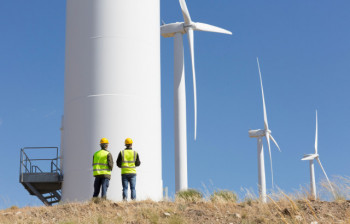
Sanity check warns EVs and heat pumps deliver "no proven carbon savings" ahead of 2030 clean power target
Faculty of Science and Engineering
11 February 2026New analysis warns that UK electric vehicles and heat pumps are delivering no proven carbon savings — and urges urgent focus on grid capacity, renewables and carbon capture instead. The conclusion: the UK is prioritising the wrong things. UK electric vehicles and heat pumps have not yet delivered any proven carbon ... [more]

"This engine is grinding to a halt" - Nature slowing down as climate change gains pace
Faculty of Science and Engineering
10 February 2026New research from Queen Mary University of London shows nature's renewal has "significantly" slowed down with rising temperatures, against expectation Ecologists have long assumed that, as global warming accelerates, so do changes in nature. The received wisdom was that as temperatures rise and climatic zones shift, species threatened with extinction ... [more]
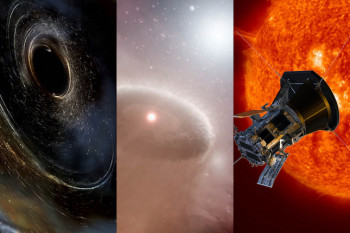
Queen Mary Astronomy Unit awarded £1.5 million for astrophysics and space science research
Centre for Theoretical Physics and Astronomy
10 February 2026Researchers in the Astronomy Unit (AU), in the School of Physical and Chemical Sciences at Queen Mary, have been awarded a total of £1.5 million from the Science and Technology Facilities Council (STFC) to fund 3 research projects over the next 3 years. The research grants cover Queen Mary's internationally leading research in ... [more]
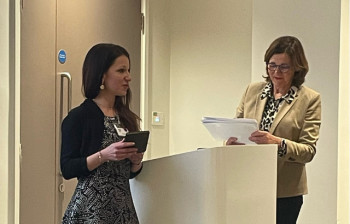
Claudia Garetto receives Suffrage Science Award for Maths and Computing
Centre for Geometry, Analysis and Gravitation
5 February 2026Many congratultons to Claudia Garetto who has been awarded the 2026 Suffrage Science Award for Maths and Computing, a prestigious peer-to-peer award recognising outstanding women in science for both research excellence and their commitment to inspiring others. The Suffrage Science Awards are unique in their format and ethos: each recipient nominates ... [more]
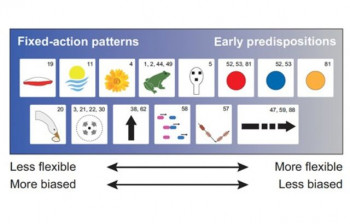
Unsupervised strategies for naive animals: New model of adaptive decision making inspired by baby chicks, turtles and insects
Faculty of Science and Engineering
4 February 2026Precocial animals, the ones that move autonomously within hours after hatching or birth, have many biases they are born with that help them survive, finds a new Royal Society paper led by Queen Mary University of London. The new model proposed by the researchers suggest that naïve animals like ... [more]
January 2026

Meet one of our academics: Nadine Lavan
Faculty of Science and Engineering
23 January 2026I am a Senior Lecturer in Psychology in the Centre for Brain and Behaviour, where I study how humans perceive voices. Human voices don't just tell us what someone is saying, voices also convey a lot of information about a speaker's intentions, feelings, and attitudes. Crucially, voices also help us ... [more]
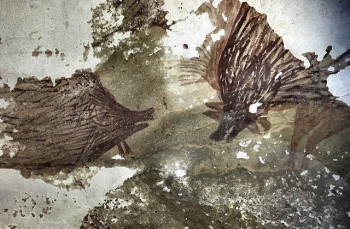
How people moved pigs across the Pacific
Faculty of Science and Engineering
5 January 2026Genomic study reveals the routes taken by people as they island hopped across Indonesia. A new study, published today in the journal Science, reveals how millennia of human migration across Pacific islands led to the introduction of invasive pig species all over the Asia-Pacific region. The study was led by ... [more]